


Can muscle mass really support longevity?

We often think about longevity in terms of diet, weight, or cardiovascular fitness. But increasingly, research is pointing to another powerful factor that’s often overlooked: muscle mass.
What’s most important to remember is that muscle isn’t just about strength or aesthetics. It’s a key driver of metabolic health, independence, and long-term resilience. So the question is, does building and maintaining muscle actually help you live longer? Let’s break it down.
How our muscle mass changes as we age
From around our 30s, we begin to gradually lose muscle mass (a process known as sarcopenia). This decline accelerates with age, making muscle health a key area of focus for healthy ageing. Muscle strength often declines faster than muscle size, which may become more noticeable when doing everyday activities or lifting weights.
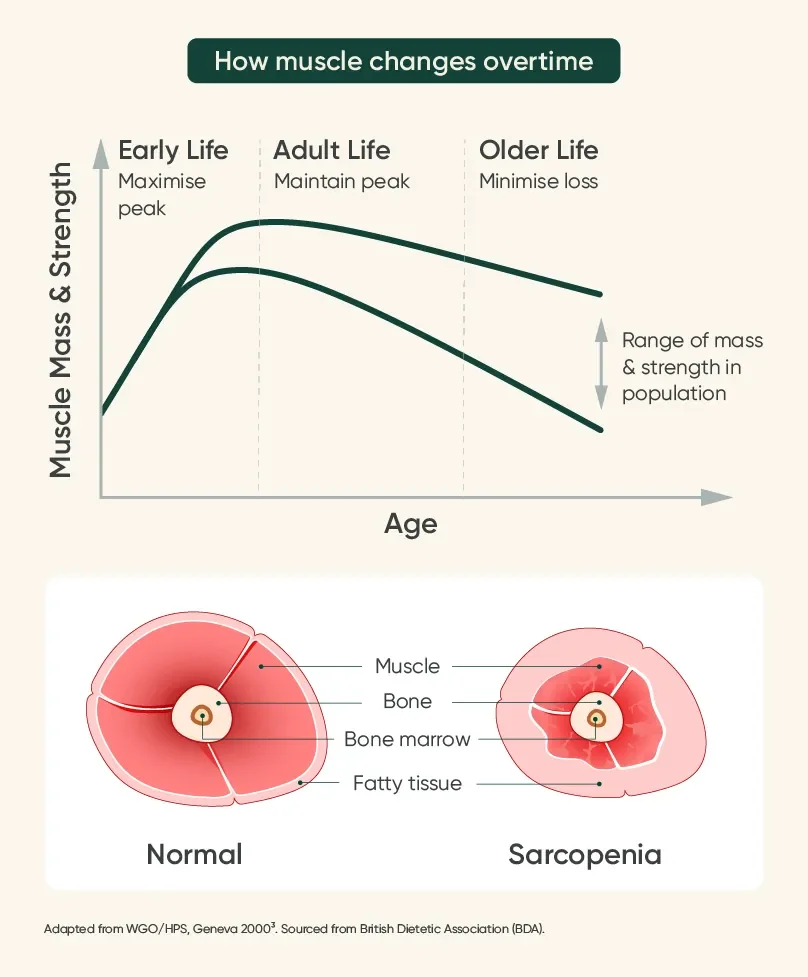
For women in particular, hormonal changes (such as in perimenopause and menopause) can speed this process up, making it even more of a focus when it comes to wellbeing. By the time we reach our 60s and 70s, reduced muscle mass and strength can impact everything from balance to mobility to metabolic health. Supporting muscle health through diet and lifestyle can help optimise the ageing process, and keep you stronger across your lifespan.
The benefits of muscle mass
While our muscles do a lot for us when it comes to strength and movement, they are also very important when it comes to metabolic health. Muscles are actually one of our most metabolically active tissues in the body. They play a range of roles to support overall health and wellbeing.
1. Muscles support metabolic health
Muscle plays a central role in regulating blood sugar and maintaining insulin sensitivity. When you have more muscle, your body is better able to take glucose out of the bloodstream and use it effectively, which helps stabilise energy levels. Maintaining muscle mass essentially gives your body more metabolic capacity to handle carbohydrates and maintain balance.
2. Muscles protects bone health
Muscle and bone health are closely linked, particularly as we age. When muscles contract during strength-based movements, they place stress on the bones, which stimulates them to maintain or even increase their density. This is one of the most effective ways to reduce the risk of osteoporosis and fractures over time. For women, especially during and after menopause when bone loss accelerates, preserving muscle mass becomes a key strategy in protecting long-term health.
3. Muscles improves function and independence
Muscles play a critical role in how we function day-to-day. They support balance, coordination, and mobility, all key for staying independent as we age. Reduced muscle mass and strength are strongly associated with an increased risk of falls and health complications in later life. Maintaining muscle allows people to continue doing everyday activities, from carrying groceries to getting up from the floor, with confidence and ease.
4. Muscles act as a metabolic reserve
One of the most overlooked areas is the muscles' role as a metabolic reserve, particularly during times of illness, injury, or stress. When the body is under strain, it draws on stored amino acids (the essential building blocks of protein, that help repair, maintain and grow muscle mass) to support immune function, wound healing, and recovery. Individuals with greater muscle mass have a larger reserve to draw from, which can make a significant difference in how well they recover from illness or surgery.
Does muscle mass support longevity?
This is where things get really interesting. Research shows that people with more muscle tend to live longer and have a lower risk of chronic disease. On the flip side, low muscle mass (or sarcopenia) is linked to many health complications and a shortened life span for some people.
What’s important here is that muscle seems to be a better marker of health than body weight alone. Two people can weigh the same, but the one with more muscle is often metabolically healthier and more resilient. It’s also not just about how much muscle you have, it’s about how well it functions. Strength, balance, and the ability to move well are just as important as muscle size when it comes to long-term health.
So while muscles might traditionally be seen as something aesthetic or fitness-related, it’s actually much more than that. It’s a key part of how your body copes with stress, recovers from illness, and maintains independence over time.
Put simply, building and maintaining muscle isn’t just about how you look, it’s one of the most practical things you can do to support your health and longevity.
How can you increase muscle mass
The good news? Muscle is incredibly responsive at any age. Here are some ways you can support your muscle health:
1. Include resistance training
This is a non-negotiable when it comes to supporting and maintaining muscle health. This might look like:
- Strength training 2–4 times per week.
- Focus on compound movements (squats, lunges, pushing, pulling).
- Progressive overload (gradually increasing load or intensity).
2. Be mindful of your protein intake
Protein is everywhere right now. And rightly so, as your muscles need protein to grow and repair. It doesn't have to be complicated:
- Aim for adequate protein daily intake. Recommended levels can vary from person to person, but a good guide is 1.0-1.6 g of protein per kilo of body weight per day, depending on your level of activity.
- Spread protein across meals, including some in main meals and snacks where possible.
- Focus on high-quality sources of protein such as eggs, dairy, legumes and lean meats.
3. Don’t forget the importance of recovery
Rest and recovery are essential when it comes to muscle health. This is because muscle grows during recovery, not during training itself. Make sure you get good quality sleep, manage stress levels and include 1-2 rest days in your weekly schedule.
When it comes to optimising muscle health, remember that consistency is more important than perfection. You don’t need extreme training, just consistent, progressive effort, along with good nutrition and time to recover.
The bottom line
Muscle mass is far more than a measure of strength or fitness. It’s a key marker of overall health, resilience, and how well we age. It supports metabolic health, protects bone density, helps maintain independence, and reduces the risk of chronic disease. Importantly, the research shows that maintaining muscle is not just about function, it’s linked to living longer.
The most empowering part is that muscle is highly responsive to what we do. Through consistent resistance training, adequate protein intake, and proper recovery, it’s possible to build and maintain muscle at any stage of life.
Ultimately, investing in your muscle health is an investment in your future self - not just in how you look or perform today, but in how you move, feel, and function in the years to come.
Reviewed by the Healthylife health experts May 2026.
Related reads













This article is for informational purposes only and does not provide medical advice, diagnosis, or treatment. Any information published on this website or by this brand is not intended as a substitute for medical advice. If you have any concerns or questions about your health you should consult with a health professional.
About this article

Sarah Gray
Sarah Gray, The Nutrition Pharmacist, is a Melbourne-based Registered Pharmacist and Nutritionist with 15+ years of experience across community pharmacy, health education, and integrative health care. Her ultimate goal is to make a difference in the health journeys of many. Passionate about integrative health, Sarah has over 10 years of experience educating emerging practitioners in pharmacy practice and integrated pharmacology.