


Soluble Fibre vs Insoluble Fibre: Which one is better?

When people think about fibre, they usually think about one thing: staying regular. But it’s doing a lot more than simply helping you go to the bathroom.
In fact, fibre is one of the most important nutrients for supporting everything from gut health and digestion to cholesterol levels, blood sugar balance and even the trillions of microbes living in your digestive tract.
The catch? Not all fibre works the same way.
There are two main types of fibre: soluble fibre and insoluble fibre. One acts a little like a sponge, absorbing water and forming a gel in the gut. The other works more like a broom, helping move waste through your digestive system.
Both have important jobs to do, and understanding the difference can help you make better choices for your digestion, overall health and even your grocery shop.
So, when it comes to soluble fibre vs insoluble fibre, which one deserves a spot in your diet? The answer is both.
What's the difference between soluble and insoluble fibre?
At their core, both soluble fibre and insoluble fibre are types of carbohydrates that your body can't fully digest.
Unlike protein, fat or starch, fibre passes through much of the digestive tract intact. But what happens along the journey depends on the type.
What is soluble fibre?
Soluble fibre dissolves in water and forms a gel-like substance in the digestive tract.
This gel slows digestion, which can help you feel fuller for longer and support healthy blood sugar responses after meals.
Many types of soluble fibre are also fermented by beneficial gut bacteria. As these microbes break down fibre, they produce compounds called short-chain fatty acids, which help nourish the cells lining the colon and support many aspects of health.
Common types of soluble fibre include:
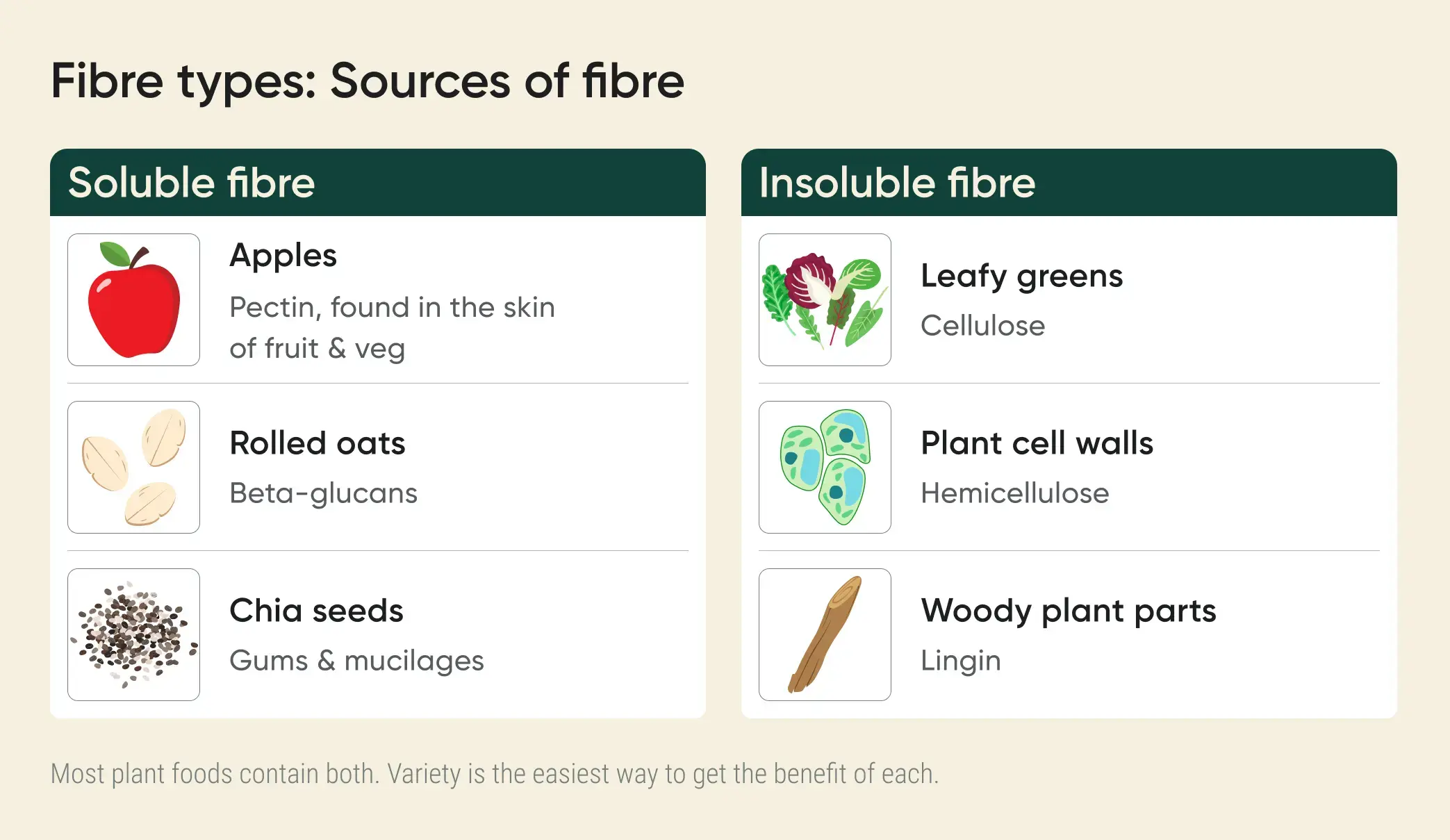
- Pectin: found in the skins of fruit and vegetables such as apples
- Beta-glucans: found in rolled oats
- Gums and mucilages: found in seeds like chia
What is insoluble fibre?
Insoluble fibre doesn't dissolve in water.
Instead, it remains relatively intact as it travels through the digestive system, adding bulk to stools and helping move waste through the gut.
It's often described as "roughage", but that doesn't tell the whole story.
Insoluble fibre creates volume within the bowel and helps support healthy bowel movements. It does this by moving through the large intestine causing an irritating effect on the lining of the large bowel, stimulating secretion of water and mucus as a defense mechanism to protect from abrasion. This helps to lubricate stools and support comfortable digestion.
Common types of insoluble fibre include:
- Cellulose
- Hemicellulose
- Lignin
All found in plant foods like leafy green vegetables.
How do they work in the gut?
While both fibre types support digestive health, they do so in very different ways.
Soluble fibre: the stabiliser
Soluble fibre works through chemistry.
As it forms a gel in the digestive tract, it slows the movement of food and nutrients. This can help support healthy blood sugar responses and promote feelings of fullness after eating.
One of soluble fibre's most researched benefits is its effect on cholesterol. Soluble fibre can bind to bile acids in the digestive tract. Because bile acids are made from cholesterol, removing them through the stool encourages the liver to draw cholesterol from the bloodstream to make more. This process is one reason why soluble fibre is associated with heart health benefits.
Soluble fibre is also highly fermentable, making it a favourite food source for beneficial gut bacteria.
The flip side? If you suddenly increase highly fermentable fibres, your gut microbes may become a little overenthusiastic, resulting in bloating, gas and digestive discomfort while they adapt. The key is to introduce these foods slowly and build up over time, not to avoid them altogether.
Insoluble fibre: the mover
Insoluble fibre takes a more physical approach. Rather than slowing things down, it helps keep digestion moving by adding bulk to stools and supporting bowel motility.
This can help reduce the time waste spends in the colon and support regular bowel movements. But digestion isn't simply about speeding things up.
Think of digestion as a motorway. If traffic moves too slowly, things back up. If it moves too quickly, important passengers, such as nutrients, may not have enough time to get off at the right exit.
A healthy digestive system relies on optimal transit time, and that's where both soluble and insoluble fibre work together. Soluble fibre helps regulate the pace, while insoluble fibre keeps things moving forward.
What are the benefits?
Benefits of soluble fibre
Soluble fibre may help support:
- Healthy cholesterol levels
- Heart health
- Healthy blood sugar responses
- Satiety and appetite regulation
- Beneficial gut bacteria
- Digestive regularity
Research has shown that viscous fibres such as beta-glucan from oats and barley, along with psyllium husk, can help support healthy cholesterol levels when consumed as part of a balanced diet.
Benefits of insoluble fibre
Insoluble fibre supports digestive function by:
- Adding bulk to stools
- Supporting regular bowel movements
- Helping reduce constipation
- Supporting healthy transit time
- Contributing to overall fibre intake
Higher intakes of wholegrain foods and fibre-rich plant foods have also been associated with improved long-term health outcomes and a lower risk of several chronic diseases.
Which food sources can they be found in?
Soluble fibre foods
Some of the best sources of soluble fibre include:
- Oats
- Barley
- Psyllium husk
- Lentils
- Chickpeas
- Beans
- Apples
- Pears
- Citrus fruits
- Carrots
- Sweet potato
Insoluble fibre foods
Common sources of insoluble fibre include:
- Wheat bran
- Wholegrain bread
- Brown rice
- Nuts
- Seeds
- Cauliflower
- Green beans
- Potato skins
Did you know?
Many people think insoluble fibre only comes from crunchy foods such as bran cereal or leafy greens. But some of the richest sources are hiding in softer foods too. The skin of a blueberry, the tiny seeds in a strawberry, the edible skin on an apple and the outer layers of many vegetables all contribute valuable insoluble fibre.
So while berries may feel soft, they still contain plenty of the structural fibres that help keep your digestive system moving.
Which foods contain both soluble and insoluble fibre?
Many plant foods naturally contain a combination of both fibre types.
These include:
- Oats
- Apples
- Pears
- Avocado
- Lentils
- Chickpeas
- Chia seeds
- Flaxseeds
- Sweet potato
- Berries
This is one reason nutrition experts recommend eating a variety of plant foods rather than focusing on a single source of fibre. Nature has already done the balancing for us.
How much fibre should you have per day?
According to the Australian Dietary Guidelines
- Women should aim for at least 25g of fibre per day
- Men should aim for at least 30g of fibre per day
Yet most Australians don't reach these targets. There are no specific recommendations for soluble fibre and insoluble fibre individually. Instead, the goal is to consume a variety of fibre-rich foods across the day. A practical way to do this is to include a fibre source at every meal.
For example:
- Breakfast: Oats topped with berries and chia seeds
- Lunch: Wholegrain sandwich with lean protein, salad and avocado
- Snack: Pear with a handful of nuts
- Dinner: Roast vegetables with legumes and lean protein
This naturally provides a mix of both soluble and insoluble fibre.
When should you speak to a health professional?
While increasing fibre is beneficial for most people, it's not always a one-size-fits-all approach.
Consider speaking with a healthcare professional if you:
- Experience ongoing bloating or digestive discomfort
- Have persistent constipation or diarrhoea
- Notice sudden changes in bowel habits
- Have IBS, inflammatory bowel disease or coeliac disease
- Are considering long-term use of a fibre supplement
A healthcare professional can help identify the underlying cause of symptoms and recommend the most appropriate approach for your individual needs.
The bottom line
When it comes to soluble fibre vs insoluble fibre, it's not about choosing one over the other.
Soluble fibre helps nourish beneficial gut bacteria, supports heart health and may assist with cholesterol and blood sugar management. Insoluble fibre provides structure, supports bowel regularity and helps keep digestion moving.
You can think of soluble fibre as the microbiome's favourite meal and insoluble fibre as the framework that helps keep the digestive system running smoothly. The real magic happens when you get both.
By regularly including fruits, vegetables, legumes, wholegrains, nuts and seeds in your diet, you'll naturally consume a mix of soluble and insoluble fibre and unlock the full range of benefits fibre has to offer.
Reviewed by the Healthylife health experts June 2026.
Related reads












This article is for informational purposes only and does not provide medical advice, diagnosis, or treatment. Any information published on this website or by this brand is not intended as a substitute for medical advice. If you have any concerns or questions about your health you should consult with a health professional.
About this article

Gabbie Watt
A bachelor degree qualified Naturopath, Gabbie is passionate about integrating evidence-based practice and traditional medicine. Formerly a Radiation Therapist, her background in conventional medicine enriches her holistic health approach.