


Baby Formula: Choosing the right one for your newborn

Important: Breastmilk is best for babies. Before you decide to use an infant formula, consult your healthcare professional (such as your GP, paediatrician, lactation consultant or maternal and child health nurse) for advice. Follow preparation instructions exactly. Prepare bottles and teats as directed. Do not change proportions of powder except on medical advice. Incorrect preparation can make your baby very ill.
This article contains general health information only. Always talk to a health professional for health or wellness advice specific to your personal circumstances.
Welcoming a newborn into the family comes with a whirlwind of love, bewilderment and a seemingly endless list of decisions. One of the biggest? How to nourish your little one. While exclusive breastfeeding is recommended for around the first six months, breastfeeding may not always be possible, practical, or the preferred choice for every family.
For parents who choose not to breastfeed, cannot breastfeed, or decide to combine breast and bottle feeding, baby formula provides a nutritionally complete and safe alternative to support your baby’s growth and development.
With so many tins, stages and formulations lining supermarket and pharmacy shelves, it's easy to feel a bit lost. This guide helps break it all down: what baby formula is, the different types, feeding stages, key ingredients to know, and how to prepare it safely, so you can feel confident in whatever choice is right for your family.
What is baby formula?
Baby formula (also known as infant formula) is a manufactured food designed to meet the complete nutritional requirements of infants from birth up to 12 months of age.
In Australia, infant formulas are strictly regulated by Food Standards Australia New Zealand (FSANZ) under Standard 2.9.1. This standard specifies compositional rules, setting exact minimum and maximum levels for energy, macronutrients (protein, fat, carbohydrates), vitamins, and minerals. The standard ingredients in formulas include:
- Protein: Sourced from cow’s milk, goat’s milk, soy or hydrolysed proteins.
- Carbohydrates: Usually lactose. Alternative carbohydrate sources are used in specialised lactose-free or soy formulations.
- Fats and essential fatty acids: A blend of vegetable oils supplies essential fats and fat-soluble vitamins (A, D, E, and K). Many brands also include Omega-3 and 6 which play roles in early brain and visual development.
- Vitamins and minerals: All infant formulas sold in Australia are iron-fortified to protect against iron deficiency anaemia, alongside calcium, zinc, iodine, and B-group vitamins.
- Prebiotics and probiotics: Some formulations incorporate beneficial bacteria strains intended to support gut microbiota (benefitting gut health) and soften stools.
Because every commercial infant formula sold in Australia must meet these strict standards, you can feel reassured that every formula provides the essential nutrients a newborn needs to thrive.
The different types of baby formula
Choosing a formula often begins with understanding the protein base and dietary design behind it. Here is an overview of the main types of baby formula available in Australia:
1. Cow’s milk-based formula
Cow's milk-based formula is the standard recommended formula for newborns who aren’t exclusively breastfed, unless there is a specific medical reason to choose an alternative. In these formulas, cow’s milk protein is modified to ensure the protein balance and mineral concentrations are gentle on a newborn's kidneys and digestive system.
2. Goat’s milk-based formula
Goat’s milk formula is an alternative that meets all the same Australian compositional standards as cow's milk formula. Goat's milk naturally forms a softer curd in the stomach, which some parents find gentler, though it is not suitable for infants with a diagnosed cow’s milk protein allergy due to high rates of cross-reactivity.
3. Soy-based infant formula
Formulated using isolated soy protein, these formulas are free from cow’s milk protein and lactose. Soy formulas are generally used when parents prefer a plant-based diet for ethical or cultural reasons, or for infants with rare metabolic conditions.
4. Specialised formulas (Foods for Special Medical Purposes)
- Partially Hydrolysed (HA): Milk proteins are partially broken down into smaller fragments. Often marketed for general digestive comfort, but not suitable for infants who have a confirmed cow’s milk allergy.
- Extensively Hydrolysed Formulas (eHF): The proteins in these formulas are broken down into very small peptides, making them suitable for many infants diagnosed with mild to moderate cow's milk protein allergy (CMPA).
- Amino Acid-Based Formulas (AAF): Formulated from individual free amino acids, these are prescribed for infants with severe CMPA, multiple food protein allergies, or severe gastrointestinal conditions.
- Anti-Reflux (AR) and Lactose-Free Formulas: Formulated with added food starches (such as carob bean gum or rice starch) to thicken in the stomach, or formulated without lactose.
Note: Specialised formulas are classified as Foods for Special Medical Purposes (FSANZ Standard 2.9.5) or prescription items. They should only ever be started following medical advice.
The different stages of baby formula
Formula packaging is categorised by stages to match an infant's age and evolving nutritional requirements:
Stage 1 (Infant Formula – Birth to 6 Months)
Specially formulated to serve as a complete, sole source of nutrition from birth. It features a higher whey-to-casein ratio that is gentle on newborn digestion.
Stage 2 (Follow-On Formula – 6 to 12 Months)
Designed for older infants who have commenced complementary solid foods. Stage 2 formulas typically contain higher concentrations of protein and iron to support older infant nutritional demands. However, standard Stage 1 formula remains nutritionally suitable for the first 12 months.
Stage 3 & 4 (Toddler Milks – 12 Months+)
Marketed for young children over one year. As stated in Australian health guidelines, toddler milks are generally unnecessary for healthy children who eat a varied diet based on the Australian Dietary Guidelines; pasteurised full-cream cow's milk or continued breastfeeding is recommended from 12 months of age.
Choosing a baby formula: Key considerations
Finding the right match for your newborn comes down to a few practical things to keep in mind:
Start with a standard cow’s milk Stage 1 formula
Unless your pediatrician, maternal and child health nurse or GP advises otherwise, start with a standard starter formula from birth. Price differences between standard and premium tins often reflect marketing or optional ingredients (like added probiotics), but both meet the same mandatory nutritional baseline.
Give it time
It can take several days to a couple of weeks for a baby's digestive tract to adjust to a new formula. Frequent switching between brands can upset your baby's tummy and make it difficult to identify the true cause of any fussiness.
Be mindful of combination feeding
Introducing formula while continuing to breastfeed (mixed feeding) can offer flexibility, but introducing bottle feeds early can reduce your breast milk supply. If your goal is to maintain breastfeeding, speak with a lactation consultant or maternal and child health nurse to establish a mixed feeding schedule that protects your supply.
Availability and budget
Pick a formula that is easily accessible in your local pharmacies or supermarkets and fits comfortably within your budget, as an infant will consume several tins each month.
How to prepare baby formula safely
Newborn immune systems are delicate and still developing, so proper hygiene and precise measurement really matter during bottle preparation.
- Step 1: Clean and sterilise. Thoroughly wash your hands with soap and water. Clean and sterilise all bottles, teats, rings, and caps before every feed until your baby is at least 12 months old.
- Step 2: Boil fresh tap water. Boil fresh tap water in a clean kettle and let it cool until lukewarm (no warmer than body temperature, around 37°C, unless specific manufacturer guidance on the tin directs otherwise). Never use mineral water or softened water.
- Step 3: Measure the water first. Always pour the exact required volume of cooled boiled water into the sterilised bottle before adding the powder. If required, warm the bottle using a bottle warmer.
- Step 4: Use the enclosed scoop correctly. Use only the scoop provided in that specific tin. Fill it loosely and level it off using the built-in leveller or the back of a clean, flat knife. Don’t pack the powder down, and don’t add extra or half-scoops unless directed by a doctor.
- Step 5: Mix and test temperature. Cap the bottle and shake gently until the powder has completely dissolved. Test a few drops of formula on the inside of your wrist. It should feel lukewarm or neutral, never hot. Bottles can be given at room temperature, however, many babies prefer it warm as it more closely resembles breastmilk.
- Step 6: Discard leftovers. Feed your baby straight away. Any formula remaining in the bottle after a feed must be discarded within one hour, as bacteria from your baby’s saliva multiply rapidly in warm milk.
On-the-go feeding tip: When travelling or leaving the house, portion out the dry powder into a sterile dispenser and carry bottles filled with pre-measured cooled boiled water. Prior to feeding, gently warm the water with a bottle warmer if preferred (though room temperature is suitable for many infants), mix in the pre-portioned powder, feed straight away, and discard any leftovers within one hour.
How much formula does your baby need?
Every baby is unique, with appetite and energy requirements changing based on age, birth weight, growth spurts, and individual metabolic rates.
According to the NHMRC Infant Feeding Guidelines, the total volume of prepared infant formula your baby needs over a 24-hour period changes across three main developmental stages:
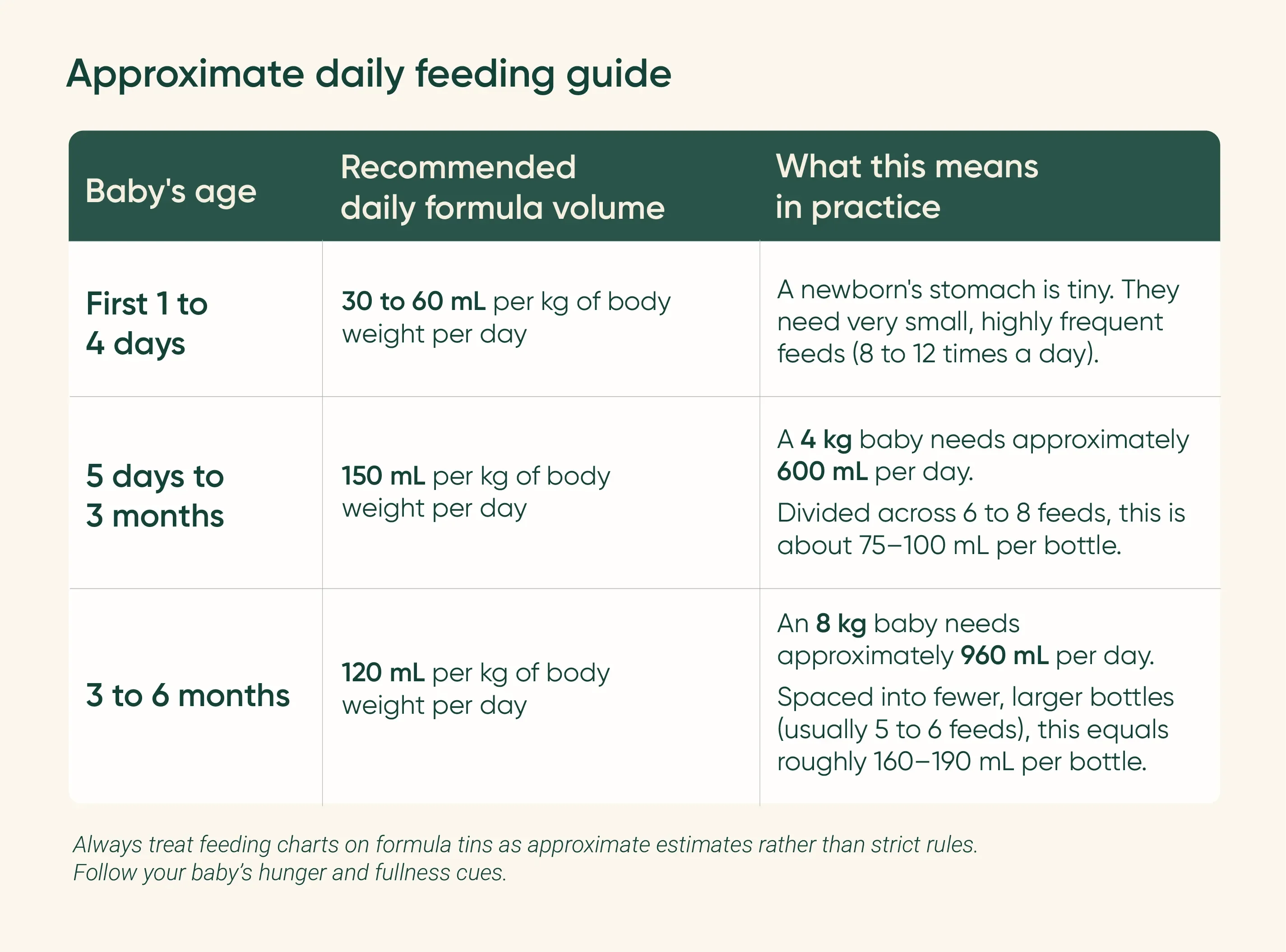
(Always treat feeding charts on formula tins as approximate estimates rather than strict rules. Follow your baby’s hunger and fullness cues).
Responsive feeding: Reading your baby's cues
Rather than forcing a baby to finish every bottle, practice responsive bottle feeding:
- Hunger cues: Rooting (a reflex where a baby turns their head toward anything that touches their cheek or mouth, searching for a nipple to feed), opening and closing their mouth, sucking on fingers or fists or crying.
- Fullness cues: Slowing down sucking, turning their head away, pushing the teat out with their tongue, opening hands, or falling asleep relaxed.
When to speak to a healthcare professional
Normal newborn behaviours, such as occasional spit-ups, passing wind, and mild grunting, are common as the digestive system matures and are rarely signs of formula intolerance.
That said, you should seek guidance from your GP, paediatrician, lactation consultant, or maternal and child health nurse if your baby shows any of the following:
- Persistent, forceful (projectile) vomiting or refusing multiple feeds.
- Blood or visible mucus in their stools.
- Severe, persistent diarrhoea or severe, hard constipation.
- Unexplained eczema, hives, or swelling around the face and lips.
- Poor weight gain or failure to track along their expected growth percentiles.
- Inconsolable crying or extreme distress during or immediately after feeds.
Never switch to a specialised or medical formula without a clinical assessment, as self-diagnosing can mask underlying medical conditions or lead to nutritional imbalances.
The bottom line
Every feeding journey is personal, and choosing the best way to feed your baby is about finding what ensures your infant is well-nourished, healthy, and thriving while supporting the wellbeing of your entire family. If you choose to use infant formula, choose a standard Stage 1 cow’s milk-based formula, prepare it with careful attention to hygiene and dilution, and lean on your healthcare team whenever you need advice or reassurance.
Reviewed by the Healthylife health experts September 2026.
Related reads












This article is for informational purposes only and does not provide medical advice, diagnosis, or treatment. Any information published on this website or by this brand is not intended as a substitute for medical advice. If you have any concerns or questions about your health you should consult with a health professional.
About this article

Megan Barker
A Registered Pharmacist holding a Graduate Certificate in Applied Pharmacy Practice. Megan is a highly experienced professional with over 15 years of comprehensive practice spanning diverse clinical environments, including both metropolitan and rural community and hospital pharmacy settings. She is deeply committed to patient-centered care and enhancing health literacy, empowering individuals to better understand their health and proactively manage their wellness.