


Diphtheria: What it is, symptoms, prevention and treatment

Diphtheria is essentially Greek for ‘leather hide’. It’s named so because of a leather hide-like membrane that is formed in infected areas in our airways.
In the distant past, diphtheria was a major cause of childhood deaths worldwide.. Before the 1930s, thousands of Australians died from diphtheria. Then, vaccination started. After that, we rarely saw the disease. But that picture is quietly shifting. In recent years, we have started to see a resurgence of diphtheria in certain parts of the country.
What is Diphtheria?
Diphtheria is caused by a toxin from the bacteria Corynebacterium diphtheriae or Corynebacterium ulcerans. Unlike viruses, like the cold or the flu that hijack the inside of our body's cells to replicate, bacteria are much larger organisms that cause illness by multiplying on their own inside our body.
The bacteria that causes diphtheria produces a toxin which can cause illness in the nose, throat, and airway, known as respiratory diphtheria; or the skin, called cutaneous diphtheria. The bugs can also be carried in our bodies without symptoms.
How it spreads depends on the strain:
- Person to person: Corynebacterium diphtheriae can spread through droplets, when a person coughs or sneezes; secretions from the nose and throat; or fluid from skin sores. Some people carry the bacteria without any symptoms, spreading the disease without realising it.
- Animal to person: Corynebacterium ulcerans, though rarer, can spread from animals to people by close contact or having raw milk.
The mortality rate, the death of affected people, is estimated to be around 10%, sometimes more.
Common symptoms of Diphtheria
While the two types of diphtheria can make you feel generally unwell, they have different symptoms.
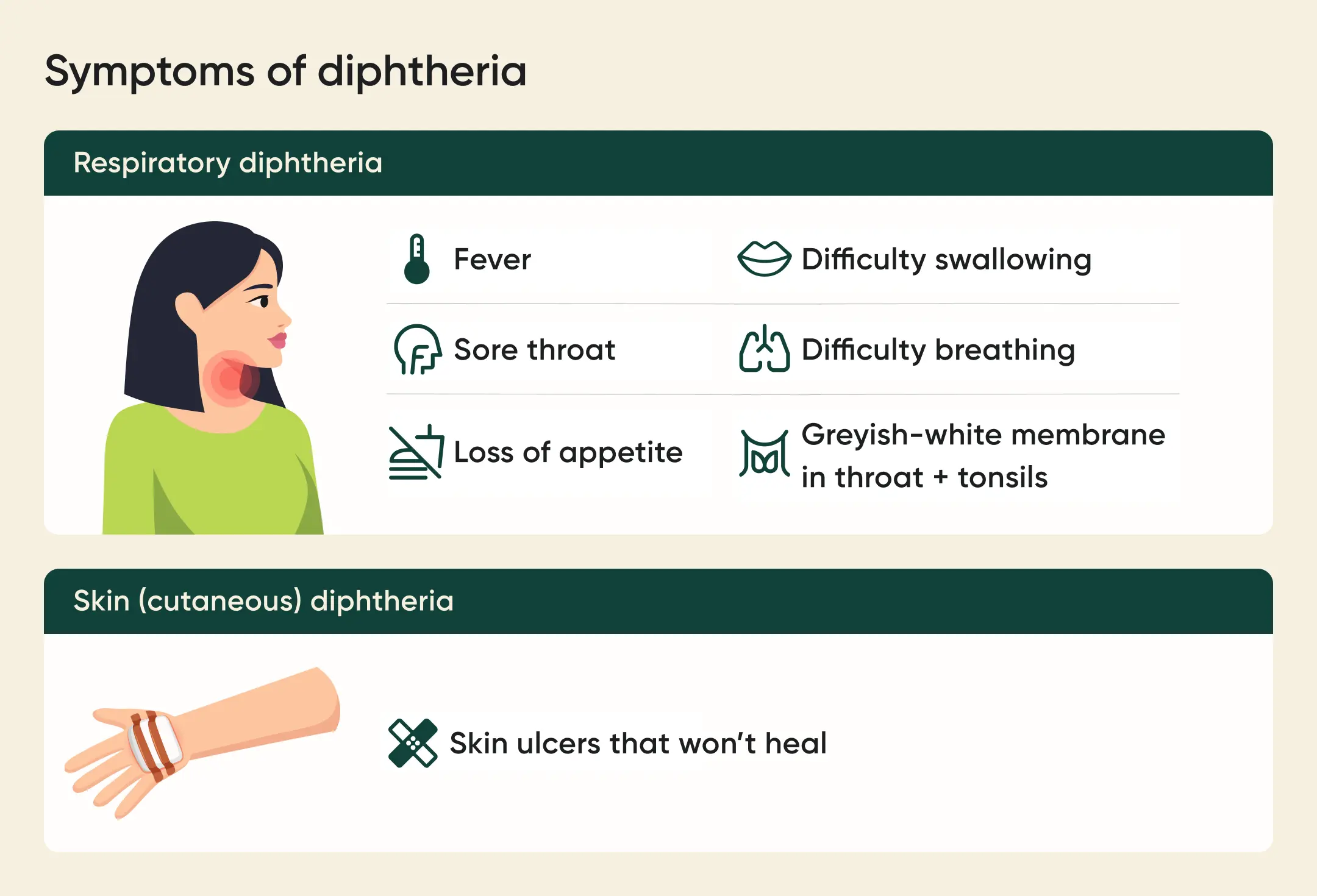
- Respiratory diphtheria: It may give you a fever, sore throat, or loss of appetite. A greyish-white membrane, the so-called “leather hide”, can form on the throat and tonsils. Sometimes, this can make it hard to swallow and breathe. In extremes, the disease can progress to block the airway, causing death. The toxin can cause inflammation of the heart, known as myocarditis, or nerve problems, too.
- Cutaneous diphtheria: It can cause skin ulcers that won’t heal. It’s less serious but, the bacteria from the sores can spread to others, even causing respiratory diphtheria.
Prevention
Diphtheria is a vaccine-preventable disease. The vaccine is combined with tetanus and whooping cough, sometimes known as a DTP vaccine. It’s effective, safe, and well-tolerated by people. When a course is given in infancy, the effect can last through childhood. But, adults may need to get a booster shot as their antibody levels can drop.
If you are not sure about being up-to-date on vaccinations, see your general practitioner, pharmacist, or nurse.
Treatment
The main treatment is antibiotics which can kill the bacteria, as prescribed by your doctor. Serious cases may require hospitalisation.
How to access care
Early treatment is critical. If you are worried that you may have been in touch with someone affected by diphtheria, or are concerned that you are developing symptoms, get in touch with your trusted health professional immediately. This may be your general practice, community health clinic, or Aboriginal medical centre.
If you are unsure, you can try 13 HEALTH (13 43 25 84) in Queensland; HealthDirect nationally on 1800 022 222; or 1300 60 60 24 in Victoria for Nurse-On-Call. If it's a life-threatening emergency, always call 000.
Where to get more information
- The Australian Centre for Disease Control
- National Centre for Immunisation Research and Surveillance (NCIRS)
Reviewed by the Healthylife health team August 2026.
Related reads















This article is for informational purposes only and does not provide medical advice, diagnosis, or treatment. Any information published on this website or by this brand is not intended as a substitute for medical advice. If you have any concerns or questions about your health you should consult with a health professional.
About this article

Dr. Dinesh Palipana
Dinesh is a doctor, lawyer, disability advocate, and researcher in spinal cord injury. He has a spinal cord injury with quadriplegia. Dinesh works in the emergency department of the Gold Coast University Hospital. He is a senior lecturer at Griffith University. He was the first quadriplegic medical graduate in Queensland.