


Testicular Health: How to self-check your balls
When it comes to cancer, early detection can make all the difference—and testicular health is no exception. While testicular cancer isn’t the most common, it’s the second most diagnosed cancer in men aged 20 to 39 according to the Cancer Council of Australia. The good news? Most cases are highly treatable, especially when caught early.
Knowing how to check your own testicles and spot the signs can empower you to take charge of your health. Let’s nut out what you need to know to keep your testicular health in check.
The importance of checking your balls
While there is little evidence at this time that checking your own balls, or testicular self-examination, detects cancer sooner or leads to better outcomes, understanding your own body is always a smart move. As recommended by the Cancer Council, it’s important to be familiar with your balls, to know what’s normal for you, and to keep an eye out for any changes. This way, if there are any new changes, you can act on them.
How often should you check?
Monthly testicular self-exams are widely recommended by health authorities, including Queensland Health, the Victorian Department of Health, and global organisations like the British Association of Urological Surgeons, Cambridge University Hospitals, and the American Cancer Society. So, going nuts on checking your balls monthly is a safe bet.
There are also some high-risk groups who may benefit from more regular self-examinations. Talking about preventative healthcare with your general practitioner is always important, so ask your doctor whether you particularly should be performing examinations more frequently.
How to do a testicular self-check?
The best time for checking your balls is in a hot shower or bath. The warmth relaxes the skin around your testicles, the scrotum. Standing is the most ideal position.
Here’s how to do it:
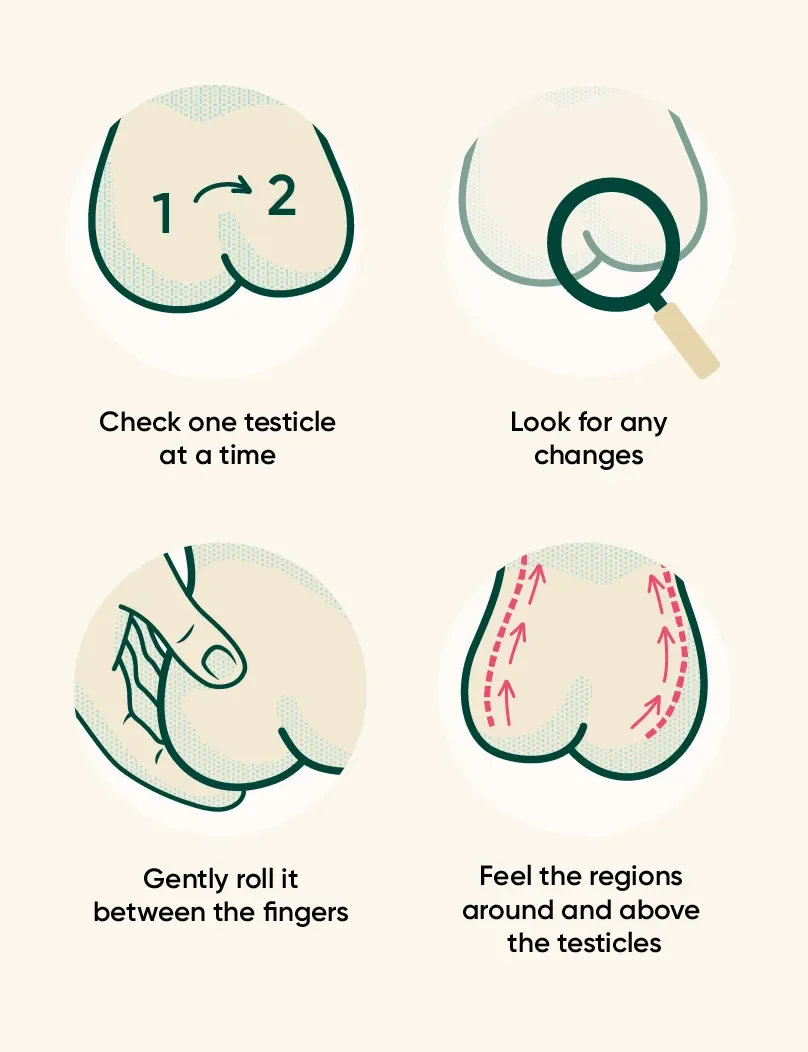
- Start by looking at your balls for any swelling or discolouration
- Feel the tissue around and above your balls that runs to your body, checking for any bumps, any masses or other changes.
- Gently roll one testicle at a time between your thumb and forefingers, feeling for hard bumps, any masses, and other changes.
What are some signs to look out for?
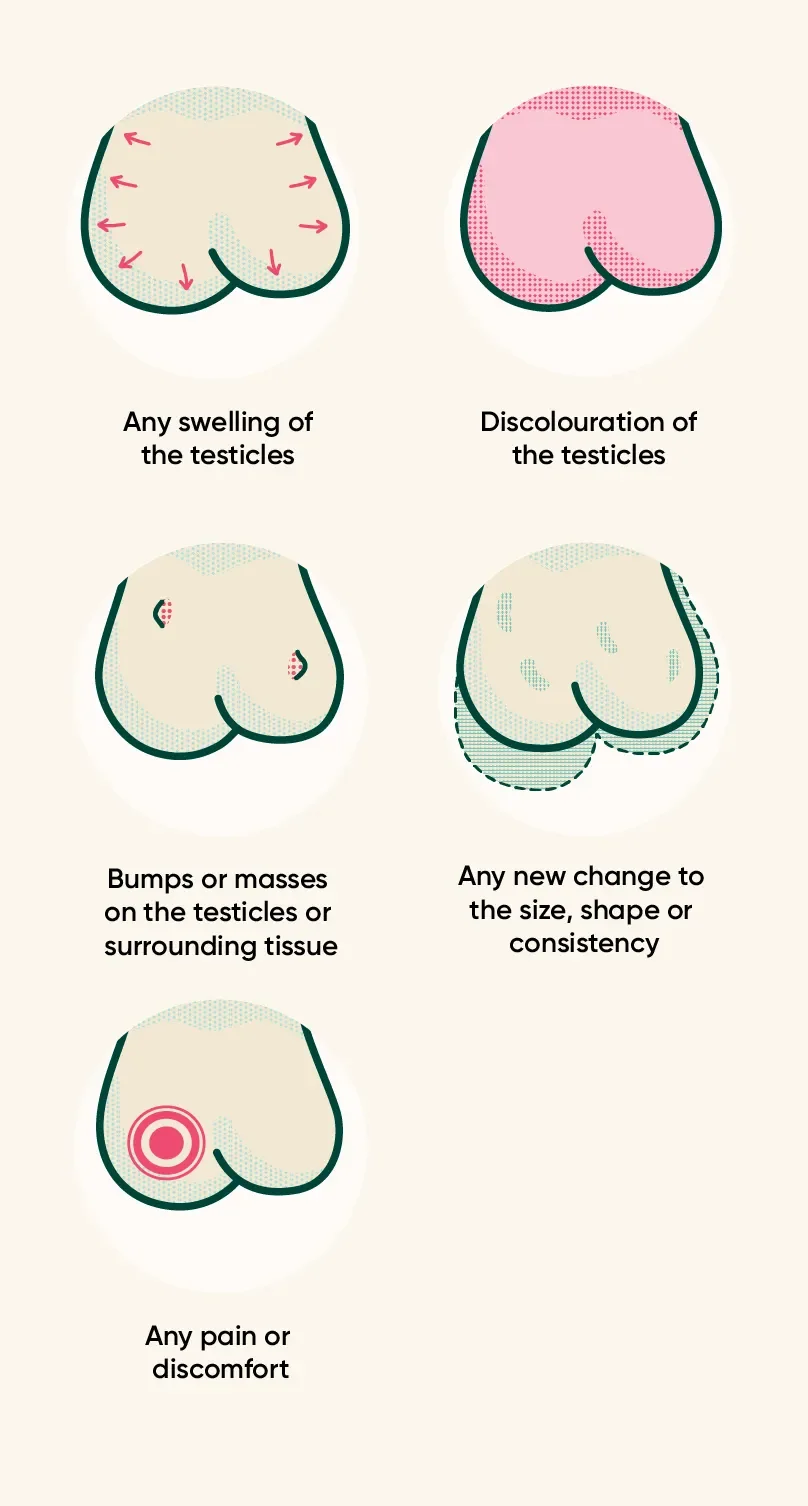
Usually, your testicles may feel smooth and firm. Over time, feel for changes in size, shape, or consistency. Some of the signs to look out for include:
Sign 1: Any swelling of the testicles
Sign 2: Discolouration of the testicles
Sign 3: Bumps or masses on the testicles or surrounding tissue
Sign 4: Any new change to the size, shape or consistency
Sign 5: Any pain or discomfort
What to do if you notice a change
See your doctor promptly if you notice changes. Your doctor may arrange investigations like blood tests and scans, with input from a urologist if and when appropriate. Remember, early diagnosis and treatment can make all the difference.
Could it be something else?
There are many benign (non-cancerous) conditions that affect the balls, so changes aren’t always cause for alarm. For example, there are:
- Hydroceles: where fluid builds up around a testicle
- Varicoceles: affects the veins in the scrotum
- Spermatoceles: happens in the tube carrying sperm from the balls
Plus more. The key? If you notice any changes, don’t wait. Get the ball rolling and see your doctor.
The bottom line
Understanding your balls is important. Over time, keep an eye out for any changes. By seeking help earlier, early diagnosis and treatment can help us stay on top of one of the most treatable cancers.
Related reads












This article is for informational purposes only and does not provide medical advice, diagnosis, or treatment. Any information published on this website or by this brand is not intended as a substitute for medical advice. If you have any concerns or questions about your health you should consult with a health professional.
About this article
Dr. Dinesh Palipana
Dinesh is a doctor, lawyer, disability advocate, and researcher in spinal cord injury. He has a spinal cord injury with quadriplegia. Dinesh works in the emergency department of the Gold Coast University Hospital. He is a senior lecturer at Griffith University. He was the first quadriplegic medical graduate in Queensland.