Is rice good for you?

Nutrition Australia2 March 2022·2 min read
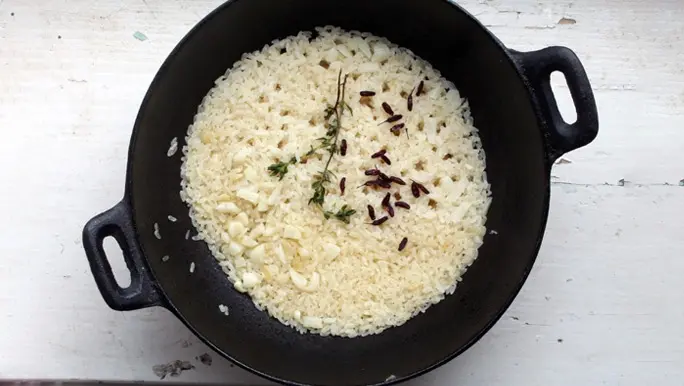
Black cast iron dish with rice, garlic and thyme

Spread the word

Rice is the primary food source for more than half the world’s population and grown in more than 100 countries. 

Affordable and easy to prepare, rice is a major source of carbohydrate, protein and other nutrients for billions of people around the world. 

There are more than 110,000 cultivated varieties of rice, but after processing, rice is generally categorised as either white or brown. Over 90% of the rice produced in Australia is medium or short-grain rice varieties, most of which are exported. 

The more popular varieties consumed in Australia include low GI white rice, basmati, jasmine, arborio, brown and coloured rice varieties such as black, red and wild rice. 

Brown, or wholegrain rice is produced by removing the inedible outer hull, leaving the germ, bran and endosperm intact. Depending on the colour of the outer layer, wholegrain rice can be classified as black, purple or red for example. 

White rice is produced through milling to remove the nutrient rich germ and bran layers to leave a white starch centre, which is then polished. 
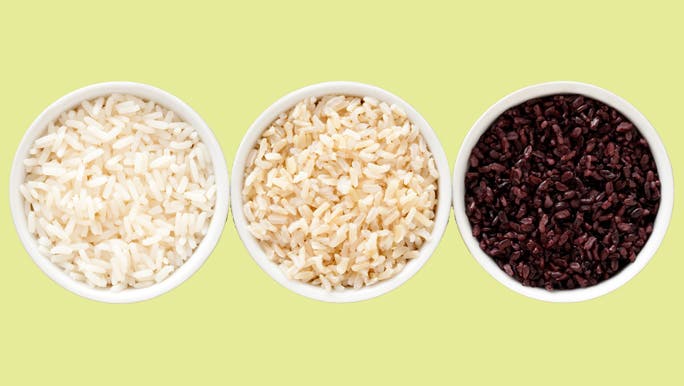
Three bowls of rice - white rice, brown rice and black rice

What’s important to remember is that white, brown, red or wild rice varieties can all be enjoyed as part of a balanced meal and contribute to a healthy diet.

What type of rice is best for me?

Brown or wholegrain rice varieties contain higher levels of protein, fat, dietary fibre, minerals and vitamins than milled white rice. Brown or wholegrain rice also contains greater amounts of phytochemicals, which have antioxidant properties that can reduce inflammation.

Milled short-grain white rice also has a higher glycaemic index (GI), as the carbohydrates in the rice are broken down quickly during digestion. If you are seeking a more sustained energy release, opt for brown or wholegrain rice varieties. 

Enjoy the taste of white rice? Although the processing of white rice results in lower nutrient levels than brown or wholegrain rice varieties, white rice still contains protein, vitamins, minerals and is low in salt. 

There are lower GI alternatives like basmati or Australian bred low GI white rice you can try or cooking and cooling your rice before reheating can increase the resistant starch in rice, which can reduce the glycaemic response too.

What’s important to remember is that white, brown, red or wild rice varieties can all be enjoyed as part of a balanced meal and contribute to a healthy diet.

What does this mean in practice? Add a couple of servings of colourful vegetables and your choice of protein to your favourite rice and enjoy!

related reads

diet
The perks of a well-stocked pantry
Nutrition Australia
Nutrition Australia

The perks of a well-stocked pantry

Do you often find yourself staring vacantly into the pantry and struggling to decide on something to eat? Here are 5 reasons to keep it well-stocked.

read more
diet
What are sometimes foods and drinks?
Sarah Gray
Sarah Gray

What are sometimes foods and drinks?

Sometimes foods typically contain high levels of saturated fats, sugars, salt and/or alcohol. Here's how to cut back and make healthier swaps.

read more

Nutrition Australia is Australia’s leading nutrition non-profit organisation, providing information, education and business-to-business (B2B) consultation and advisory services to help Australians achieve optimal health through good nutrition.

Reviewed by the healthylife Advisory Board March 2022 

Related reads

diet
Wholegrains vs. refined grains: What’s the difference?
Nutrition Australia
Nutrition Australia

Wholegrains vs. refined grains: What’s the difference?

Grain foods are not the enemy, but the types of grain foods we choose to eat are important.

read more
diet
Bread is back on the menu, so let’s make it work for you

Bread is back on the menu, so let’s make it work for you

Missing bread but worried it's bad for you? Here’s how some bread may actually help your health.

read more
diet
What is low GI eating... and how to do it
Lyndi Cohen
Lyndi Cohen

What is low GI eating... and how to do it

Get the low-down on low-GI eating, including why eating a low GI diet is healthier for you and how to do it.

read more
diet
How to build a healthy shopping list

How to build a healthy shopping list

Discover expert tips on how to build a healthy shopping list. From the best supermarket aisles to shop, to wholesome foods to support your wellbeing.

read more
diet
How to spot added sugar

How to spot added sugar

Some foods have naturally occurring sugars and some have added sugars. But are they similar? Let's take a look.

read more
diet
What are the health benefits of legumes?
Simone Austin
Simone Austin

What are the health benefits of legumes?

Ever wondered what legumes are and whether you've eaten them or not? Legumes are a staple in many cuisines and dishes across the world, and come with a number of health benefits.

read more
low FODMAP diet
A guide to a low FODMAP stir-fry

A guide to a low FODMAP stir-fry

Stir-fry is an easy and healthy food option. This step-by-step guide shows how to create low FODMAP stir-fries. Low FODMAP ingredients only. Learn more.

read more
diet
How many servings of grains do you really need?
Simone Austin
Simone Austin

How many servings of grains do you really need?

Discover the power of grains for a balanced diet. Learn about whole grains, serving sizes, and gluten-free options.

read more
diet
Natural Sweeteners vs Artificial Sweeteners

Natural Sweeteners vs Artificial Sweeteners

Some people may opt for sweeteners because they are aiming to reduce their sugar intake. But how can we determine which may be the better option? Or should sweeteners be avoided?

read more
diet
Are you eating enough fibre? Most Aussies aren’t – and it matters
Simone Austin
Simone Austin

Are you eating enough fibre? Most Aussies aren’t – and it matters

Low fibre intake is common in Australia. Discover easy ways to increase fibre in your diet for better gut health and overall wellbeing.

read more

Spread the word

This article is for informational purposes only and does not provide medical advice, diagnosis, or treatment. Any information published on this website or by this brand is not intended as a substitute for medical advice. If you have any concerns or questions about your health you should consult with a health professional.