


Are you eating enough fibre? Most Aussies aren’t – and it matters

Did you know that most Aussies aren't getting enough fibre in their diet? Dietary fibre plays a crucial role in our overall health, so it’s one nutrient you don’t want to skip..
The good news? It could be easier than you think to achieve. Let’s take a look at what fibre is, why it's essential, and how incorporating more into your meals can make a big difference to your wellbeing.
Why fibre matters for your health
Dietary fibre is the part of plant-based foods that our bodies can't digest. Instead, it passes through our digestive system, and along the way provides numerous health benefits:
- Improved digestion: Fibre adds bulk to your stool, helping with regular bowel movements, making it easier to pass and preventing constipation.
- Heart health: Some fibres (e.g. soluble fibre) can help lower cholesterol levels, reducing the risk of heart disease. It binds to cholesterol in the digestive system and helps eliminate it from the body.
- Blood sugar control: Soluble fibre slows down the absorption of sugar into the bloodstream, which helps maintain stable blood sugar levels. This is especially important for people with diabetes or pre-diabetes.
- Weight management: High-fibre foods are generally more filling, which can help keep you full for longer and manage appetite.
- Gut health: Fibre acts as a prebiotic fibre, meaning it feeds the beneficial bacteria in your gut. A healthy gut microbiome is essential for overall health including immune function, hormone regulation and mental wellbeing.
How much fibre do you need?
According to the Australian Dietary Guidelines, adults should aim for around 25-30 grams of fibre per day. However, many Aussies eat significantly less than this amount.
The Living Healthy Report 2025 shows most of us don’t buy enough of any of the food groups that contain high fibre foods, like Vegetables and legumes, Fruit and Grains and cereals. The report even shows we can save money if we did. A healthy shop that hits Australian Dietary Guideline targets compared to the average Aussie food shop for at-home eating can save you 8% or more on your grocery shop. Pile those high fibre foods in your basket and reap the health (and cost!) benefits.
Which food groups are rich in dietary fibre?
Dietary fibre is found in a variety of plant-based foods, and variety is key. The aim is to eat a range of the different types of fibres ( insoluble, soluble, prebiotic) and ensuring some of these are wholegrains from grains and cereals to help reduce our risk of heart disease.
By including different sources each day, you’ll get a mix of the fibre types:
- Fruits: Such as apples, bananas, berries, oranges, and pears are all good sources of fibre. Leave the skin on whenever possible to maximize the fibre intake.
- Vegetables: All veggies such as broccoli, carrots, Brussels sprouts, sweet potatoes, and leafy greens are packed with fibre.
- Legumes: Beans (kidney, black, pinto), lentils, and chickpeas are excellent sources of both fibre and protein.
- Nuts and Seeds: Almonds, chia seeds, flaxseeds, and sunflower seeds are high in fibre and healthy fats and add fabulous crunch and texture to meals and snacks.
- Wholegrains: Wholemeal bread, brown rice, oats, quinoa, and whole-wheat pasta are much higher in fibre than their refined white counterparts.
How to increase your intake
Making small, gradual changes to your diet can help increase your fibre intake without causing digestive discomfort.
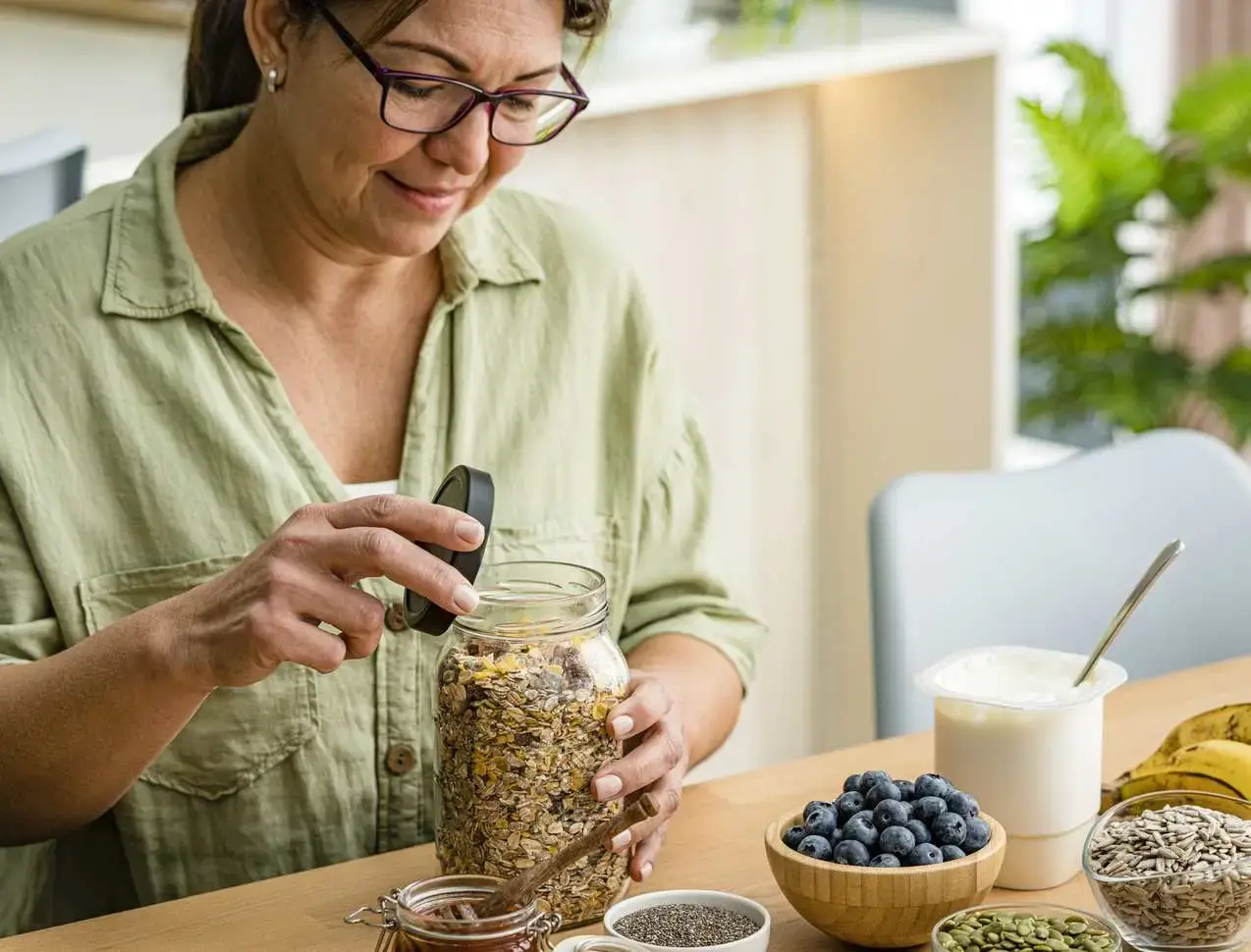
- Start your day right: Choose a high-fibre breakfast such as porridge with fruit and nuts, or wholemeal toast with avocado and tomato.
- Add more vegetables: Make them the hero of every meal. Add them to soups, stews, salads, and stir-fries. Roast trays of them to use with any meal.
- Choose wholegrains: Swap white bread, rice, and pasta for wholegrain versions. If you aren’t used to brown rice, go half and half with white. With a sandwich, have one slice white and the other brown and build your way up!
- Snack smart: Keep a supply of fruits, vegetables, nuts, and seeds on hand for snacks.
- Include legumes: Add beans or lentils to your meals. They’re a great way to boost fibre and protein. They are also a great way to keep the protein part of your meal’s budget in check at only around 0.50c a serve according to the Living Healthy Report.
- Read food labels: Check the nutrition information panel on packaged foods and choose those with higher fibre content.
- Don’t forget to drink plenty of water: Some fibres absorb water, so it's important to stay hydrated to prevent constipation and other digestive issues. If you don’t drink enough water with your fibre, you could be making rock hard cement!
- Meal Planning: Plan your meals for the week ahead, focusing on including high-fibre ingredients.
Here’s a sample meal plan for 30g+ fibre
Breakfast (approx. 6g fibre):
- 1 cup cooked rolled oats (4g fibre)
- 1/2 cup mixed berries (2g fibre)
Lunch (approx.10g fibre):
- Salad with mixed greens (2g fibre), chickpeas (4.5g per 1/2 cup), and a small apple (4.4g fibre)
- Add a sprinkle of seeds for an extra fibre boost.
Snack (approx. 6.6g fibre):
- A handful (30g) of almonds (3.3g fibre)
- A medium banana (3g fibre)
Dinner (approx. 12g fibre):
- Lentil soup (7g fibre)
- Wholegrain bread, two slices (5g fibre)
Can you eat too much fibre?
It’s best to gradually increase your fibre intake over time. This allows your body to adjust and minimises the risk of gas or bloating. As some fibres are fermented by bacteria in your gut, it can produce the gases good for your health and can cause bloating. You may need to cut back and gradually build up if that is the case.
The bottom line
With some tweaks to your shopping, cooking and adding more high-fibre foods to your diet, you can significantly improve your chances of good health and wellbeing. Most Aussies aren't getting enough fibre, but with a little awareness and effort, you can ensure you meet your daily requirements and reap the numerous benefits that fibre has to offer.
Related articles:
Reviewed by the Healthylife Advisory Board June 2025
Related reads













This article is for informational purposes only and does not provide medical advice, diagnosis, or treatment. Any information published on this website or by this brand is not intended as a substitute for medical advice. If you have any concerns or questions about your health you should consult with a health professional.
About this article

Simone Austin
Simone Austin is an Advanced Sports Dietitian, author of Eat Like An Athlete and past President of Sports Dietitians Australia. She has worked with some of Australia’s top sports teams over her 25+ year career.