


Ovulation tracking: Get cycle savvy and enhance fertility

Did you know that women only have around six days each month when they can fall pregnant? This is known as the “fertile window”—the days leading up to, during, and just after ovulation.
Ovulation is when a mature egg is released, ready for fertilisation. If you’re trying to conceive, tracking your ovulation can be a game-changer. But even if you’re not, all women could benefit from learning more about their menstrual cycle, when ovulation occurs and when a bleed is coming. Here’s how to get cycle savvy.
Before we get into it, a quick rundown of a woman’s cycle
From puberty to menopause, most healthy women will ovulate once a month. This is part of a healthy menstrual cycle that, on average, lasts 28 days (but can range anywhere between 21-35 days). The cycle is made up of four stages; menses (the period), follicular, ovulatory (ovulation) and luteal, then back to menses. During this time hormones will increase and decrease naturally.
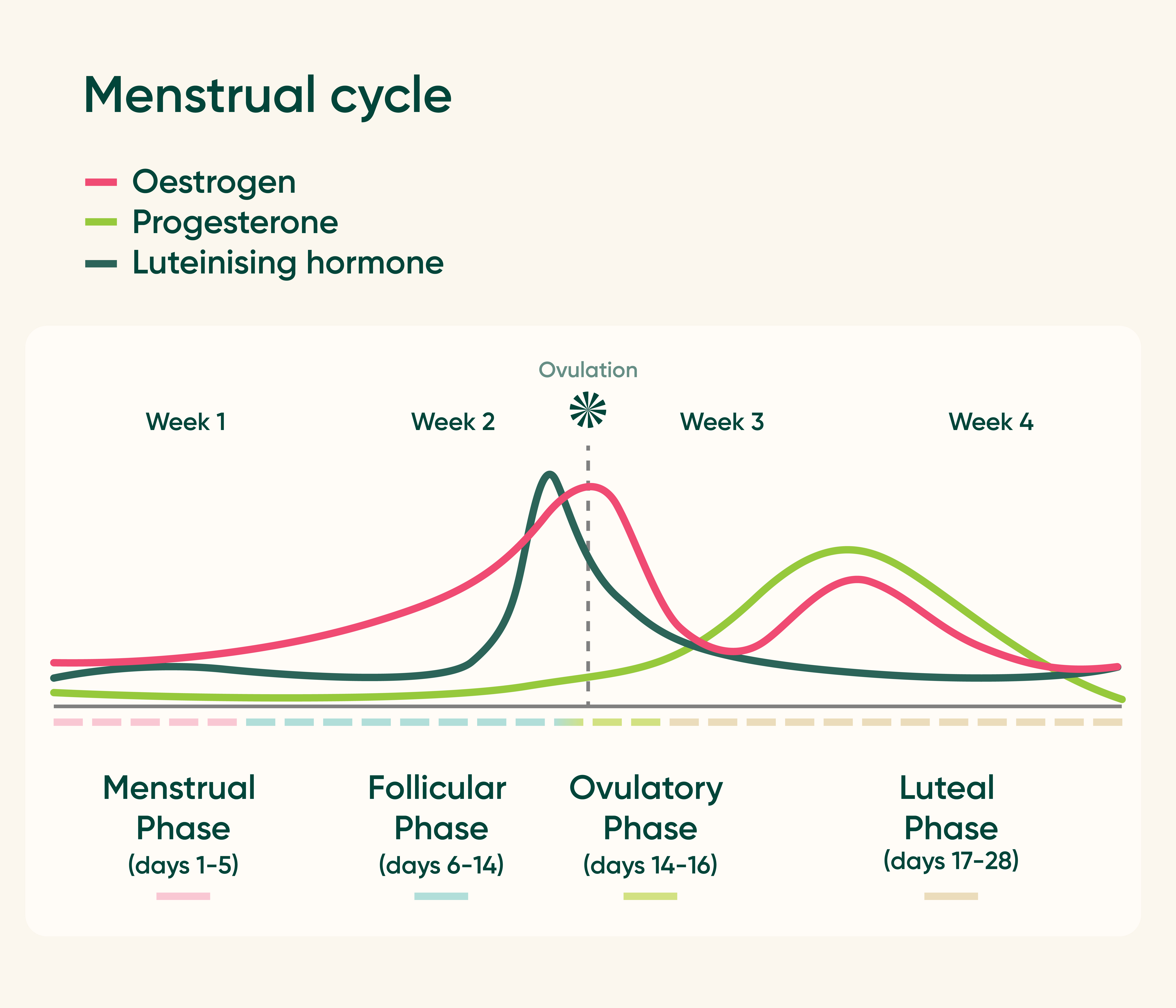
What is ovulation tracking?
Ovulation tracking helps you predict when your body releases a mature egg. Typically, ovulation happens around the middle of your cycle, around day 14 for a 28-day cycle, or a little later if the cycle is longer. But because cycles can vary from month to month, it can be tricky to know the exact timing. That’s where ovulation tracking comes in handy, especially for couples wanting to time things just right to boost the chances of natural conception.
Who should track their ovulation?
Ovulation tracking is a great tool to support the chances of natural conception by helping you time intercourse so that the egg is fertilised. It’s especially helpful for:
- Women with irregular cycles
- Women who have regular cycles who still aren’t sure what ovulation signs to look forCouples facing challenges with conceiving
But it’s not just about fertility. Understanding your cycle—when ovulation happens, when to expect your period—can be a game-changer for your overall health. Your menstrual cycle is a powerful health indicator, giving insight into what’s happening inside your body.
How do you track ovulation?
There are a number of ways you can track ovulation and it doesn’t have to include a fancy device (but it can!)
Basal body temperature
Throughout a cycle, body temperature naturally fluctuates, spiking and dropping at different stages. Nearing ovulation, basal body temperature will subtly rise. To track this indicator of ovulation, temperature should be taken at the same time each morning before getting out of bed. You can use mobile phone apps to track the temperature changes or manually graph them to see the changes throughout the month.
Mucus changes
Your hormones are always working behind the scenes, causing cervical mucus to shift in texture, volume, and colour throughout your cycle Just before ovulation, the cervical mucus will turn clear, wet and slippery making it easier for the sperm to swim up to meet an egg at ovulation. Tracking these changes is a natural way to pinpoint your fertile window and time intercourse like a pro.
Progesterone check
Want to confirm that ovulation has occurred? An ovulation confirmation check can be done by measuring blood progesterone levels days after ovulation. High progesterone levels indicate that ovulation has occurred and that your body is doing its thing. Your healthcare professional can provide a blood test referral to get this checked.
Ovulation test kits
For a quick and easy way to predict ovulation, grab an over-the-counter ovulation test kit. It detects a rise in luteinizing hormone (LH) in the urine, which signals that the egg is about to be released. Women can start testing their urinary LH mid cycle once or twice daily. Once the LH surge shows up, you’ll know ovulation is coming within 48 hours!
What if ovulation tracking doesn’t work?
There are plenty of factors that play a role in fertility, and timing conception through ovulation tracking is just one piece of the puzzle. If you have been consistently tracking ovulation and still not conceiving, it is best to reach out to your healthcare professional. They can provide further advice and guide you on the next steps to help support successful conception.
Related articles:
- Foods for fertility: How your diet can support ovulation
- How to talk to your doctor about fertility: A guide to confident conversations
Reviewed by Healthylife health experts December 2024.
Related reads













This article is for informational purposes only and does not provide medical advice, diagnosis, or treatment. Any information published on this website or by this brand is not intended as a substitute for medical advice. If you have any concerns or questions about your health you should consult with a health professional.
About this article

Lucy Burgess
A bachelor degree qualified naturopath, Lucy is passionate about a holistic approach to health capturing traditional medicine and evidence led. She believes education is key when is comes to healthy choices and optimal nutrition.