


Should kids take melatonin?

It’s a common question for many parents, but the answer isn’t a simple yes or no. For most kids with sleep problems, there’s usually a specific cause which should be identified and treated with behavioural strategies before melatonin is considered as an option.
Getting kids to sleep isn’t always easy, but it usually isn’t related to their melatonin levels.
That said, there’s an increasing use of taking melatonin in a tablet, liquid or gummy form among kids, teens and adults often without medical supervision. The concern isn’t melatonin’s safety, but the inconsistent dosing, poor labelling, and lack of regulation in supplements worldwide. To date there’s little research on the long-term effects of melatonin use in kids. Let’s take a closer look.
What is melatonin?
Melatonin is a hormone that is naturally produced in the body. It helps us get to sleep and stay asleep. It’s made when the eyes are exposed to dark conditions, which is why it’s not usually produced during the day and is known as ‘the hormone of darkness’.
Should kids take melatonin?
Most kids don’t need to take artificial forms of melatonin as they have their own internal melatonin that’s produced in their brains.
While melatonin can be purchased online in various forms, it’s strongly recommended that kids use prescription-only preparations after consulting with a healthcare professional. Typically, in developing kids, the goal should be to use melatonin short-term only.
The majority of online melatonin products are not tightly regulated and have been shown to contain varying amounts of active melatonin as well as other contaminants. Concerns about the purity of online melatonin have been raised and several studies have confirmed a wide variation in the actual amount of melatonin and other compounds being present. Typically, melatonin gummies have the most variability in the amount of melatonin.
Melatonin from a pharmacy that is either compounded or prescription-regulated is the safest and is regulated by the government here in Australia.
Is melatonin safe for kids?
Short term use is effective and safe, and side effects are rare. Long-term side effects are not known.
Long-term use is only appropriate if it’s because of a specific sleep issue, such as those that may be seen in kids with developmental problems or visual impairment.
Melatonin should only be used under the supervision of a medical doctor. Further research must be conducted to clearly understand the long-term side effects of melatonin on kids.
In kids, melatonin is used to treat difficulties with going to sleep or staying asleep. It may benefit children with Attention Deficit Hyperactivity Disorder (ADHD), autism, other developmental disabilities or visual impairment.
There’s some evidence that it’s beneficial in helping some typically developing kids and teens with chronic insomnia to sleep faster, but should be used only after or in conjunction with behavioural strategies and in special cases under the supervision of a healthcare professional.
There are clear guidelines internationally and from the Sleep Health Foundation of when not to use melatonin:
- Melatonin shouldn’t be given to children under 2 years old.
- If melatonin is required, it’s recommended to use a prescription formulation, as this is the safest approach compared to online sourcing.
- Melatonin shouldn’t be used to treat other sleep problems in children such as sleepwalking, nightmares, and restless sleep.
- Melatonin shouldn’t be used to 'make sleep better' in children with symptoms of a sleep disorder, these children need to be seen by a sleep doctor via a referral from your GP.
How can you help improve kids' sleep?
There are many other ways to improve sleep in kids apart from giving medications. Parents and caregivers should consult healthcare professionals before starting melatonin, and focus on behavioural sleep hygiene as the foundation.
For example, a child might not be able to get to sleep due to their anxiety. If the child is anxious, there are things to try first such as relaxation techniques and using tools such as visual imagery.
In children 5 years and younger, sleep duration and quality can be affected by external factors such as teething, separation anxiety, or changes in routine.
The following are behavioural strategies that are proven via good quality research to be effective and safe:
- Keep kids or teens on a regular sleep schedule: For teens, that sleep schedule should preferably include sleep at night, not during the day. It's okay if your teen stays up a little later on a weekend or during school holidays, but try not to vary too much beyond a couple of hours. Our bodies are more likely to drift off to sleep when we're used to falling asleep at a particular time.
- Make sure your child gets exercise during the day: It helps with increasing tiredness at bedtime.
- Once your child has given up naps, don't do naps: If they come home from school exhausted because they stayed up too late, don't let them nap as it could make it harder to go to sleep that night.
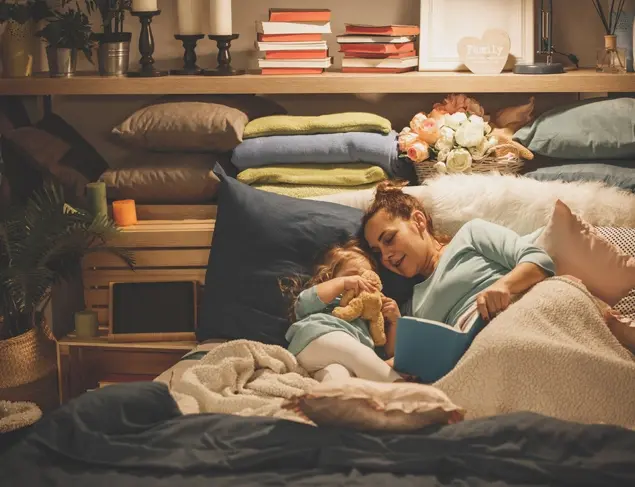
- Have a calming bedtime routine: This can be hard for high school students who have sports practices and homework but try to keep those calming routines from childhood such as bath/shower, reading, and generally being quieter as bedtime approaches.
- Be aware of the stimulation and bright light emitted by screens: As these can wake up the brain, and it's easy to get hooked into whatever you are doing on that screen. Ideally, screens should have limits placed on them in the lead up to bed and it's best to charge phones somewhere else besides the bedroom. If teens say they need the phone as their morning alarm, buy them an old-fashioned alarm clock.
- Create a sleep environment conducive to sleep: Not having a TV or other devices helps. For some kids, room-darkening curtains are great; for others, a night light is important. A white noise machine can help if there is ambient noise. Make the space inviting and comfortable for sleep. If you have tried all this and your child is still having trouble falling asleep, talk to your healthcare professional.
Where can I find out more?
Make sure to check out trusted information sources like the Sleep Health Foundation's, Raising Children’s Network and Sleep With Kip. If your child’s paediatrician, GP or sleep specialist has recommended melatonin, the dose will depend on your child’s age.
All forms of melatonin administered to children need a doctor’s prescription in Australia. All forms of melatonin should not be used without medical supervision.
While melatonin can be purchased online in various forms, it’s strongly recommended that prescription-only preparations are used in kids. This is because the majority of online melatonin products are not tightly regulated and have been shown to contain varying amounts of active melatonin as well as other ingredients.
When to speak to a doctor
Your local maternal and child health nurse, as well as your local doctor can be a good support if you’re struggling with your kid's sleep patterns. There are specific sleep schools and centres for babies and parents, ask your GP if there is one near you.
There are many days and nights where parents and kids struggle with sleep and it’s part of the typical territory of family life. However, if this lack of sleep is making you feel as though you or your kid are not coping well with work, school or relationships and it’s been many months then it’s time to seek professional help with sleep.
The bottom line
Melatonin can be effective for short-term sleep issues in children, especially those with neurodevelopmental disorders (such as ADHD and autism), as well as visual impairment, but long-term safety remains uncertain and should be approached with caution.
Even if children are prescribed melatonin, behavioural strategies, such as having a consistent bed routine and a wind down period, need to still be used. It’s not a cure-all and should be part of a broader sleep management plan.
Reviewed by Healthylife health experts November 2025
Related reads




This article is for informational purposes only and does not provide medical advice, diagnosis, or treatment. Any information published on this website or by this brand is not intended as a substitute for medical advice. If you have any concerns or questions about your health you should consult with a health professional.
About this article
Dr Moira Junge
Dr Moira Junge is a registered, practising Health Psychologist, with the added specialty of sleep expertise. She is the current CEO of the Sleep Health Foundation and was a founding member of the Behavioural Management of Sleep Disorders Committee within the Australasian Sleep Association (ASA) and was the Chair of the ASA Insomnia and Sleep Health Council (2008-2015).