


A doctor on your wrist? Checking your health with your watch

Remember the days when your watch just used to tell the time? Now, smartwatches are becoming more common and tell you all kinds of information like when your next meeting is, what the weather is like as well as making calls and playing music. Things have come a long way from the days of the big hand and little hand.
For me though, as a doctor, I am very excited by the future of health features that are now becoming standard in smartwatches and other fitness trackers. There are now smartwatches and activity trackers that are equipped with ways of measuring how healthy you are, even picking up medical conditions early.
So what can your device tell you and how should you use this data? And of course, how accurate are its readings? Let's take a look.
Heart rate monitoring
A very common feature of many watches and fitness trackers is heart rate measurement. These watches will all give you a measurement of your heart rate, which is how many times a minute your heart, beats. A normal heart rate at rest is around 60-70 bpm (beats per minute), although, in very fit people, this can be lower.

Monitoring your heart rate data can tell you how hard your heart is working during a workout. However, it might not always be spot on. During exercise, when you’re moving a lot, the device can have trouble picking up accurate readings. However, the margin or error is probably small and it can give you a good idea of where you’re at.
Heart rate variability
Your heart doesn’t beat at a perfectly rhythmic pace. In fact, there is a tiny bit of variability of the time between each heartbeat, a phenomenon called heart rate variability.
Heart rate variability has been associated with long term heart health - the higher it is, the lower your risk of heart issues, meaning that it reflects how healthy your heart is and how it interacts with your nervous system. Things like low fitness, alcohol, stress and lack of sleep can decrease your heart rate variability.
HRV is gaining popularity for people to measure as a way of seeing how recovered their body is and therefore if it’s ready for more training. It’s very popular with elite level athletes and has now made its way to gadgets for us mere mortals. While it’s nice to have, you don’t have to know your HRV to understand if you need a rest.
Calorie counting


If you wear any kind of fitness tracker, you might be familiar with it telling you how many calories or kilojoules you burned during a workout. This number is calculated by the device knowing things such as your age, height and weight and then combining that with other things it measures. This can include your heart rate and how long you worked out.
The number of calories burned during an exercise is probably the one area where smart technology is the most inaccurate. Studies have shown that the calorie-counting during a workout can be way off.
A better way of measuring your workout, if you want to, is to simply look at how long you were active. After all, we are aiming for 150 minutes of moderate-intensity activity per week, not calories burned.
Oxygen levels
A relatively new feature has been the ability of smart devices to measure the oxygen levels in your blood, called oxygen saturation. What that means is measuring how much of your body’s oxygen-carrying molecule, called haemoglobin, is carrying.
The measurement of oxygen saturation from these devices may not be as accurate as the devices we use in hospitals. However, it’s early days with these devices so watch this space.
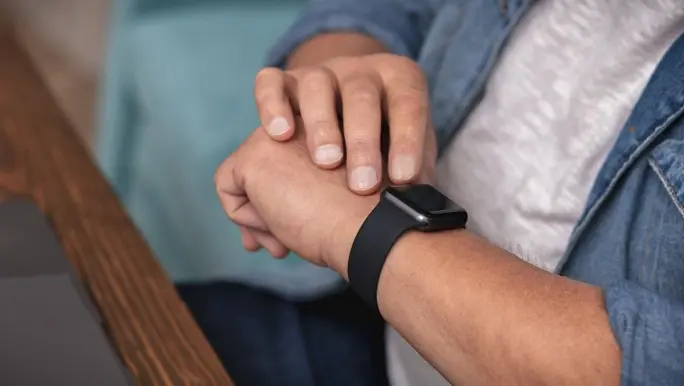
No matter what your watch says if you’re not well, get checked out by a health professional.
Early warning: making a diagnosis from your wrist
A really cool feature available in some devices is the ability to detect a common heart rhythm called atrial fibrillation. Atrial fibrillation (AF) is the most common heart rhythm abnormality and untreated, it can lead to complications like stroke.
They have the ability to perform a simple reading of the heart called an ECG by holding on to the watch if you feel like you have palpitations or are otherwise unwell. The watch then tells you if you have AF or if your heart rhythm is normal.
Studies have shown that if your watch tells you that you have AF, that’s pretty accurate. However, it can say things are fine when they’re not. This is why no matter what your watch says if you’re not well, get checked out by a health professional.
Better than a doctor? The bottom line
At the moment, while a lot of this new health technology is fantastic, some of it is in its infancy and isn’t anywhere near as accurate as some of the machines your doctor would use to check your health. However, things will only get better with time, allowing us to have much more autonomy over our health.
The take-home message is that if you’re unwell, be sure to get to your doctor for medical advice, no matter what your watch says. Otherwise, enjoy the insights into your body!
Dr Nikki Stamp is an Australian trained cardiothoracic surgeon and PhD candidate. She has a strong desire to change the way we think about health and is a passionate supporter of the Heart Foundation and women's heart disease advocacy. Nikki is a previous member of the healthylife Advisory Board.
read more from Dr Nikki Stamp


Reviewed by the healthylife Advisory Board January 2022
Related reads









This article is for informational purposes only and does not provide medical advice, diagnosis, or treatment. Any information published on this website or by this brand is not intended as a substitute for medical advice. If you have any concerns or questions about your health you should consult with a health professional.