


Hydroxyapatite: What is it and are there benefits?

If you’ve been browsing the toothpaste aisle at the chemist or scrolling through health blogs, you’ve probably come across hydroxyapatite. It’s the latest trend in dental care, branded as a “natural” alternative to fluoride, but what is it really, and does it live up to the hype?
Traditionally, we’ve relied on fluoride to do the heavy lifting, but hydroxyapatite (HAp) is gaining traction as a powerhouse ingredient that doesn’t just protect your teeth, it’s actually what your teeth are made of.
What is hydroxyapatite?
Simply put, hydroxyapatite is a naturally occurring mineral form of calcium apatite. It is the primary building block of your body’s hard tissues.
- Enamel: About 97% of your tooth enamel is made of hydroxyapatite.
- Dentin: About 70% of the layer beneath your enamel (dentin) is made of it.
- Bones: Roughly 60% of your bones consist of this mineral.
In dental products, you’ll often see nano-hydroxyapatite (nHAp). These are tiny particles designed to mimic the size of the crystals in your natural enamel, allowing them to bond more effectively to your teeth.
How does hydroxyapatite work?
Think of your enamel as a wall made of tiny bricks. Over time, acids from food and bacteria act like "acid rain," dissolving those bricks (this is called demineralisation).
When you use toothpaste containing hydroxyapatite, those tiny mineral particles act like "liquid enamel." They fill in the microscopic pits and fissures on the surface of your teeth. This process, known as remineralisation, effectively "plugs" the holes, making the surface smoother and harder once again.
Hydroxyapatite vs fluoride
Should you brush with hydroxyapatite or fluoride? This is the big debate! While they both aim to prevent cavities, they work in slightly different ways:
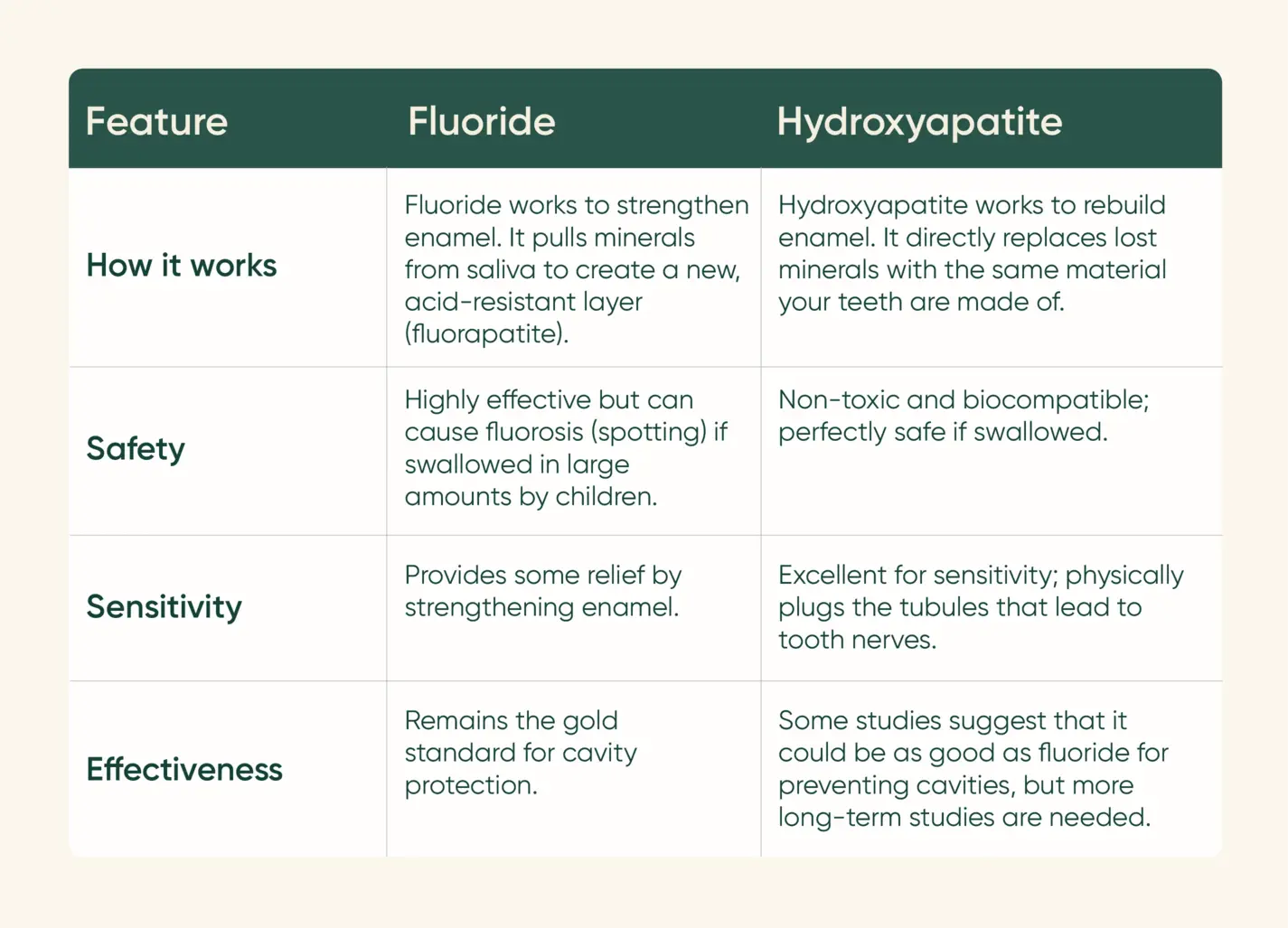
Hydroxyapatite is a great natural ingredient for those with sensitive teeth, thinning enamel, or for young children who haven’t mastered spitting out toothpaste yet. However, it isn’t a perfect swap for fluoride in every case.. There are specific "high-risk" situations where it would be more suitable to use a traditional or high-strength fluoride toothpaste over a fluoride-free HAp version:
- Active decay & multiple cavities: If you currently have multiple active cavities or a history of frequent tooth decay, fluoride’s "antibacterial" properties give it an edge. It specifically inhibits the enzymes bacteria use to create acid, slowing down the decay process in a way HAp doesn't.
- Dry mouth (Xerostomia): Saliva is necessary for hydroxyapatite to bond effectively to your teeth. If you suffer from severe dry mouth (often a side effect of certain blood pressure or antidepressant medications), your teeth lack their natural defense. In these cases, the chemical "hardening" effect of fluoride is often more reliable.
- High-sugar diets: If you struggle to limit sugary snacks or acidic drinks, fluoride creates a surface layer called fluorapatite, which is significantly more resistant to acid than natural enamel.
- Cost and accessibility: In Australia, high-quality nano-hydroxyapatite toothpastes are often found at online stores, whereas fluoride toothpaste is commonly found at local supermarkets often at a cheap price,
Tip: You don't actually have to choose. Many modern "hybrid" toothpastes now contain both ingredients. This gives you the structural repair of hydroxyapatite plus the acid-shielding power of fluoride.
Benefits of hydroxyapatite
- Enamel repair: It actively repairs the enamel surface rather than just "coating" it.
- Reduced sensitivity: By sealing the microscopic channels (tubules) in your teeth, it blocks the path that cold or hot triggers take to your nerves.
- Whitening effect: It doesn’t use bleach. Instead, by smoothing the enamel surface and filling in scratches, it reflects light better, making teeth look naturally brighter and glossier.
- Antibacterial properties: It can help prevent bacteria from sticking to the tooth surface, reducing plaque buildup.
Common uses of hydroxyapatite
While we’ve focused on dental care, this mineral is a bit of a "multitasker" in the medical world:
- Toothpaste and mouthwash: The most common consumer use for remineralisation.
- Bone grafts: Used in surgery to help repair bone or coat dental implants to help them fuse with the jaw.
- Skincare: Occasionally used in formulations for its mineral content.
What to watch for
Side effects:
Because hydroxyapatite is "biocompatible" (meaning your body recognises it as its own), side effects are extremely rare. It is generally considered very safe for children and pregnant women.
Misconceptions:
- "It replaces the dentist": No toothpaste replaces regular check-ups. While HAp can repair early "white spots," it cannot "fix" a cavity that has already formed a hole.
- "Nano-particles are dangerous": There is a common fear about "nano" ingredients. However, research suggests that nano-hydroxyapatite is safe in toothpaste because it doesn’t penetrate the skin or gums; it simply binds to the tooth surface.
The bottom line
Hydroxyapatite is a fantastic, science-backed ingredient that can be helpful for those with sensitive teeth, thinning enamel, or for young children who haven’t mastered spitting out toothpaste yet. Always look for a "nano-hydroxyapatite" concentration of around 10% for the best results. While fluoride remains the gold standard for cavity prevention, hydroxyapatite is a safe, effective addition to help protect teeth
Reviewed by the Healthylife health experts April 2026.
Related reads








This article is for informational purposes only and does not provide medical advice, diagnosis, or treatment. Any information published on this website or by this brand is not intended as a substitute for medical advice. If you have any concerns or questions about your health you should consult with a health professional.
About this article

Soumya Pandya
Soumya Pandya is a Registered Pharmacist who is passionate about finding innovative ways to allow easy and safe access to healthcare for all Australians. Soumya’s goal is to help people better their health journey through education and tools that allow the individual to take a holistic approach to their health.