


Fibre foods and your gut
all about fibre
Fibre is an important element of gut health - but it can sometimes be a confusing topic. Let’s share all our knowledge and help you work out your daily fibre intake - could you use some more?



Why focus on fibre?
Fibre is essential for healthy bowel motions by increasing transit time, softening the stool, and creating a more formed stool, whilst also feeding your healthy gut bacteria. It also helps an important nutrient in maintaining healthy cholesterol levels, keeps you satisfied for longer and even helps to manage energy levels through stabilizing blood sugar levels. We should be aiming for around 30g of fibre per day.
Fibre is the indigestible part of plant foods. Some good sources include grains, fruit, vegetables, legumes, nuts and seeds. It is important to note that there are three main types of fibre that each play different roles.
Types of fibre
- Soluble fibre: helps us feel fuller for longer by slowing down the emptying/digestion process in our stomachs. Soluble fibre is found in the flesh of fruits and vegetables, rolled oats, barley and legumes such as lentils.
- Insoluble fibre: absorbs water to help to support regular bowel motions by softening the stool. Insoluble fibre also assists in helping us feel fuller for longer. Good sources of insoluble fibre include wholegrains, the skin of fruit and vegetables, seeds, nuts, and wheat bran.
- Resistant Starch: a type of fibre that is not digested in the small intestine (i.e. resists digestion) and proceeds to the large intestine where it helps to feed healthy gut bacteria. Resistant starch also assists in feeling fuller for longer. Sources of resistant starch include unripe (green) banana and cooked then cooled rice/potato/pasta (such as in pasta/potato salad).



How much fibre?
Ideally most adults should be aiming for around 30g of fibre per day. This should include a combination of soluble fibre, insoluble fibre and resistant starch. In the short-term not getting enough dietary fibre can result in constipation and other gut symptoms such as diarrhoea/pain/bloating.
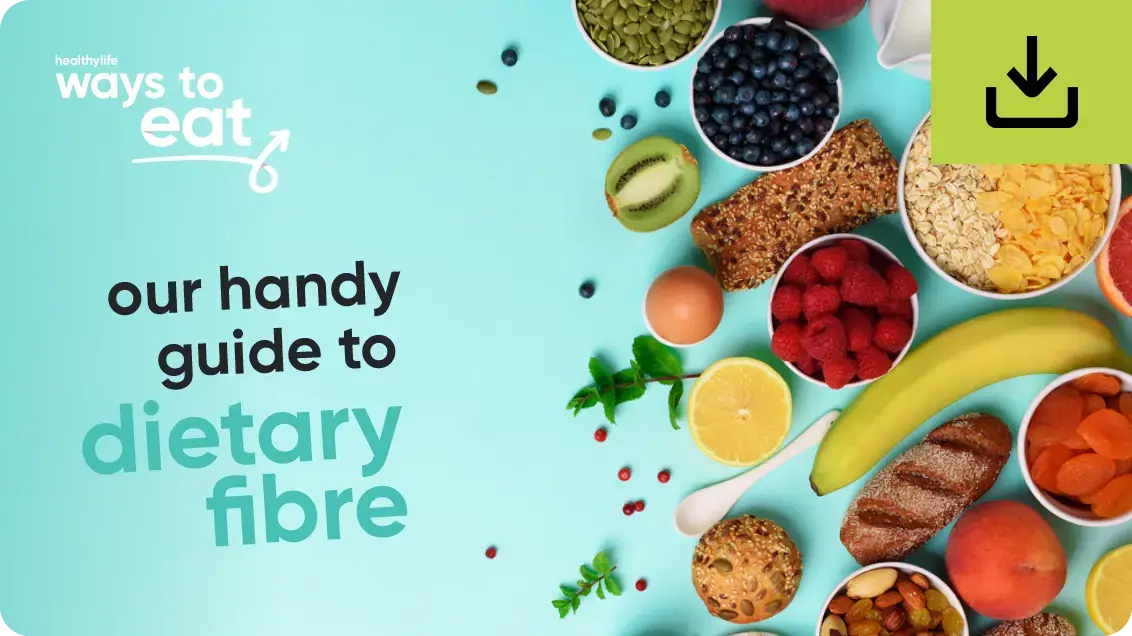
Long-term inadequate fibre intake can have negative impacts on the gut bacteria and increase risk of certain conditions such as diverticulitis, heart disease and certain cancers such as bowel cancer. To get an idea of the fibre content of certain foods, download this handy guide.

What about water?
Most of us know that drinking water is important to keep us hydrated and help our bodies function well. What many may not know is the importance of water for a healthy gut. Drinking enough fluids can help move food and waste through your digestive system and softens your stool.
Inadequate water intake slows down digestion, which can result in waste build-up. If you aren't drinking enough water, you may find your bowel motions are harder and less regular. Fluid requirements vary between individuals. As a general rule of thumb, men need around 10 cups of fluids every day and women need around 8 cups.
It is important to note that water requirements will increase with exercise and warm weather (due to increased fluid loss through sweat). The easiest way to tell if you're getting enough water is checking the colour of your urine. If you're well hydrated, your urine should be a pale straw colour. If your urine is dark yellow, you need to drink more water immediately, and then increase intake for the rest of the day.
Tips to drink more water
Many individuals struggle to drink enough water for a variety of reasons. The most common reasons include disliking the taste, or simply forgetting to drink enough during the day. Here are some tips to up your water intake.
warm it up!
For something different why not try warm water with a slice of lemon (some ginger works really well too).
sparkling for the win
Mix things up by alternating with natural sparkling or soda water.
carry your water bottle
This is your reminder to drink more water - even add some lemon or orange slices for extra flavour.

Keep an eye on your inbox
You're almost there! Stay tuned for:
- Check in on your dietary fat sources.
- Caffeine and spicy foods on gut health.
- A sweet little summary of all that we've covered.

This page is for informational purposes only and does not provide medical advice, diagnosis, or treatment. Any information published on this website or by this brand is not intended as a substitute for medical advice. If you have any concerns or questions about your health you should consult with a health professional.