


Cold or Flu: Understanding the Key Differences

Picture this: you’re battling a bug. You feel rotten, but you don’t know whether you’ve got a common cold or the flu. They’re both contagious respiratory bugs, but they’re actually as different as night or day! Not only are they caused by different viruses but they have different symptoms too. Let’s take a look at how to tell the two apart and the best way to treat them so you can bounce back fast.
Cold vs Flu Symptoms
What are the symptoms of a common cold?
The main symptoms of a common cold generally affect the upper respiratory tract. Things like, blocked/stuffy nose, sore throat and sneezing. These symptoms come on pretty gradually; they might start off with a sore throat and then progress to other symptoms, so you can actually feel it coming on! It often feels like impending doom, but there’s things you can do to help nip it in the bud. More on this soon.
What are the symptoms of the flu?
The main symptoms of the flu come on abruptly, so you generally get no warning. These symptoms are also more severe and include things like fevers and chills, muscle aches and pains and chest discomfort. So, the flu is not just a light tap on the shoulder; it's like a full-body takeover you never saw coming.
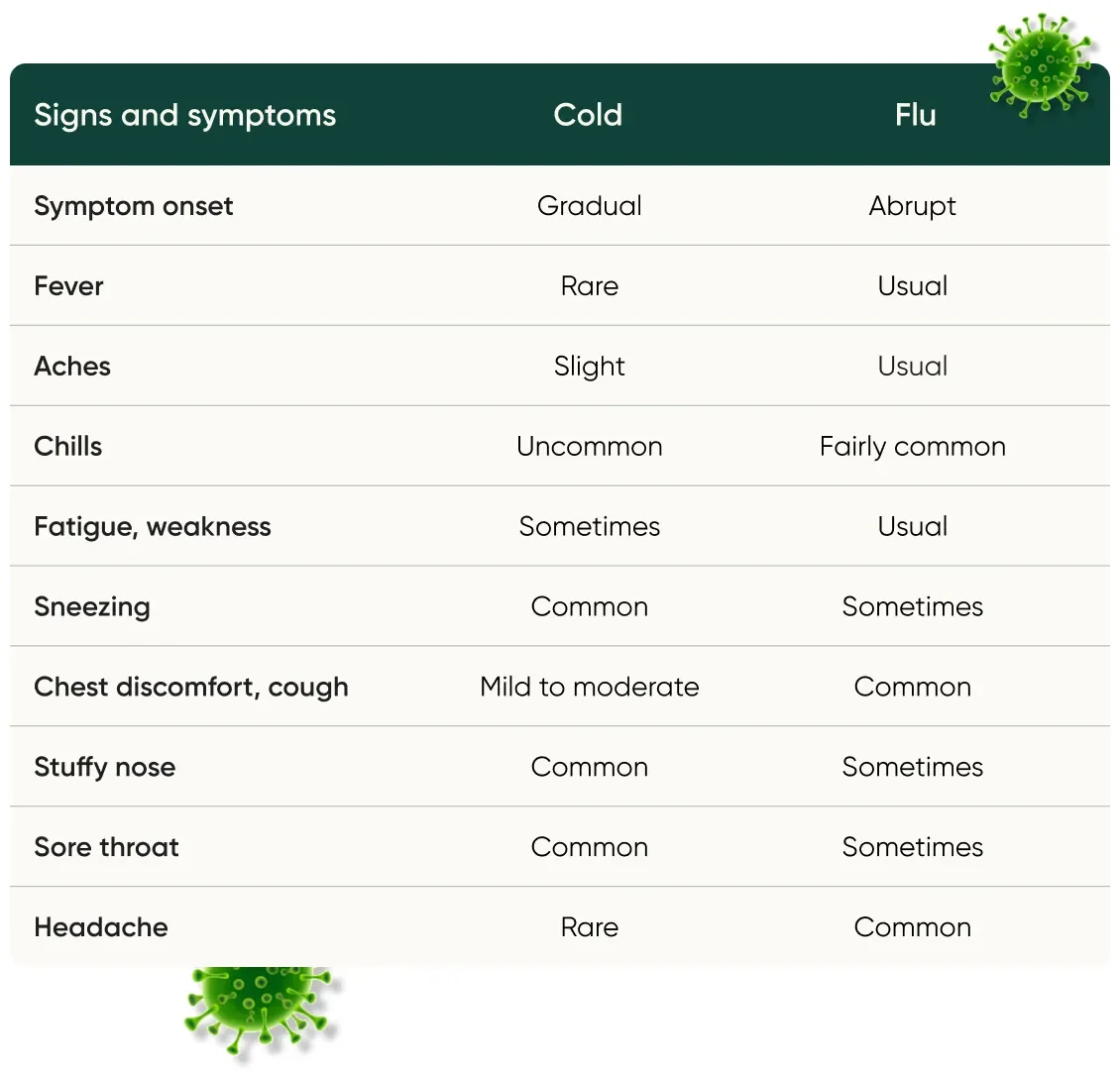
Cold vs Flu Treatments
Treatment for the common cold
The treatment for the common cold primarily involves treating the symptoms associated with it. These include:
Symptoms & Treatments:
- Blocked/stuffy nose: Medicated nasal sprays, Saline nasal sprays
- Sore throat: Gargles, Lozenges and sprays
- Sneezing: Antihistamine tablets
Treatment for the flu
There are a couple of ways to manage flu symptoms, such as:
Symptoms & Treatments:
- Fevers/Chills: Paracetamol/Ibuprofen
- Aches: Paracetamol/Ibuprofen
- Pains: Paracetamol/Ibuprofen
- Headaches: Paracetamol/Ibuprofen
- Cough: Lozenges or cough syrup
Antiviral treatment provides the greatest benefit when started soon after flu illness begins. There are four FDA-approved antiviral drugs recommended by CDC to treat flu this season. Speak to your healthcare professional to see which one is suitable for you.
It is also important to ensure you get your Flu vaccination to prevent the severity and duration of the flu if you do get it (take this as a sign to book it in if you haven’t already!).
Can you get rid of a cold or the flu fast?
There are some things you can try that may help speed up your recovery process from the common cold or flu, including:
- Stay hydrated: Water, juice, clear broth or warm lemon water with honey helps loosen congestion and prevents dehydration.
- Take immune-supporting vitamins: Vitamin C, Echinacea, Andeographis and Vitamin D may help support your body to fight off the virus.
- Avoid alcohol, coffee and caffeinated sodas:, as these can make dehydration worse.
- Add moisture to the air: A cool-mist vaporizer or humidifier can add moisture to your home, which might help loosen congestion.
- Rest: your body needs time to heal.
Can you prevent the cold or flu?
Absolutely. There are a number of ways you can prevent the cold or flu, including:
- Avoid close contact with people who are sick: Putting physical distance between yourself and others can help lower the risk of spreading a respiratory virus.
- Wearing a mask:. When worn by a person with an infection, masks reduce the spread of the virus to others. Masks can also protect wearers from breathing in infectious particles from people around them.
- Washing your hands often: will help protect you from germs. If soap and water are not available, use an alcohol-based hand rub.
- Prioritise clean air: as this can reduce the risk of exposure to viruses. You can improve air quality by bringing in fresh outside air, purifying indoor air or gathering outdoors.
- Practise good hygiene: Cleaning frequently touched surfaces, such as countertops, handrails, and doorknobs regularly can help prevent the spread of some illnesses.
- Maintain healthy habits: get plenty of sleep, be physically active, manage your stress, drink plenty of fluids, and eat nutritious food.
Summary
To wrap it up, the common cold and flu are both caused by different viruses and have different symptoms, so this means they need different treatments as a result! If you’d like more personalised guidance, speak to a healthcare professional.
Related articles:
- A guide to 7 of our favourite picks for cold & flu relief
- Can you exercise with a cold or flu?
- 5 immune supporting habits to help you bounce back
Reviewed by the Healthylife health experts May 2024.
Related reads


How to avoid catching colds or the flu: Tips to prevent them before they start
Winter not only brings cooler weather and the football season of choice, but we also get the cold and flu season (cue sneezing). Australian adults may have 2-4 colds a year, and young children in childcare and primary school could have 5-10 which means that adults around little ones are likely to have more.


Cold & flu remedies: What to take and when
With the right support at the right time, you can reduce the severity and duration of your symptoms.

Your immune game plan: What to do at the first sign of sickness
You notice a tickle in your throat; your head’s a little foggy and you’re reaching for the tissues more than usual. Sound familiar?

A guide to 7 of our favourite picks for cold & flu relief
Are you looking for guidance to prevent the common cold & flu this sniffle season? Read our guide on 7 of the best products to help prevent a cold and provide symptom relief.

Sick again? When to ride it out, and when to see a doctor
The cooler weather is here and while this is a relief after a long, hot summer and autumn, it also means the cold and flu season is back. Winter is the peak time for the sniffles, which can lead to unwelcome viral upper respiratory tract infections, colds and flus.


How to stay healthy this winter
Cold and flu season is nearly upon us and Australians are bracing for the possibility of a particularly bad cold and flu season. Prepare to stay healthy as the temperatures drop to help you stay healthy this winter.

Support your immune system with these immunity juices
Can you really sip your way to better health? Studies show that blitzing up fruit and veggies may provide nutrients to support the immune system. Find out how and bookmark these tasty recipes to try at home today.


Top immune myths, busted by experts
In just a few hundred years, we've evolved from using signal fires, letters, and even carrier pigeons to being instantly connected. But while we’re digitally connected, are we meaningfully connected as human beings?

Ice Baths: 5 Benefits of Cold Water Therapy
Take a deep dive into the world of ice baths, cold showers and winter swimming and discover the potential benefits of cold water therapy.

5 immune supporting habits to help you bounce back
Our top 5 expert-back tips to support your body when illness strikes and help you recover.
This article is for informational purposes only and does not provide medical advice, diagnosis, or treatment. Any information published on this website or by this brand is not intended as a substitute for medical advice. If you have any concerns or questions about your health you should consult with a health professional.
About this article

Soumya Pandya
Soumya Pandya is a Registered Pharmacist who is passionate about finding innovative ways to allow easy and safe access to healthcare for all Australians. Soumya’s goal is to help people better their health journey through education and tools that allow the individual to take a holistic approach to their health.