


Endometriosis or just ‘bad periods’? Here’s how to tell the difference

Ever been told that excruciating period pain is just part of being a woman? Or that your heavy, soul-draining periods are "normal"? If so, let’s set the record straight. While periods aren’t exactly a walk in the park, pain that disrupts your daily life is not something you should have to grin and bear. One condition that often flies under the radar (or gets dismissed altogether) is endometriosis. A chronic inflammatory condition that affects roughly 1 in 7 women and those assigned female at birth in Australia.
Endometriosis is not "just a bad period." It’s a medical condition that deserves attention, understanding, and, most importantly, validation. Let’s break it down.
What is endometriosis?
Endometriosis occurs when tissue similar to the lining of the uterus (the endometrium) grows outside of the uterus like on the ovaries, fallopian tubes, bowel, bladder, and even beyond. This tissue behaves like the uterine lining, thickening and shedding during your cycle, but unlike a period, it has nowhere to go. This leads to inflammation, pain, and, over time, scar tissue and adhesions that can cause significant complications.
The cause? Still under debate. Genetics, immune dysfunction, and hormonal influences all seem to play a role, but no single factor has been nailed down just yet.
What are the symptoms of endometriosis?
Symptoms can vary greatly, which is one reason why diagnosis often takes 6-8 years (yes, you read that right). Some people have severe symptoms, while others have mild ones, or none at all. Here’s what to watch for:
1. Intense period pain
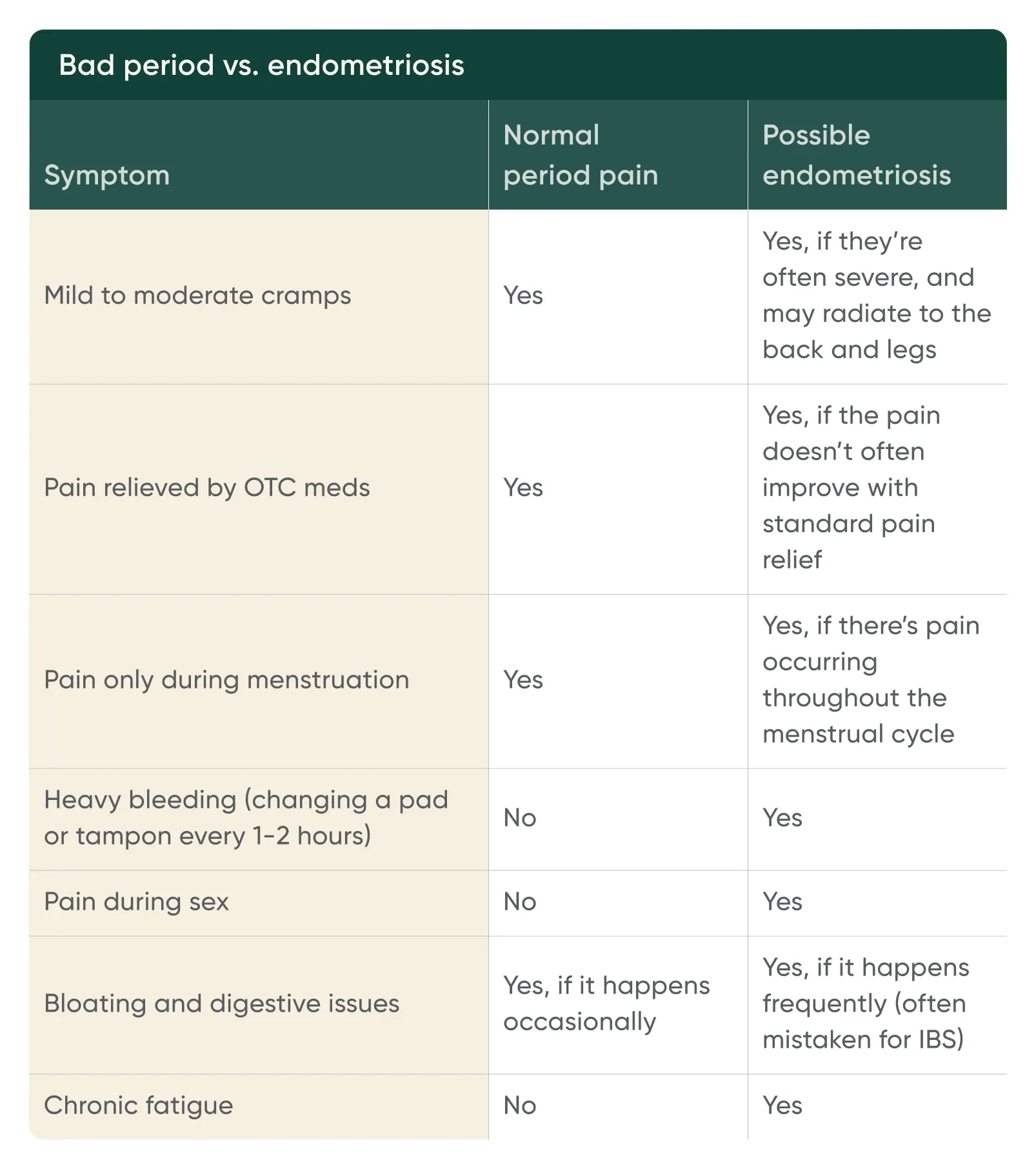
Cramping that leaves you curled up in a ball, missing work or social events, and relying heavily on pain relief is not normal. While mild discomfort is expected during menstruation, severe, debilitating pain isn’t something you should have to push through.
2. Heavy or irregular bleeding
Soaking through pads or tampons in under an hour? Passing large blood clots? Bleeding for more than 7 days? These could be signs of endometriosis, as the condition can impact hormonal balance and uterine function.
3. Pain during or after sex
Pain during penetration or a lingering ache afterward isn’t just "in your head." Endometriosis-related lesions can cause internal inflammation and irritation, making intimacy painful.
4. Digestive issues (often misdiagnosed as IBS)
Bloating, diarrhoea, constipation, nausea, or feeling like you’re six months pregnant every cycle? Endometriosis often affects the bowel and bladder, leading to symptoms that mimic irritable bowel syndrome (IBS).
5. Chronic pelvic pain
Pain isn’t just reserved for your period. Many people with endometriosis experience ongoing discomfort in the pelvis, lower back, or legs, even when they’re not menstruating.
6. Fatigue
Ever feel like you’ve run a marathon even though you’ve barely made it through the day? Chronic inflammation and hormonal imbalances from endometriosis can leave you exhausted, no matter how much you rest.
7. Fertility issues
Endometriosis may impact fertility by causing inflammation, scarring, and damage to the reproductive organs. Some people only discover they have endometriosis when they struggle to conceive.
Period pain vs. Endometriosis pain: What’s normal?
When to see your doctor
If any of the above symptoms sound painfully familiar, it’s time to advocate for your health. You don’t need to have all of these symptoms to have endometriosis. If your period is significantly interfering with your life, that’s reason enough to seek medical advice.
A good starting point is tracking your symptoms over a few months, noting pain levels, bleeding patterns, and any other concerns. When you see a doctor, be direct: tell them how your symptoms affect your life. If you feel dismissed, don’t hesitate to seek a second opinion.
The bottom line
Endometriosis is a complex condition that affects millions of people worldwide, but awareness and early recognition of symptoms can make a significant difference. While the road to diagnosis can sometimes be frustrating, understanding your body and advocating for your health is an essential step.
If your symptoms are interfering with your daily life, trust yourself and seek medical advice. You are not alone, and with the right information and guidance, you can take charge of your health and well-being.
Reviewed by the Healthylife health experts March 2025.
Related reads












This article is for informational purposes only and does not provide medical advice, diagnosis, or treatment. Any information published on this website or by this brand is not intended as a substitute for medical advice. If you have any concerns or questions about your health you should consult with a health professional.
About this article

Gabbie Watt
A bachelor degree qualified Naturopath, Gabbie is passionate about integrating evidence-based practice and traditional medicine. Formerly a Radiation Therapist, her background in conventional medicine enriches her holistic health approach.