


Neurotypical vs neurodivergence: What are the key differences?

All of us have our own individual ways of thinking, feeling and interacting with the world. Studies even show that each human’s brain is unique, even identical twins can be told apart by the structure of their brains. So when we look at how we think, learn, and move through life, labels like “normal” and “abnormal” don’t always really fit.
What is neurodiversity?
“Neurodiversity” is a non-medical term that was coined to advocate and support people’s strengths.. Historically, medicine has focused on differences in terms of weaknesses, deficits, defects or impairments of function.The neurodiversity movement wants to change that and highlight that society benefits from people having different strengths and weaknesses.
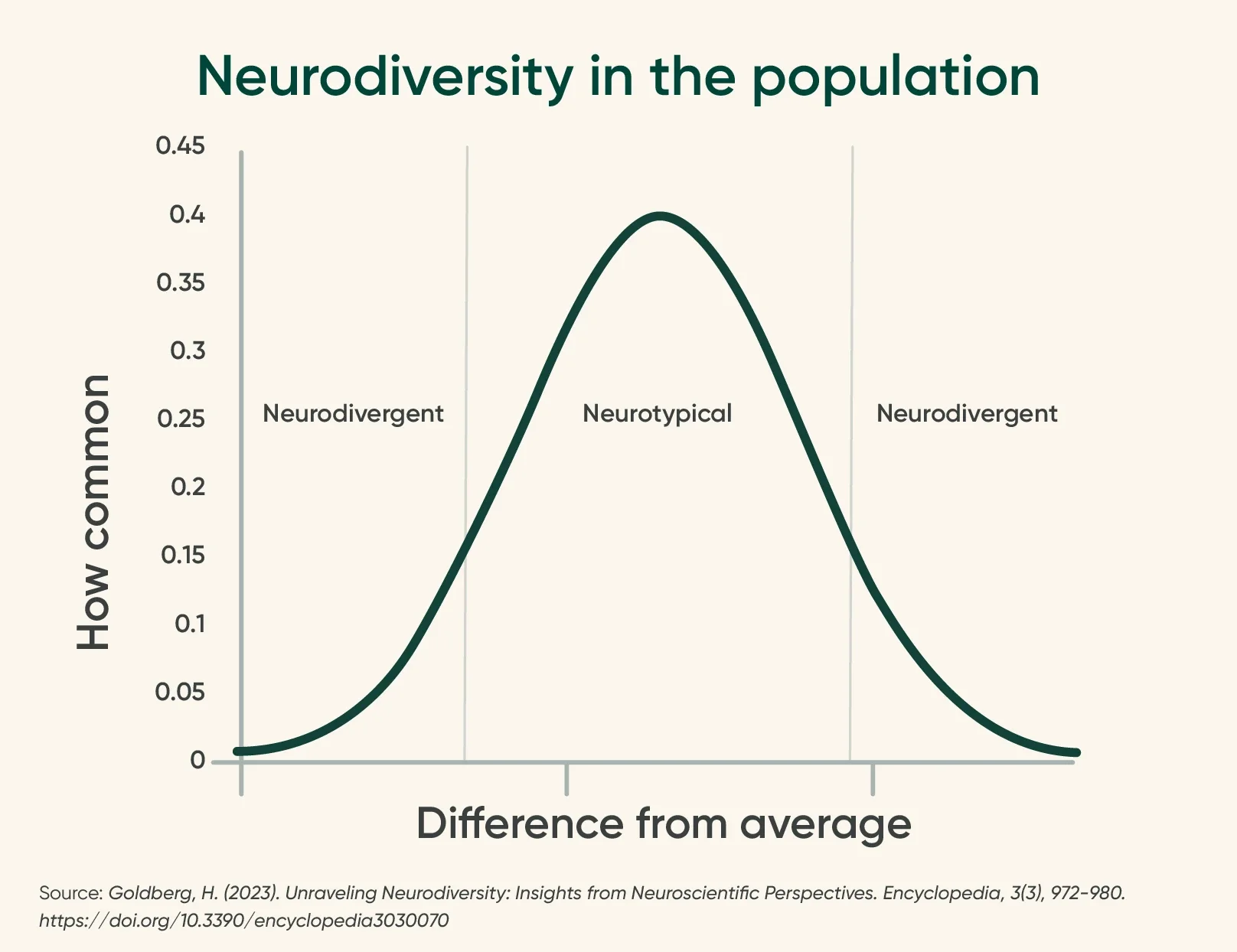
The term neurodiversity encompasses all the different ways that people think and process information. For any human trait, there is a curve of how commonly it occurs and there are always going to be people who don’t fit in with the most common group.
What does neurotypical mean?
Neurotypical is a way to describe those whose way of thinking, learning and communicating is seen as standard for the culture they are in, which is estimated to be around 80% of the population. Educational systems, social spaces and workplaces are designed to fit with the needs of neurotypical people.
What is considered standard is different in different cultures and can change over time. For example, less than 15% of people are left-handed, which is a particular way that their brains work. They could be considered ‘not standard’ and in the past they faced discrimination, but this isn’t the case anymore, and they are generally considered neurotypical today. Who is neurotypical and who isn’t can and does change.
What does neurodivergence mean?
People who are neurodivergent learn, communicate and interact with the world in a way that doesn’t align with common social norms.
When the idea of neurodiversity was first proposed, it focused mainly on autistic spectrum disorder (ASD), but it’s now grown to include other neurodevelopmental conditions (conditions beginning in childhood that affect the development and function of the brain) like ADHD and Tourette Syndrome. It also includes learning disabilities like dyslexia, dyscalculia or dyspraxia (Developmental Coordination Disorder, orDCD). Up to 20% of the population may be considered neurodivergent.
You may also come across terms used to describe people who aren’t neurotypical, including neuroatypical, or neurominorities. While “neurodivergent” or “neurodiverse” are more commonly used, some people in the community use “neurospicy”. There is also ongoing debate about the use of “neurotypical”, so it’s best to be guided by how people identify.
What are the key differences?
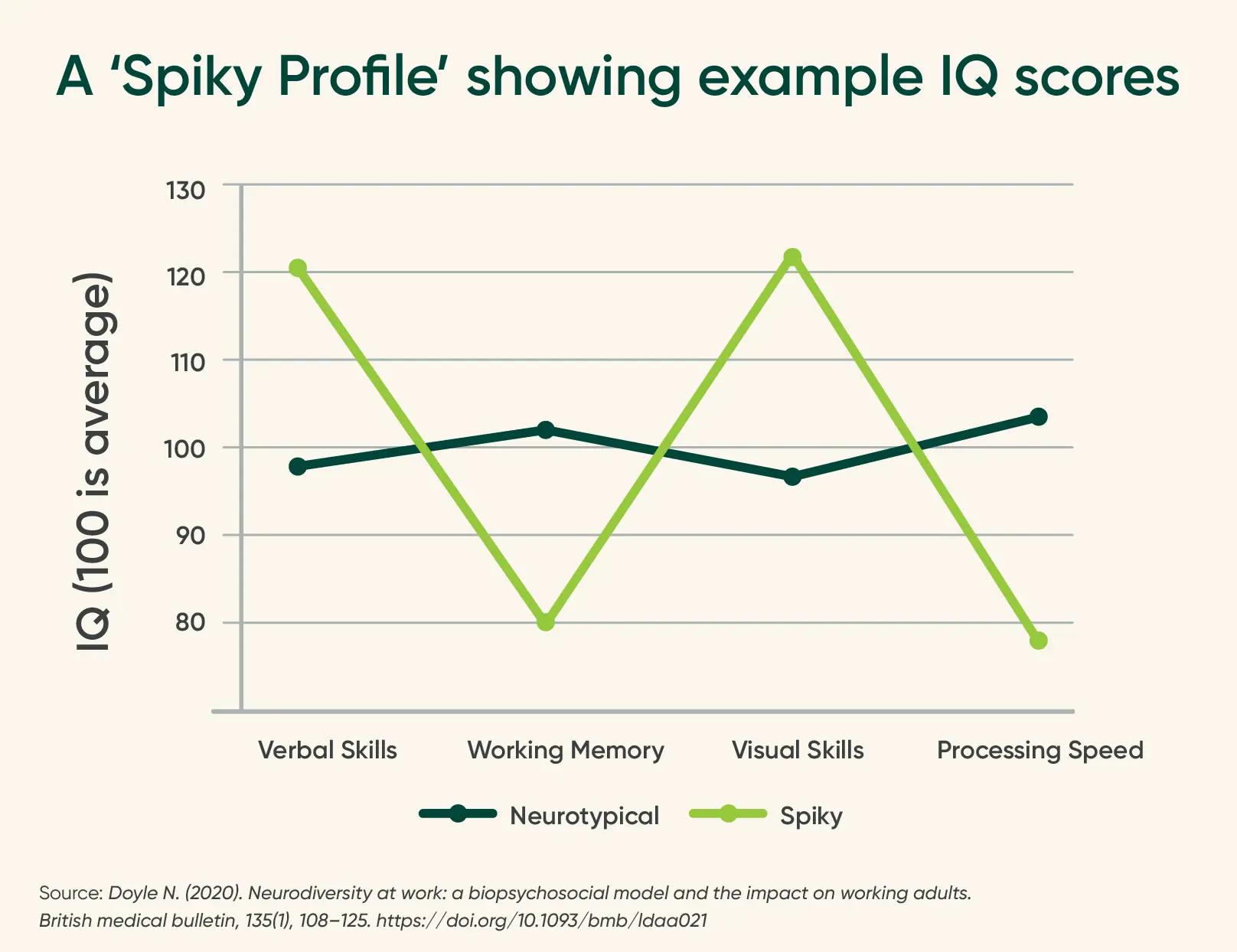
There is no one way to be neurotypical or to be neurodivergent, everyone has their own strengths and weaknesses. Educational specialists consider an individual’s way of thinking across several areas such as verbal skills, processing speed, and working memory to describe the difference between neurotypical and neurodivergence.
People who are neurotypical usually have some strengths and weaknesses, but overall, generally similar levels. Neurodivergent people often have significantly different results in different areas, leading to a ‘spiky graph’. Neurodiversity can also describe the neurodivergent person’s cognitive skills.
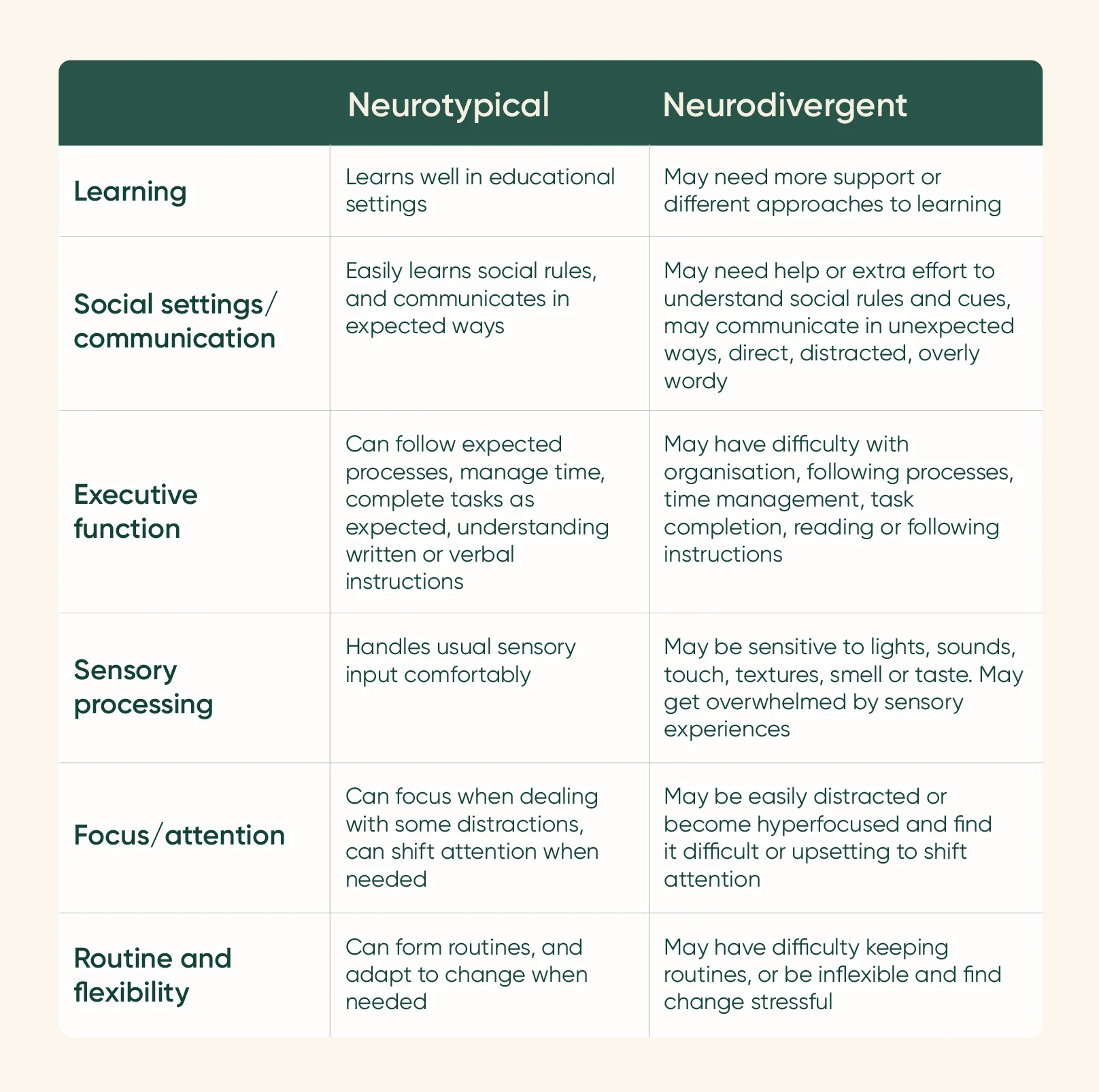
Some of the areas where neurotypical and neurodivergent people may be different (for example ASD, ADHD, dyslexia, DCD):
How to know if you’re neurotypical or neurodivergent?
Neurotypical or neurodivergent aren’t medical diagnoses, so there are no simple check boxes to know which category you fit in, but there are patterns.
While everyone is different, you may be neurotypical if:
- You met developmental milestones and learning stages in childhood in the expected timeframes.
- You don’t get overwhelmed by sensory information, you can ignore unpleasant sounds, smells or textures and don’t get overstimulated or overwhelmed in busy environments.
- You can focus and filter out background distractions in noisy environments.
- You can pick up on social cues and unspoken rules without too much effort.
- You can fit in without pretending to be like everyone else.
- You can adapt to changes in routine and environment comfortably.
If you struggle with any of these, you may want to look into it further. The process for diagnosis has changed over time, so despite the fact that these conditions usually begin in childhood, often adults are the ones to seek diagnosis. There are some specialised resources listed below and you can discuss your concerns with your doctor or a psychologist. Only healthcare providers can make a formal diagnosis.
What are the benefits of both?
There is nothing inherently right or wrong in being either neurotypical or neurodivergent, it’s just a trait like being left-handed or the colour of your eyes.
Being neurotypical can make it easier to navigate society and the world. Schools and universities, workplaces and social norms are set up for the neurotypical.
Being neurodivergent can make it harder to navigate education, work and social spheres. There can be benefits too. People with ASD may be better at focusing on tasks, attention to details, and gaining an understanding of how things work. People with dyslexia may be more creative, and have good visual-spatial skills (they were significantly better at spotting black holes than others in the astrophysics field!). People with ADHD may be creative, flexible, curious, have hyperfocus and good at noticing their environment.
There is increasing evidence that supporting neurodiversity in groups like workplaces supports innovation, creativity and productivity.
The bottom line
Neurodiversity describes the spectrum of different ways that people think, learn and interact with others and the world. While most people are likely to be similar (neurotypical), everyone is unique. The neurodiversity movement supports focusing on people’s individual strengths and needs, whether they are neurotypical or neurodivergent.
If reading all of this makes you think you may not be entirely neurotypical, you are not alone. You can look into some of the resources below and discuss it with your healthcare provider. You can also read this article about Neurodiversity in the workplace.
Reviewed by the Healthylife Advisory Board January 2026.
Related reads












This article is for informational purposes only and does not provide medical advice, diagnosis, or treatment. Any information published on this website or by this brand is not intended as a substitute for medical advice. If you have any concerns or questions about your health you should consult with a health professional.
About this article

Dr. Rob McCartney
Dr Rob McCartney is a Occupational and Environmental Physician who has specialised in the field of Occupational and Environmental Medicine for over 20 years. His career goal is to maximise the health, wellbeing and productivity of working people.