


Clean home. No nasties.
Refresh your space with natural, family-safe cleaning essentials.

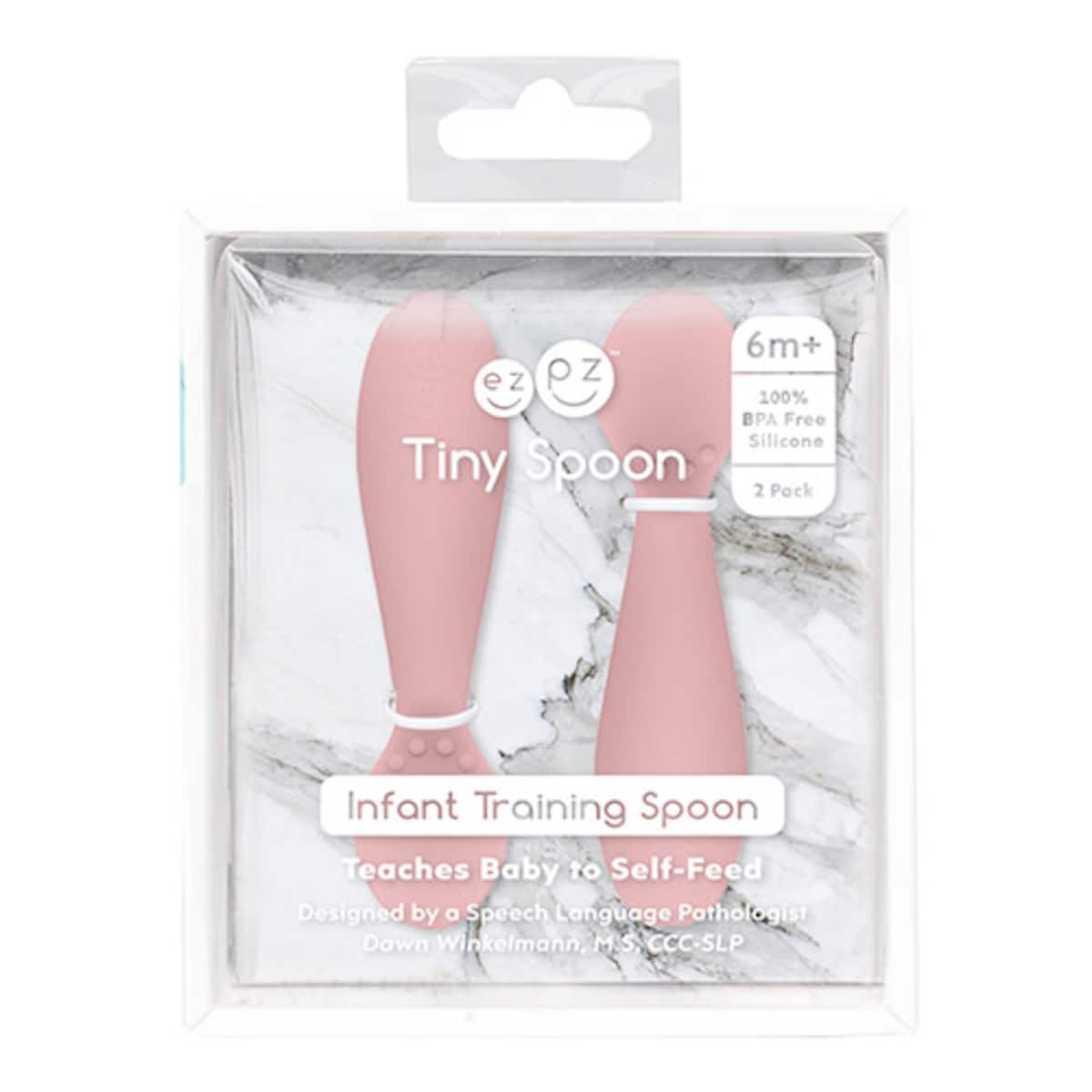
Ezpz Tiny Spoon Blush 2 Pack
Code: 10060166
RRP $26.95
$23.95
11% OFF RRP
Collect 24 Everyday Rewards Points*
Currently unavailable
This product is temporarily unavailable. Click below to be notified when its back in stock
Choose delivery option
Customers May Also Like

Product Overview
This blush-coloured Tiny Spoon is designed for infants 4+ months and helps baby learn how to self-feed. Learning to self-feed is an important developmental milestone. The ezpz Tiny Spoon is designed to help baby learn how to feed independently.
Product Details + Benefits:
- Soft silicone protects baby's developing teeth and makes mouthing and self-feeding safe.
- Slight arc of spoon bowl makes dipping more effective and helps develop lip closure.
- Narrow spoon bowl safely fits baby’s mouth.
- Sensory bumps on the spoon bowl activate sensory awareness to decrease gagging and choking.
- Non-slip grip and short, fat, round handle help baby grasp utensil.
- Bumps on the bottom of the spoon stabilise the spoon when at rest.
- Dishwasher safe.
Materials:
100% food grade silicone is free of BPA, BPS, PV, phthalates, lead, and latex.
Built to last (silicone is bendable and flexible and doesn't fade, corrode, or deteriorate)
Healthylife provides general product information such as nutritional information, country of origin and product packaging for your convenience. This information is intended as a guide only, including because products change from time to time. Please read product labels before consuming. For therapeutic goods, always read the label and follow the directions for use on pack. If you require specific information to assist with your purchasing decision, we recommend that you contact the manufacturer via the contact details on the packaging or email us at care@healthylife.com.au. Product ratings and reviews are taken from various sources including Bazaarvoice. Healthylife does not represent or warrant the accuracy of any statements, claims or opinions made in product ratings and reviews.
Ezpz Tiny Spoon Blush 2 Pack
RRP $26.95
$23.95
11% OFF RRP
Collect 24 Everyday Rewards Points*
Currently unavailable
This product is temporarily unavailable. Click below to be notified when its back in stock
Choose delivery option
Understanding Baby Feeding and Weaning
Guidance on introducing solids and textures for your baby.

What is baby led weaning?
Baby led weaning means letting your baby feed themselves. Sounds pretty daunting, right?


Finding baby food textures tricky? Here's how to make the transition.
When you and your infant are ready to start on solids, it can be hard to know where to begin. Read on to learn more about the different food textures and how to help your baby transition.

How do I know if my baby is ready for solid food?
Around the 6 month mark, most babies are ready to start with food; it’s a big milestone for both baby and parents. We’ve got an easy guide on the signs to look out for and where to start.

Concerned about allergies? How to safely introduce potential allergens to your baby
It might come as a surprise that health experts recommend introducing allergens like eggs, nuts and shellfish for most infants before the age of 12 months. Here's how to safely introduce them.