


Men’s health checks | Ways to eat men’s health program
being on top of your health
Now that we’ve covered nutrition needs and supporting our energy levels and performance, we are going to take a deep dive into a few of the main health concerns for men. But first, let’s talk health checks.


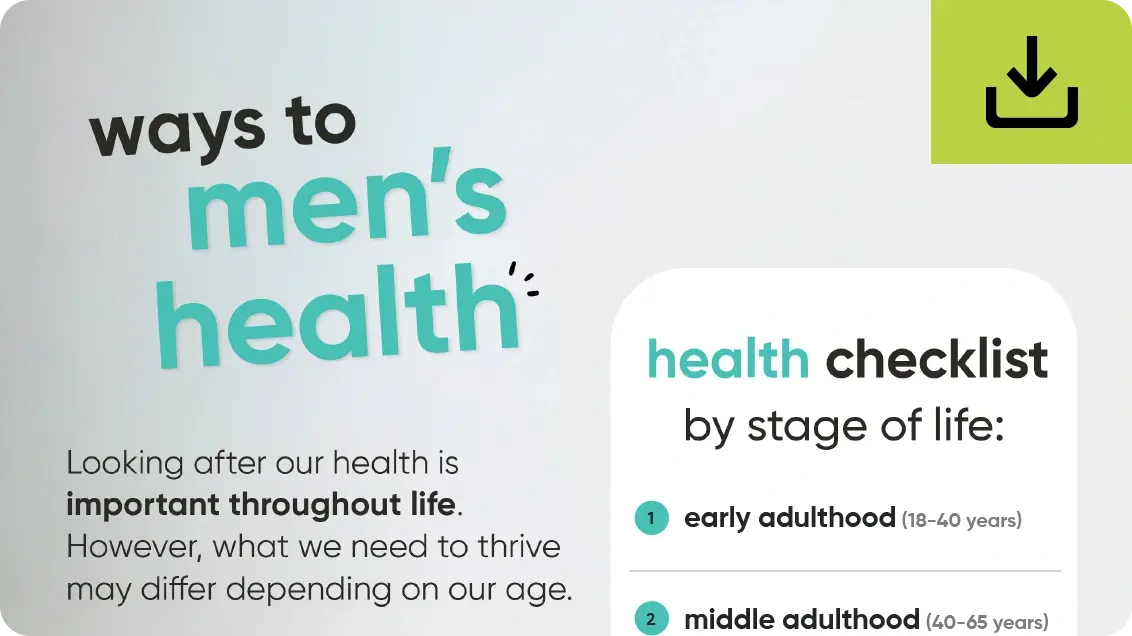
Have you avoided going for regular health check-ups in the past? Was it because of fear or embarrassment? Lack of time? Or simply because you didn’t know what to get checked?
You’re not alone, as these are all common barriers for men when it comes to getting their health checks. To help get you started, check out our handy Men’s Health Checklist.
Did you know one of the main health concerns for men is heart health?
Coronary heart disease takes more Australian lives each year than any other health issue, with men being the majority of people being affected. The prevalence of heart, stroke or vascular diseases increases with age and is higher in men than women. The heart is one of the most important organs in our body.

Here are a few ways you can look after your heart:
- Get your heart checked, you can do this by chatting to your healthcare professional.
- Eat a balanced diet, full of fruit and vegetables, fibre and healthy fats and participate in regular exercise.
- Limit saturated fats and replace with healthy unsaturated fats.
- Reduce stress: read about work related stress and strategies to help overcome it.
Look out for your bowel health
It's recommended to have a bowel screening test every two years once you reach 50. Good bowel health is important and there are some ways we can keep them healthy.
- Fibre, fibre, fibre. We mentioned fibre and its importance on day 1. This nutrient helps keep us regular.
- When consuming more fibre, it’s important to drink enough water in order to keep things moving.
- Eat a healthy and varied diet.
- Go for check-ups with your healthcare professional, particularly if bowel cancer runs in your family or if you’ve reached the aged of 50.


Check your prostate
Talking about your prostate can be a little uncomfortable, but it is important to monitor and look out for any changes or symptoms that you need to tell your healthcare professional about.
- There are three main conditions that may affect the prostate; prostate enlargement, prostatitis (inflammation of the prostate gland) and prostate cancer.
- Changes to the prostate occur as you age and this can start happening in your 30’s (or even earlier).
- It’s important to chat to your healthcare professional if you are experiencing trouble passing urine or pain during.
Did you know?
Red coloured foods such as tomatoes and watermelon contain a powerful antioxidant called lycopene.


Don’t forget your bone health
- You may know that osteoporosis is common in women, BUT men can also develop osteoporosis and be at risk of bone fractures. In fact 1 in 16 Australian men aged over 50 have osteoporosis.
- Calcium helps with the functioning and development of our bones, muscles, heart and nervous system. Calcium is a bone building nutrient, helping strengthen and build density of our bones and teeth.
- Peak bone mass for men occurs in their early 20s and then slowly reduces with age.
So how can you maintain bone density?
- Eat calcium rich foods, especially dairy foods or fortified alternatives
- Get in the sunshine (to ensure adequate vitamin D that is also important for bone health).
- Participate in weight bearing exercises.
- Avoid smoking and drinking too much alcohol.

Quiz time
Now that you know a bit more about nutrition and health concerns to be aware of for men, challenge yourself and see how much you’ve learnt by giving our myth busting quiz a go!
If you’ve been waiting for a sign…this is it! What health checks have you been putting off? Pick just one (or more if you like!) and go make that appointment today.


Almost there!
Stay tuned and look out for the final Men’s Health instalment to hit your inbox where we’ll be breaking down some barriers to talk about mental health.
Content prepared by Nutrition Australia for healthylife
This page is for informational purposes only and does not provide medical advice, diagnosis, or treatment. Any information published on this website or by this brand is not intended as a substitute for medical advice. If you have any concerns or questions about your health you should consult with a health professional.