


Can you reset the vagus nerve? 6 tips that actually work

Life stressors often can’t be avoided. Work deadlines, caregiving, trauma, illness, breakups, grief and financial pressure can sometimes feel relentless.
Although the best plan is to reduce stress, we sometimes need accessible tools to calm anxiety, improve sleep, boost resilience, and generally calm our nervous system. Here’s how to reset.
What does it mean to reset?
“Hacking” or resetting the nervous system is about trying to regulate the body’s stress response with quick, accessible tools to calm anxiety, improve sleep, and boost resilience.
But first, let’s look at the types of stress we’re exposed to:
- Some stress is systemic (e.g., poverty, discrimination, chronic illness)
- Some is unpredictable (e.g., grief, emergencies)
- Some is internalised (e.g., trauma responses, anxiety disorders)
While removing stressors is the long-term goal (and certainly can’t be eliminated overnight), nervous system “hacks” are short-term tools to help people stay regulated and functional in the meantime.
What is the vagus nerve?
The vagus nerve is the 10th of 12 pairs of cranial nerves. Our nervous system comprises of the:
- Central Nervous System (CNS): this is the brain and spinal cord
- Peripheral Nervous system (PNS): these are the nerves outside the brain and spinal cord that carry signals to and from the body which process and interpret information. The cranial nerves are a part of the PNS.
We have the sympathetic nervous system (‘fight or flight’ which activates the body in response to stress or danger) and the parasympathetic nervous system (‘rest and digest’ which calms us and conserves energy).
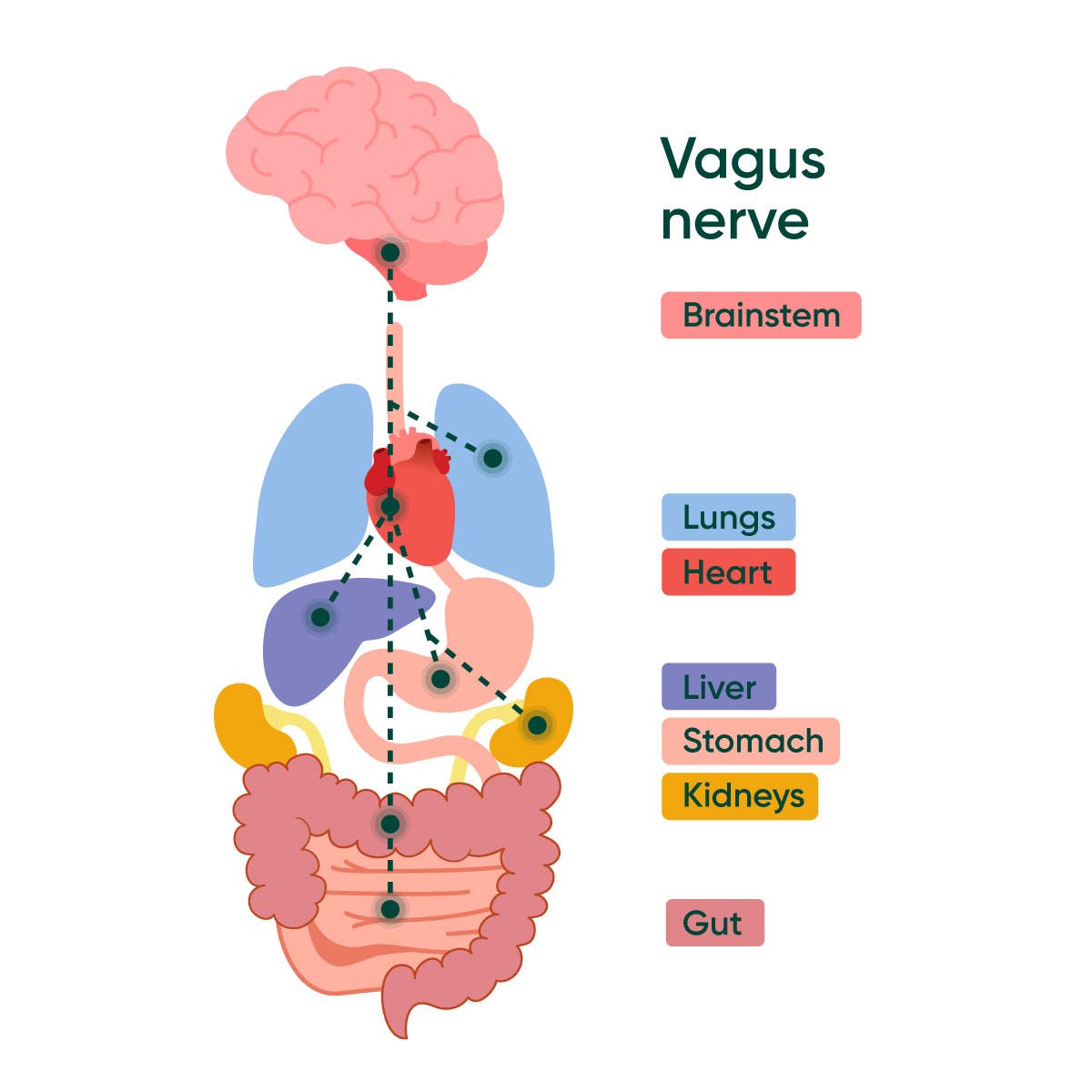
The vagus nerve is a core component of the parasympathetic nervous system, facilitating communication between the brain and various organs, including the ears, heart, lungs, pancreas, spleen, and gastrointestinal tract.
Think of it like your body’s WiFi connection. It links the brain to your organs so they can share constant updates. When it’s flowing freely, your body stays calm, balanced, and in sync.
How important is your vagus nerve?
It’s crucial, alongside all our nerves and anatomy and physiology. It’s important to keep it ‘toned’ (which means it can respond effectively and quickly).
The vagus nerve is involved in all brain-body communication, including digestion, reducing heart rate, mood and emotional regulation, speech and swallowing, as well as interactions with the immune system.
There’s also evidence that suggests that the gut–brain axis, via the vagus nerve, may play a role in the development and progression of psychiatric, neurologic, and inflammation-related disorders.
Can you reset it?
While there’s no real ability to ‘reset’ our nerves (neurosurgeons might be able to!), we can absolutely calm ourselves and regain a sense of control over our bodies and emotions, especially when external circumstances feel overwhelming.
We can build nervous system resilience through:
- Calm breathing
- Movement
- Social connection
- Better sleep
- Certain environmental stimuli (like dim lighting and relaxing music)
- Regulation techniques such as mindfulness and yoga.
It’s important to note that some people will need to use these techniques alongside therapy, medication, or lifestyle changes, not instead of them.
Ways to help calm your vagus nerve:
Tip 1: Breathwork
In the past 30 years there’s been an increase in modern society’s interest in ancient practices like being able to take control of our breathing and tuning into the power of breathing techniques. Try learning different breathing techniques, it’s an effective and free technique!(Link to Healthylife articles on breathing and breathwork)
Tip 2: Singing and humming
What a lovely way to reduce stress! There’s clear evidence that humming and singing can increase our vagal tone because the vagus nerve innervates our larynx (voice box). It’s highly possible that the joy of singing and humming also stimulates the vagus nerve via more than the voice box. And if singing in a choir or a group, it can be related to social connection and the positivity of being surrounded by supportive like-minded people, and this increases wellbeing.
Tip 3: Cold water
There’s scientific evidence that exposure to cold water can help us to feel calmer. Exposure to cold water can help to stimulate the vagus nerve and may help to reduce inflammation and mild anxiety. You can try splashing cold water on your face or take a brief cold shower, or cold water swims. It’s not for everyone but give it a try to see how you respond to it.
Tip 4: Social connection, smiles and laughter
This is one of the most important ways to enhance our wellbeing and reduce stress. It’s known that loneliness and isolation aren’t good for human health so lean into trying to connect more and smile more when possible.
Tip 5: Moving and meditating
Movement and meditation, even just for 5–10 minutes a day, can help regulate your nervous system. There are a range of movements including yoga that can be very soothing and calming.
Tip 6: Improving gut health
The vagus nerve connects your brain and gut. There is evidence to suggest that eating fibre-rich, foods that may reduce inflammation and probiotics can support this connection and help to reduce feelings of distress and anxiety.
When to speak to a doctor
If you’ve been trying to help yourself for weeks or months but still feel stuck, overwhelmed, or unable to manage daily life at work or home, it may be time to reach out for professional support.
The bottom line
The goal is to try to remove as much stress and strain as possible, rather than remaining in high stress environments for a long time, and then relying on ‘hacks’ to cope with the stress and strain. Reducing stress is an essential way of approaching life in a fast-paced, globalised world, but it’s not always possible.
While the vagus nerve gets a lot of coverage in the media and on social media as it serves the purpose of calming the body and mind, if it could talk it would probably remind us to find ways to remove ourselves from stressful situations; making good decisions about your job, your relationships and lifestyle habits.
Reviewed by Healthylife health experts December 2025
Related reads











This article is for informational purposes only and does not provide medical advice, diagnosis, or treatment. Any information published on this website or by this brand is not intended as a substitute for medical advice. If you have any concerns or questions about your health you should consult with a health professional.
About this article

Dr Moira Junge
Dr Moira Junge is a registered, practising Health Psychologist, with the added specialty of sleep expertise. She is the current CEO of the Sleep Health Foundation and was a founding member of the Behavioural Management of Sleep Disorders Committee within the Australasian Sleep Association (ASA) and was the Chair of the ASA Insomnia and Sleep Health Council (2008-2015).