


Chia seeds vs Psyllium husk: Which is the better fibre source?
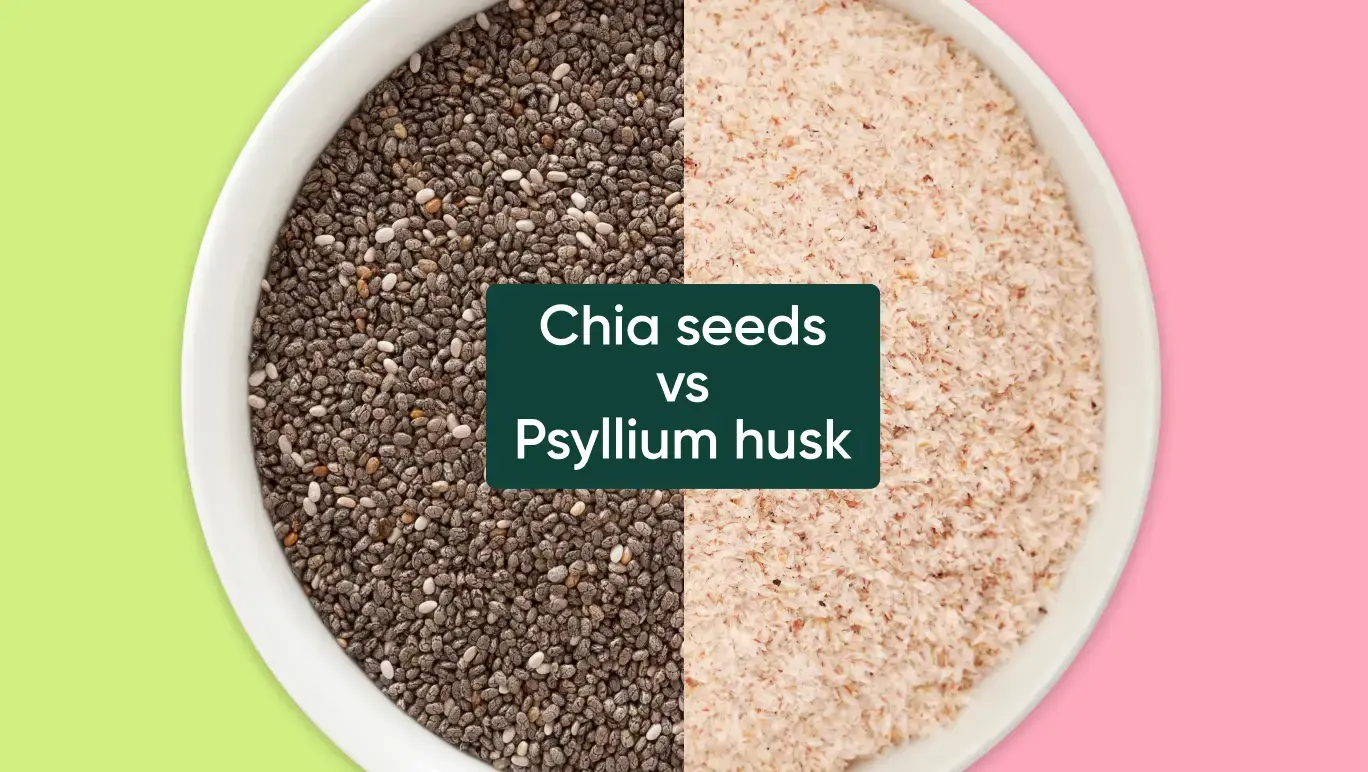
Fibre is a vital part of a healthy diet, playing a crucial role in gut health and overall wellbeing. And thanks to the viral ‘Fibremaxxing’ trend, chia seeds and psyllium husk are stepping into the spotlight.
While both are well-known for their impressive fibre content, they have distinct differences in their nutritional profile and how they work in your body. Understanding these differences can help you decide which one is best for you.
What are the key differences?
Chia seeds originate from Mexico from the Salvia hispanica plant and are tiny, whole seeds that are high in fibre, healthy fats (omega-3s), and protein.
Psyllium husk, on the other hand, is the dried outer shell of the Plantago ovata seed and is primarily composed of pure fibre.
When mixed with liquid, both form a gel, but psyllium husk forms a much thicker, more robust gel almost instantly, while chia seeds take longer and hold their round seed shape. This difference is exactly why they behave differently inside your gut.
Nutritional breakdown
While both provide a lot of fibre, they bring different nutrients to the table. Chia seeds provide a mix of fibre, protein, and fat (mostly heart-healthy omega-3 fatty acids). On the other hand, psyllium husk powder delivers fibre, with negligible protein or fat. If your goal is to boost both fibre and essential fats, chia seeds provide a more complete nutritional profile.
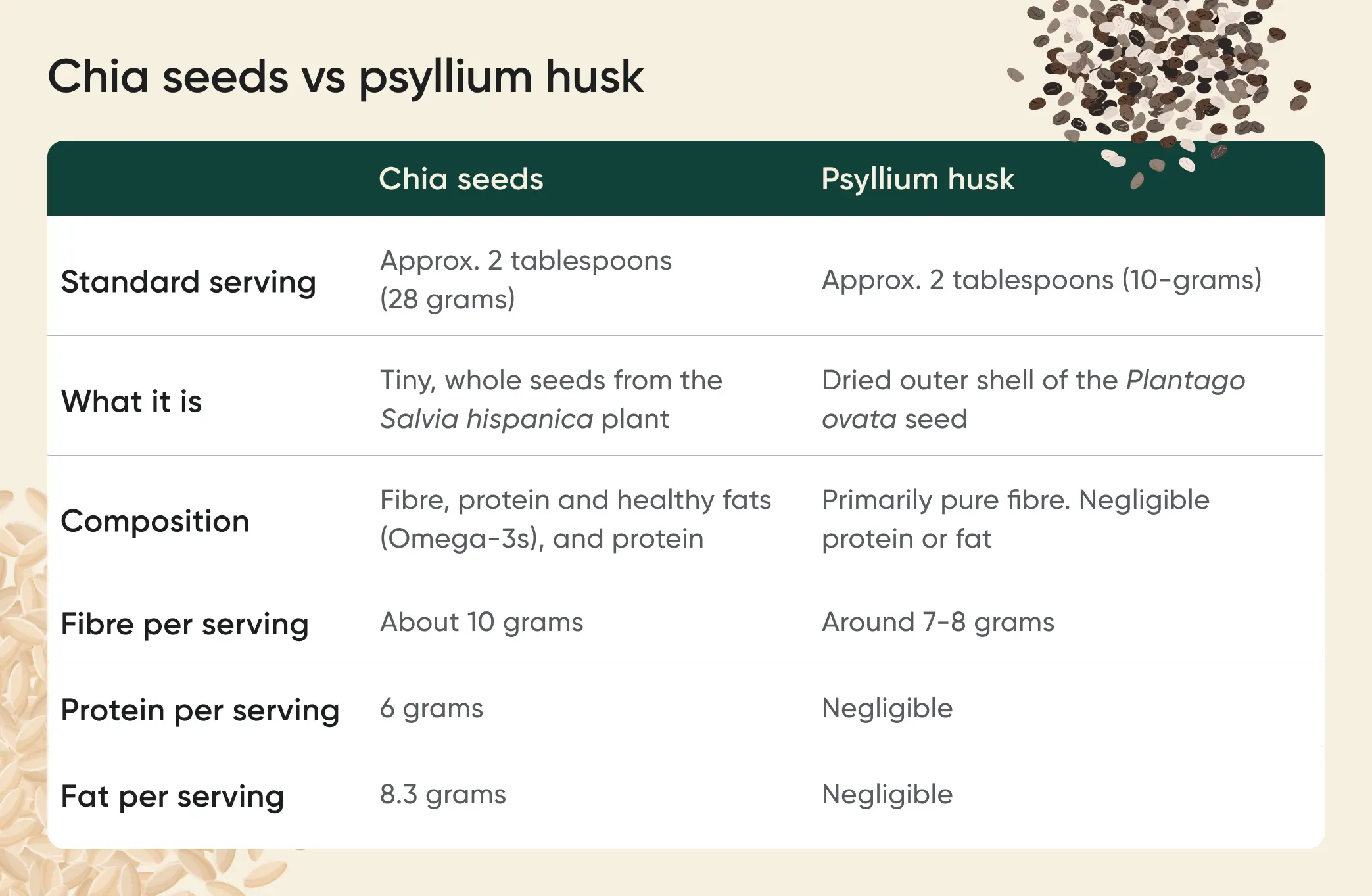
Reference: Australian Food Composition Data Base
What are the health benefits?
Both chia seeds and psyllium fibre sources offer valuable benefits. The soluble fibre in psyllium is fantastic for binding to cholesterol in the digestive tract to help lower the LDL-“bad cholesterol”) levels, helping to remove it from the body. That’swhy when it comes to r cholesterol management, the science backs psyllium due to its very high soluble fibre content.
Chia seeds may also help support heart health. Their omega-3 fatsand soluble fibre may help increase the HDL-good cholesterol”) levels and help slow down sugar absorption, benefiting blood sugar control.
The fibre in both psyllium and chia seeds helps you feel fuller for longer, which can support weight management.
Which is better for digestion?
For digestive health, the answer depends on your specific needs. Psyllium husk is often recommended as a bulk-forming laxative because it absorbs a large amount of water, which adds volume and moisture to stool, helping to promote regular bowel movements. This makes psyllium the preferred option for constipation.
However, chia seeds offer a combination of both soluble and insoluble fibre, which supports overall gut health by feeding beneficial gut bacteria (prebiotic effect) as well as providing bulk to stools. Psyllium is nearly all soluble fibre, making it particularly effective at softening stool, but chia seeds provide a broader spectrum of fibre types.
Are there any side effects?
Introducing high-fibre foods too quickly can lead to gastrointestinal distress, including bloating, flatulence, and stomach cramps. This is common with both chia seeds and psyllium husk and many high fibre foods.Start small and increase your intake over time to let the gut adjust.
Taking enough water with high-fibre foods is crucial. Psyllium, in particular, can thicken up quickly forming a cement-like mixture and may pose a risk of obstruction, without enough water. Adding extra water as you increase fibre in your diet is key
How to eat psyllium husk and chia seeds safely
The key to safe chia seed and psyllium use is hydration and gradual introduction. Always start with a small amount, perhaps half a teaspoon, and slowly increase your intake over several weeks to give your gut time to adapt.
- Psyllium husk: Mix the powder or whole husk into a full glass of water or juice and drink it immediately. Follow up with another glass of water. Try mixing it into yoghurt with your favourite fruit. Do not pre-mix and let it sit as it becomes too thick and could be a choking hazard. You can use it to thicken soups or gravies just before serving.
- Chia seeds: These can be eaten whole or ground. They are excellent when soaked in liquid to create a gel, like in chia pudding, or mixed into smoothies, yoghurt, bread mix or bircher muesli. They also make a great addition to salad dressings with olive oil, vinegar and herbs.
When to speak to a health professional
If you experience persistent constipation, abdominal pain, or have underlying medical conditions like Inflammatory Bowel Disease (IBD), consult a healthcare professional before starting any high-fibre supplement. If you are taking medications, especially for blood sugar or cholesterol, discuss adding psyllium or chia seeds with your doctor or dietitian, as they can affect the absorption of certain drugs.
The bottom line
Both chia seeds and psyllium husk are fantastic sources of fibre, but they serve slightly different purposes. Psyllium husk is a powerful, nearly pure source of soluble fibre, making it highly effective for bulk-forming and targeting cholesterol.
Chia seeds offer a more comprehensive nutritional package, providing fibre, protein, and essential omega-3 fats, making them a superb wholefood addition to your daily diet. You can use both or choose one. Use them in a way that best aligns with your specific health and dietary needs.
Reviewed by Healthylife health experts July 2026
Related reads

Psyllium husk: What is it & what are its benefits?
Psyllium husk seems to be everywhere right now. From social media wellness trends to conversations about gut health, cholesterol and weight management, this humble fibre supplement has become increasingly popular. But what exactly is psyllium husk, and does it live up to the hype? The short answer is that for many people, it can be a simple and effective way to increase fibre intake and support digestive and metabolic health.

Soluble Fibre vs Insoluble Fibre: Which one is better?
When people think about fibre, they usually think about one thing: staying regular. But it’s doing a lot more than simply helping you go to the bathroom. In fact, fibre is one of the most important nutrients for supporting everything from gut health and digestion to cholesterol levels, blood sugar balance and even the trillions of microbes living in your digestive tract.


20+ High fibre foods to support your microbiome
Building a healthy gut microbiome is one of the most proactive things you can do for your overall wellbeing. And while many people turn to supplements, the best place to start is actually on your plate, with high-fibre foods.

Food and fibre: The way to a healthy future?
Did you know, raspberries have a whopping 8g of fibre per cup? Discover what else you can include to increase your fibre

What exactly are prebiotics?
Curious about prebiotics? No, that’s not a typo. They are different from probiotics, and just as handy.

What are the health benefits of legumes?
Ever wondered what legumes are and whether you've eaten them or not? Legumes are a staple in many cuisines and dishes across the world, and come with a number of health benefits.

Low FODMAP grains
Grain products can irritate IBS symptoms, but also provide health benefits. Discover low FODMAP grains, and how to include them in low FODMAP dishes today!

Are you eating enough fibre? Most Aussies aren’t – and it matters
Low fibre intake is common in Australia. Discover easy ways to increase fibre in your diet for better gut health and overall wellbeing.
How many servings of grains do you really need?
Discover the power of grains for a balanced diet. Learn about whole grains, serving sizes, and gluten-free options.

FODMAPs and fibre - getting the balance right
How can you get enough fibre on a low FODMAP diet? Here’s everything you need to know.
This article is for informational purposes only and does not provide medical advice, diagnosis, or treatment. Any information published on this website or by this brand is not intended as a substitute for medical advice. If you have any concerns or questions about your health you should consult with a health professional.
About this article

Simone Austin
Simone Austin is an Advanced Sports Dietitian, author of Eat Like An Athlete and past President of Sports Dietitians Australia. She has worked with some of Australia’s top sports teams over her 25+ year career.