


Is it cheaper to eat healthy?

In today's food landscape, too many Australians are falling short of meeting the Australian Dietary Guidelines. Our diets are often lacking in essential components like fruits, vegetables, nuts, seeds, legumes, and whole grains, while being overloaded with discretionary items like sweets, snacks, and processed meats.
However, contrary to popular belief, healthy food doesn't have to be expensive. We looked at the cost of a healthy food shop against the cost of the average Australian food shop in 2023. The result? The healthy food shop was cheaper. Plus, provided more nutritional bang for your buck! Let’s look at how, and some simple tips on how to eat healthy on a budget.
What does a healthy shop look like?
A healthy food shop is one that provides the number of serves of each of the five food groups for each person based on the Australian Dietary Guideline recommendations. These diets include plenty of vegetables, fruit, nuts, seeds, legumes, wholegrains and cereals, lean meat and/or fish, dairy foods such as yoghurt, milk and cheese and some healthy fats such as extra virgin olive oil.
The Living Healthy Report 2024 data shows that Australian household purchases across all retail for at‑home eating (not cafes, restaurants, take away) are no closer to hitting dietary targets in Australian households than four years ago.
Each year was found to be falling short on the recommended number of serves for each of the five food groups, and too high on purchasing of discretionary foods. To improve the health of Australians this needs to change.
The good news is we can do something about it for our health and our budget. If we swapped some of the discretionary food serves to other food groups, we would shift our shops to be healthier and also save money. A win-win!
We developed a healthy food shop, with all the food needed for a week to meet the Australian Dietary Guidelines for a family (male and female 19–50 years, female 8 years, male 14 years). See the ‘Healthy weekly shop’ at the end of the report. This can take the guesswork away and make it faster and easier to shop and eat healthy.
Opting for seasonal produce is recommended, but don't worry, canned or frozen options can be just as nutritious when fresh produce is unavailable.
The healthy weekly food shop has plenty of everyone’s favourites and most common foods. It also encourages some, that Australians would benefit from eating more of, such as whole grain breads and breakfast cereals and including kidney beans and baked beans for more legumes.
Is it cheaper to eat healthy in Australia?
We found 58% of Australians believe eating healthy food is expensive, so we investigated.
Looking across the total food spend for at-home eating, the average ABS household of 2.5 people (1.8 adults, 0.7 children) spends $233.63 per week, but does not meet the Australian Dietary Guidelines.
If Australian households aligned their weekly shopping with the Australian Dietary Guidelines, they would spend $216.05 per week, a 7% saving and healthier food options. How good!
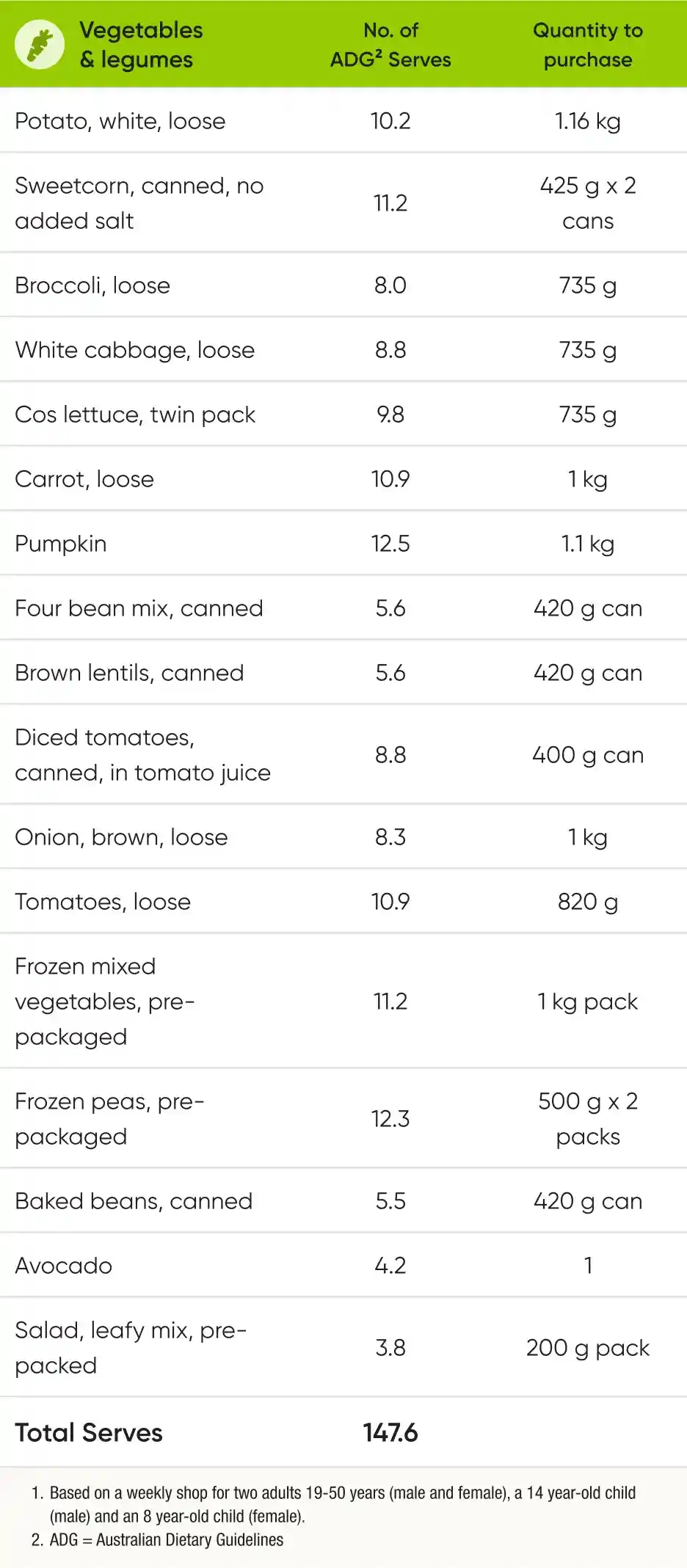
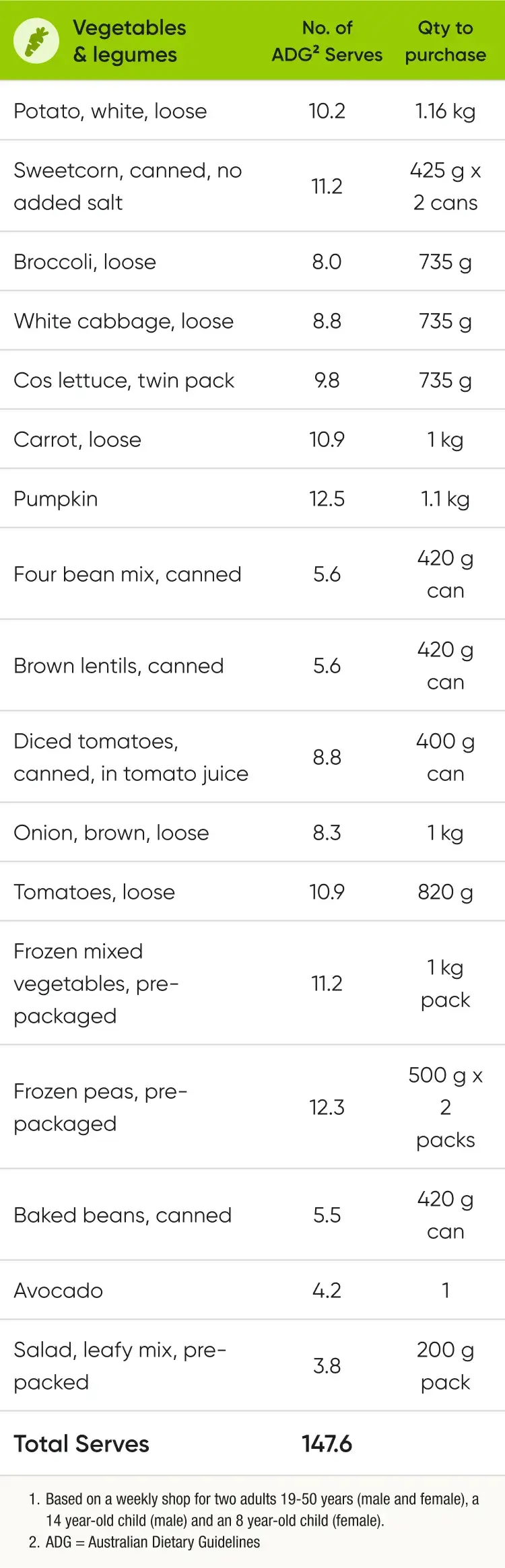
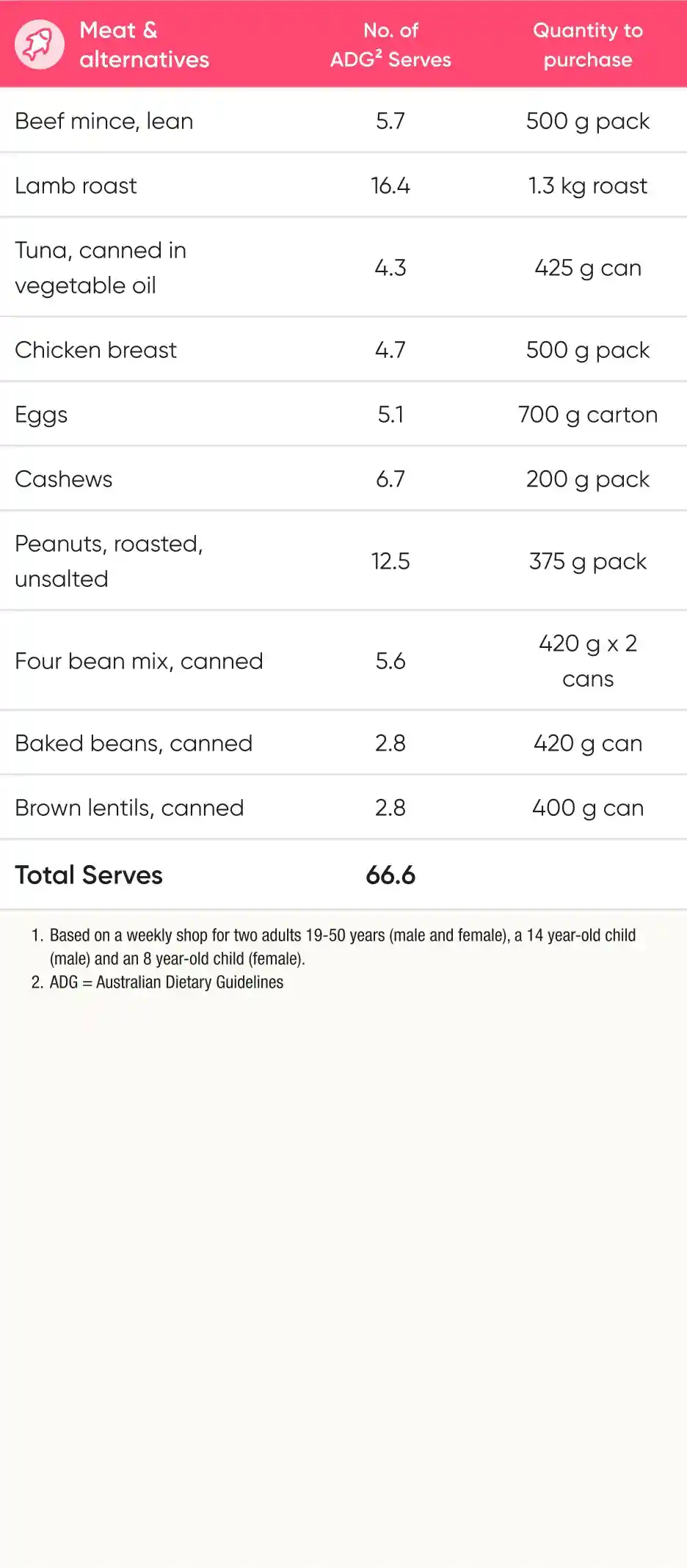
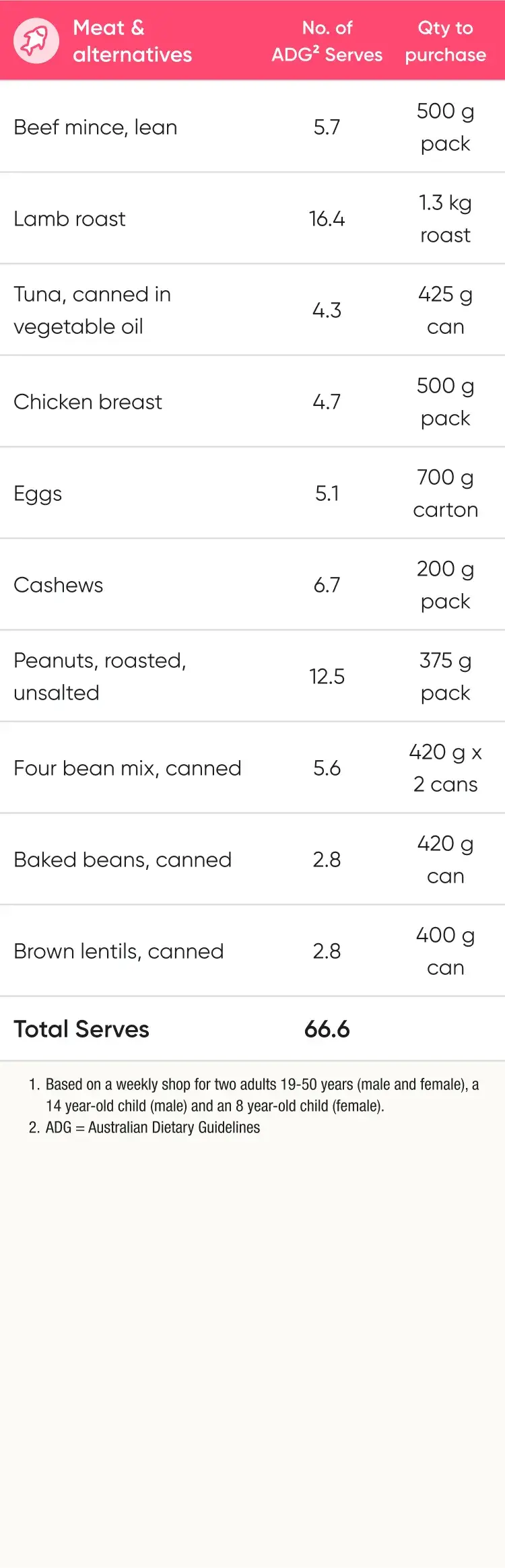
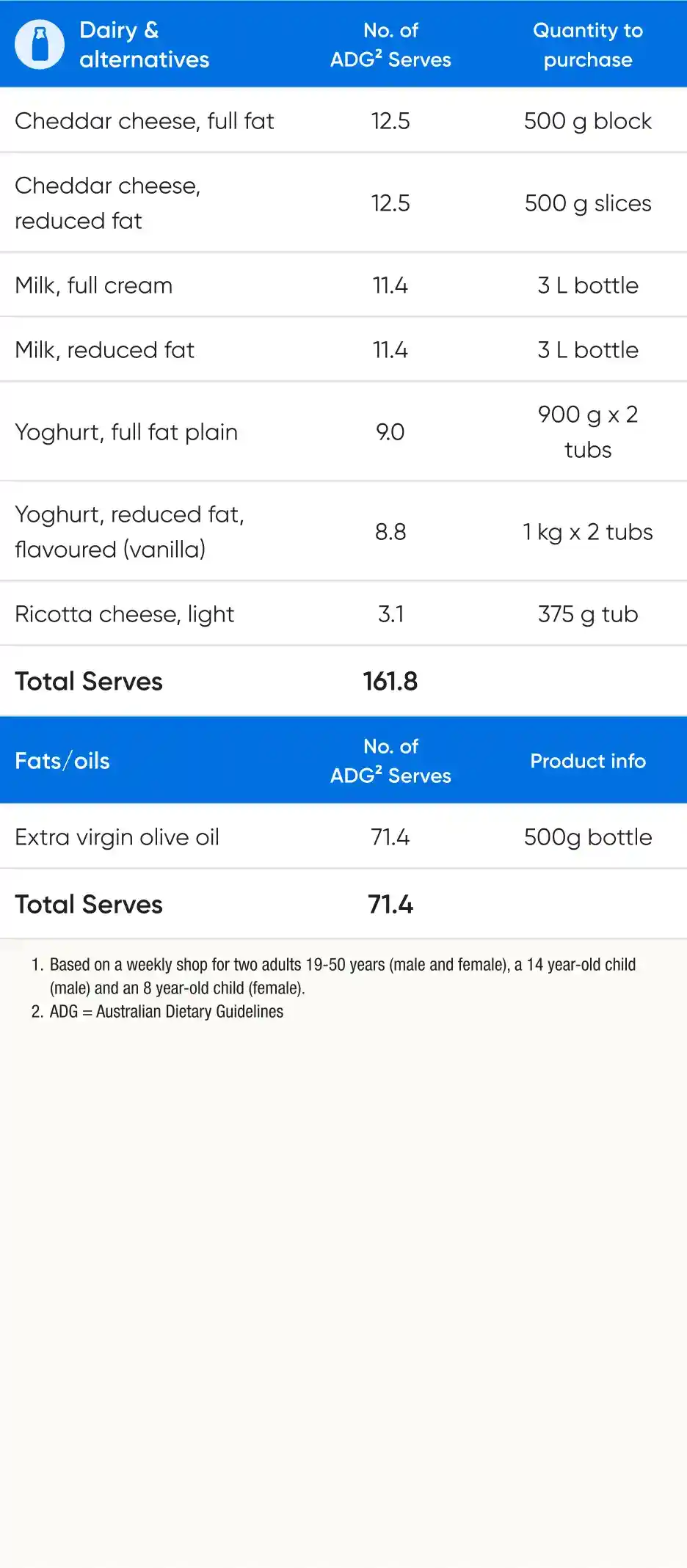
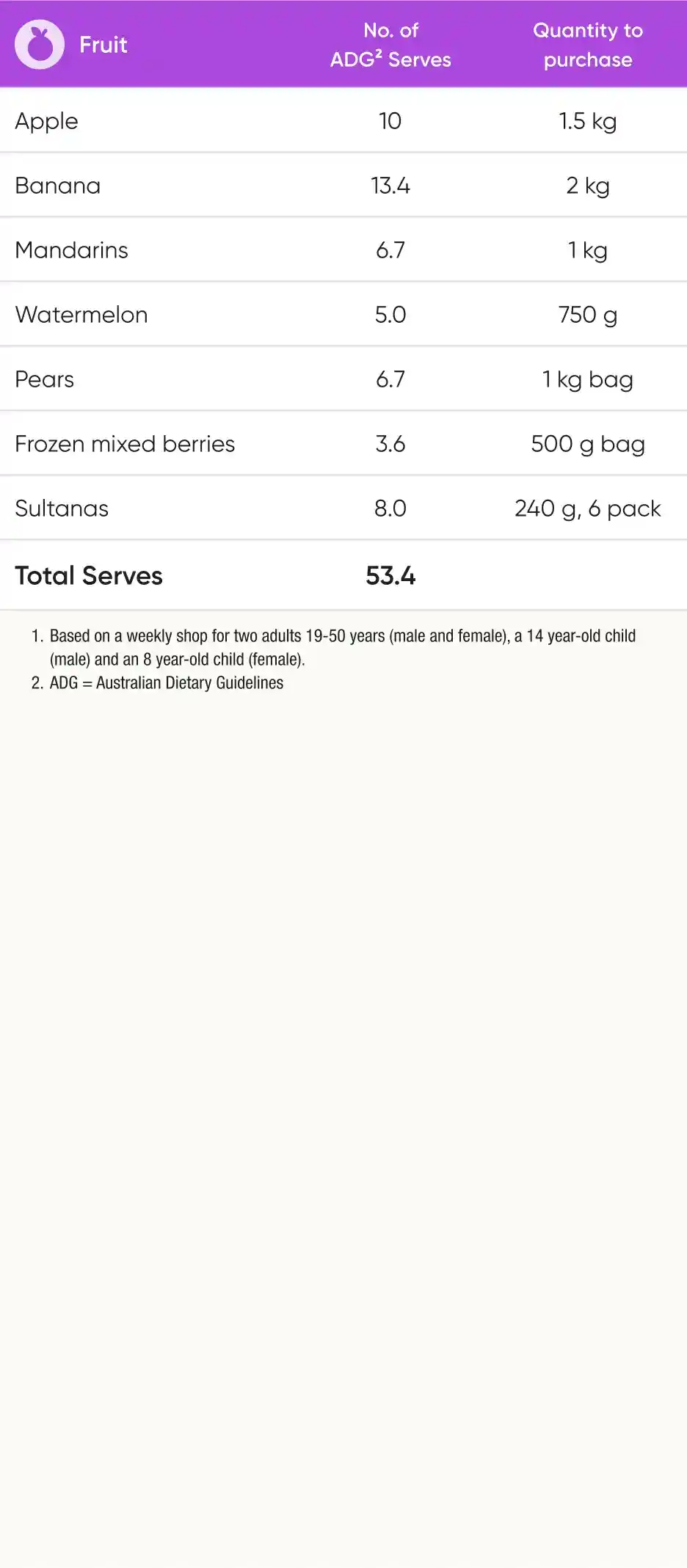
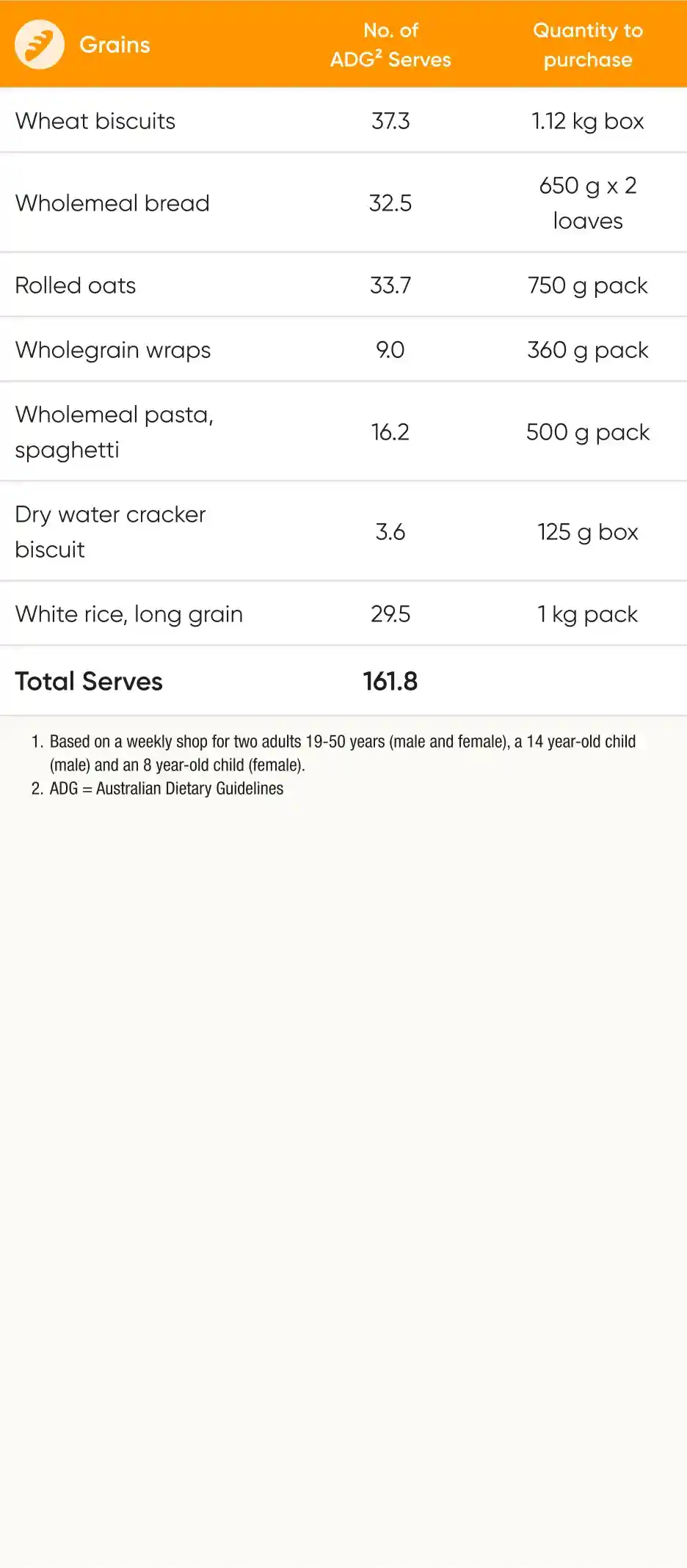
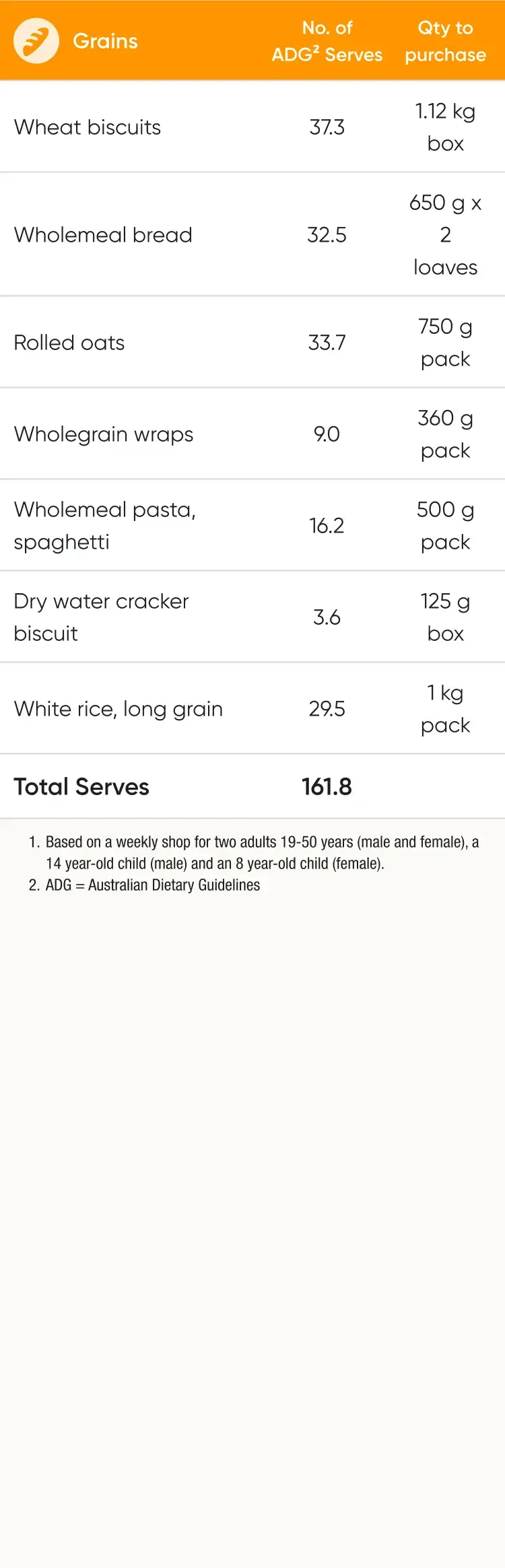
There is potential for further savings if seasonal produce is favoured, own brands are used and lower-cost items from the same food group are swapped. For example, using legumes to replace some meat.
Tips on eating healthy on a budget
Saving money while eating healthy is not just a dream - our data proves it's entirely possible! Here are some tips to help you achieve both.
Tip 1: Buy from each food group first with vegetables being the hero of meals
First, take a look at each of the five food groups and understand what your recommended requirements for each are (this can be finicky and boring, so read on for a free, handy fix for this that helps take all the guesswork out of it!). When you next go food shopping, try for a balance of foods from each food group and aim for vegetables to feature most in your basket. Stick to hitting this balance of core food groups first before popping in any discretionary foods.
Data from the Living Healthy Report 2024 shows that around 37% of food shop spend is on discretionary foods that provide minimal nutritional value. Start with the good (nutritious) stuff first!
Food Tracker by Healthylife is a free tool that takes the guesswork out of your groceries by showing you how many serves of each food group you have, compared to the recommended amount in the Australian Dietary Guidelines. Join for free today!
Tip 2: Use a variety of fresh, canned and frozen fruit and vegetables
Start with fresh fruit and vegetables that are in season. These will be tastier and more affordable. Then top up with canned and/or frozen.
For example, when fresh corn is in season, grab fresh cobs. When it isn’t, frozen and canned are quick and easy nutritious options that can also be more affordable. Frozen fruit can be another good example of an affordable swap when fresh are not as available.
Tip 3: Make meat go further
Add cans of legumes (or used dried varieties) to meat dishes for the health and budget-friendly benefits. Legumes are on average $0.50/serve, and with a diet low in legumes the number one dietary risk factor for chronic disease, why wouldn’t you add them in? Simply add a can of brown lentils to spaghetti bolognese or lasagna, kidney beans in chilli con carne or chickpeas in a meat curry for an easy nutritional win!
Tip 4: Top up on wholegrains
Whole grain cereals are only $0.31/serve on average, so they make for great healthy and budget-friendly meals and snacks to fill up the whole family, such as:
- Whole grain toast or crackers with cheese, tomato or a nut spread make a great meal or snack. With biscuits the number one contributor to discretionary food serves, whole grains make a perfect nutritious alternative.
- Porridge or muesli made with rolled oats for breakfast, after school or a pre or post-work out snack.
- Using brown rice or whole meal pasta will have you feeling fuller for longer after meals.
Summary
A weekly shop that is both healthy for and your budget, starts with writing a list based on the five food groups. This will help you hit your nutrition targets and reduce spending on discretionary foods that have minimal nutritional value.
Vary between fresh, frozen and canned produce based on season and price. Make your meals go further by adding in plenty of vegetables, including legumes and whole grains. While being healthy and budget-friendly there is also no need to lose out on flavour, these foods are delicious and nutritious!
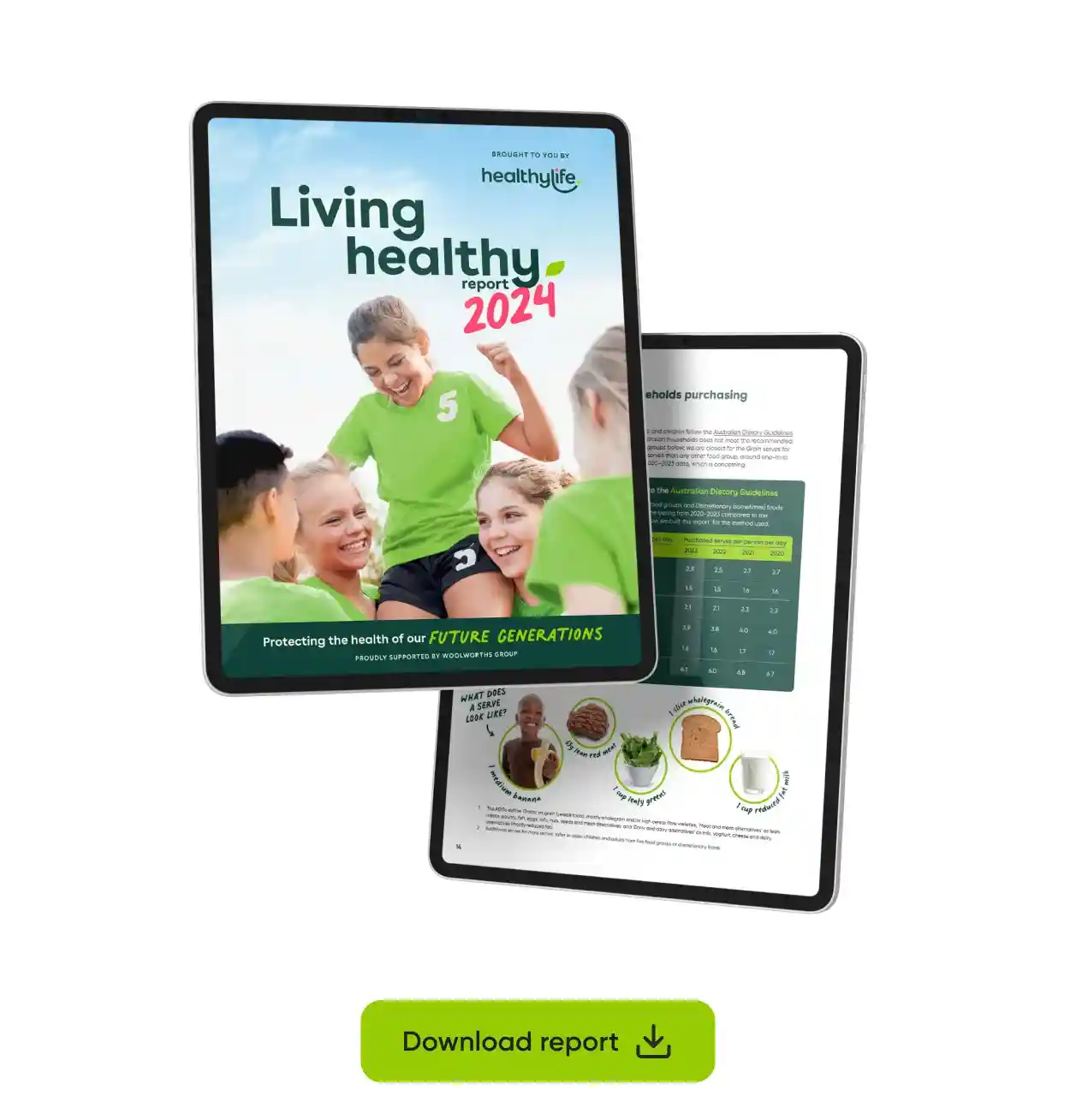
Check out more on what Aussies are eating and how you can support your health and your wallet by downloading your free copy of the Living Healthy Report 2024 today.
Related articles:
- How many servings of vegetables do you really need?
- How many servings of grains do you really need?
- How to build a healthy shopping list
Reviewed by the Healthylife Advisory Board April 2024
Related reads









This article is for informational purposes only and does not provide medical advice, diagnosis, or treatment. Any information published on this website or by this brand is not intended as a substitute for medical advice. If you have any concerns or questions about your health you should consult with a health professional.
About this article

Simone Austin
Simone Austin is an Advanced Sports Dietitian, author of Eat Like An Athlete and past President of Sports Dietitians Australia. She has worked with some of Australia’s top sports teams over her 25+ year career.