


What's in season in autumn for a low FODMAP diet

In most parts of Australia, we are lucky enough to have wide access to produce. Advancements in our food supply have led to year-round availability of what used to be ‘seasonal’ fruit and veg.
This is great in some aspects, such as having access to your favourite produce at other times of the year. But it also has its limitations, like confusing us all as to what fruit and veg are actually in season!
Benefits of shopping in season
There are many great reasons to shop seasonal produce. Firstly, when a type of produce is in season it generally means more availability and therefore much more affordable. Not only is seasonal fruit and veg more cost-effective, but it also tastes better too. Less money spent and better-tasting produce are two great reasons to shop in season.
When you shop in season, you’re also likely to be supporting local Aussie farmers. One of the reasons certain fruit and veg appear in supermarkets when they aren’t in season is because they are imported from overseas. If you’re lucky enough to live near a farmers market, then this is an excellent way to ensure you’re both shopping in season and supporting local farmers.
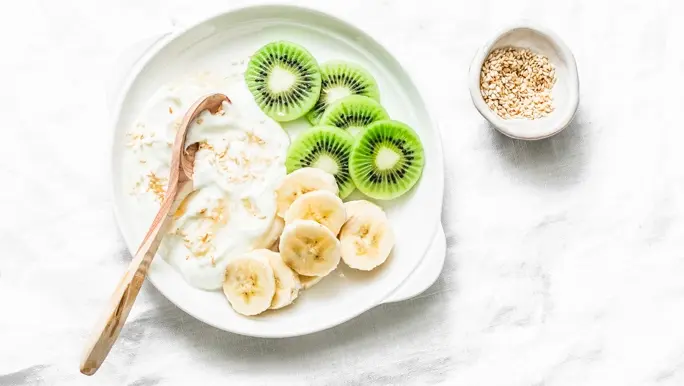
Natural yoghurt with a low FODMAP serving of banana and kiwi fruit is an easy way to start the day.
Autumn low FODMAP fruits
There are a range of low FODMAP fruits to enjoy in Autumn. Below are some ideas to include and suggestions for how to enjoy them:
- Bananas: enjoy either a medium under-ripe banana or 1/3 ripe banana (great if baking) as a low FODMAP serve. Use in smoothies, add to porridge, pair with banana and peanut butter on toast, or make home-made muffins/pikelets.
- Grapes: whilst grapes are now only safe at a serving size of 6 grapes, they can still be enjoyed this Autumn. Grapes are a source of excess-fructose, so to avoid FODMAP stacking, pair them with a serve of fruit containing fructans such as 2 small kiwi fruit. You can also use them as a refreshing salad addition or add to an individual snack plate with some cheese and wholegrain rice crackers.
- Kiwi fruit: enjoy kiwi fruit with yoghurt and seeds, add to cereal, add to smoothies, or add to pavlova made with lactose-free cream.
- Lemons: whilst typically not eaten on their own (unless you love sour fruit), lemons are a very diverse fruit that can be used for sweet and savoury dishes. Squeeze on salads and steamed veggies, add a wedge to sparkling water, pair with fresh seafood and chicken, squeeze on pancakes, make a lemon dessert such as a low FODMAP lemon meringue pie or lemon friands.
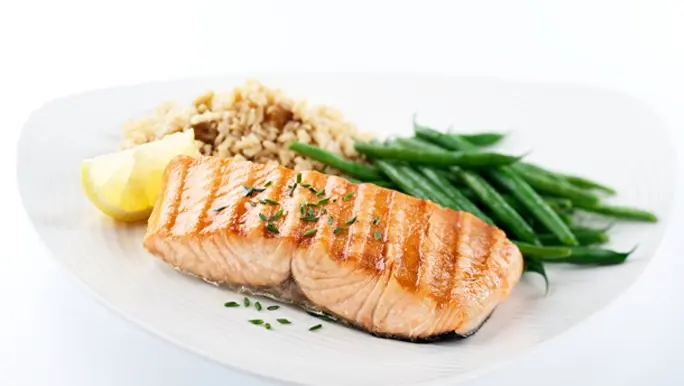
Grilled salmon and brown rice served with seasonal green beans and lemon is a simple and satisfying low FODMAP meal for autumn.
Autumn low FODMAP vegetables
In addition to fruit, there is a range of low FODMAP vegetables to enjoy in Autumn. Below are some of our favourite options to include and suggestions for how to enjoy them:
- Green beans: enjoy a 75g serve (15 beans) raw or roasted in salads, sautéed in garlic-infused extra virgin oil and topped with toasted pine nuts, add to stir-fry and curries.
- Broccoli heads: enjoy 75g (3/4 cup) broccoli heads roasted with garlic-infused extra virgin olive oil and a sprinkle of parmesan cheese, add to stir-fries and curries, enjoy raw with a low fodmap olive dip.
- Red cabbage: red cabbage can be included at a 75g (3/4 cup) serve and goes well in salads, smoothies (especially a berry smoothie), coleslaw and stir-fries.
- Carrot: carrots can be enjoyed in a variety of ways such as roasted or steamed with 1 tsp maple syrup and sesame seeds, as sticks with low fodmap dip, in salads, grated on wraps/sandwiches, raw with peanut butter, in overnight oats or baked as muffins.
- Eggplant: roast, grill or combine with a bit of miso paste and extra virgin oil to use in poke bowls!
- Pumpkin: enjoy kent or jap pumpkin roasted, added to salads, in curries or in pumpkin soup.
- Potato: the humble potato is perhaps the most diverse vegetable. Enjoy it mashed, roasted, steamed, as jacket potato, as chips, or in potato salad.
Need a recap on what FODMAP means and what FODMAP foods are? We cover this and more in our Ways to eat - Simple FODMAP challenge program. Join now
related reads


Reviewed by the healthylife Advisory Board March 2022
Related reads






This article is for informational purposes only and does not provide medical advice, diagnosis, or treatment. Any information published on this website or by this brand is not intended as a substitute for medical advice. If you have any concerns or questions about your health you should consult with a health professional.