


How long before bed should you turn off your phone?
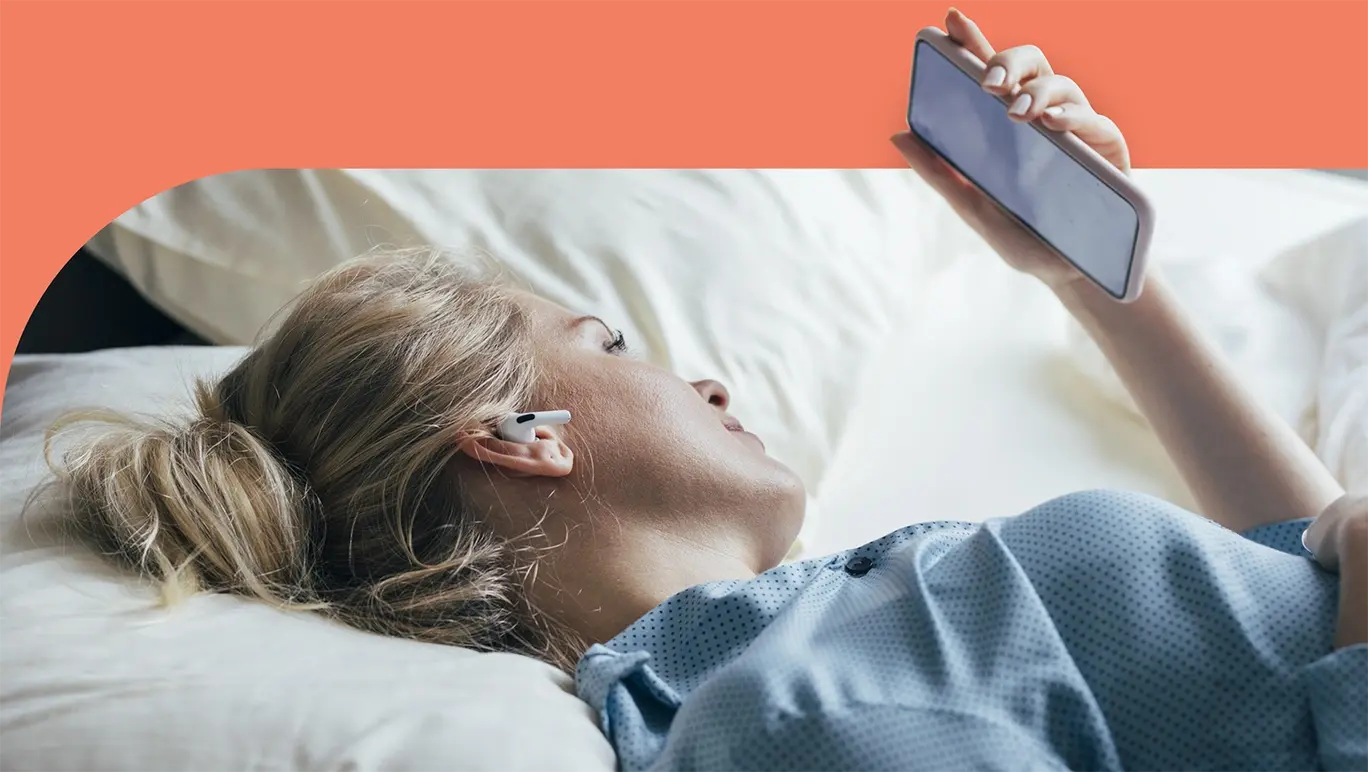
Key points about turning your phone off before bed
- Blue light from your phone can reduce the production of sleep hormones
- Levels of light sensitivity differ from person to person
- Try blue light glasses if you want to use your phone before bed
If your phone is the last thing you look at before you go to bed at night, you could be disturbing your sleep cycle. The blue light emitted from screens can interfere with our sleep by blocking melatonin (a sleep hormone) production.
So – how long before bed should you turn off your phone?
Before we answer that question, let's explore how screen time, the blue light from screens, and even household light can affect your sleep. And we have 5 tips for what you can do about it.
How blue light affects your sleep
We all know sleep is important for our physical and mental health. It restores and replenishes us.
But sleep deprivation doesn’t just make the next day much harder to deal with. Chronic lack of sleep has also

What is a healthy weight? (Spoiler alert: It’s personal)
What is a healthy weight? It’s a complex question. Research has shown that some people with a ‘healthy’ weight are considered to be “metabolically unhealthy”. Here’s what you need to know.
been linked to a host of physical and mental health problems such as:
- elevated blood pressure
- being overweight
- low mood
And now, sleep specialist Dr David Cunnington says there’s growing evidence that night-time screen use and bright lights can stop us from getting enough sleep.
He explains that this happens because normally when you go to bed at night, the sleep hormone melatonin kicks in to help you drift off. Your brain’s pineal gland releases this hormone in response to darkness, making you feel sleepy. Then, in the morning when the sun shines, the light switches off your melatonin production.
And, according to Dr David, “If you have a source of blue light like your phone in front of you, your pineal gland thinks it’s the morning sun, so it reduces your melatonin levels. That’s why you don't get that natural sleepy feeling.”
Should you turn off your phone an hour before bed?
Well, yes and no.
Maybe someone you know (possibly in the bed right next to you!) has no trouble falling asleep after staring at a screen for hours. But if you struggle to sleep after scrolling on your phone, you could be highly sensitive to light.
Research from Monash University shows that not everyone has the same sensitivity to light. The study found that some people are as much as 50 times more sensitive to light than others, reacting to normal evening home lighting as though it was bright outdoor lighting. Meanwhile, other participants had almost no response.
“That’s why general rules like ‘no screens for one hour before bed’ don’t apply to everyone,” Dr David says. “That 50-fold difference in sensitivity means that some individuals are exquisitely sensitive, so even a little light really messes with their sleep schedule. Meanwhile, others experience no effect, and everyone else is somewhere in between.”
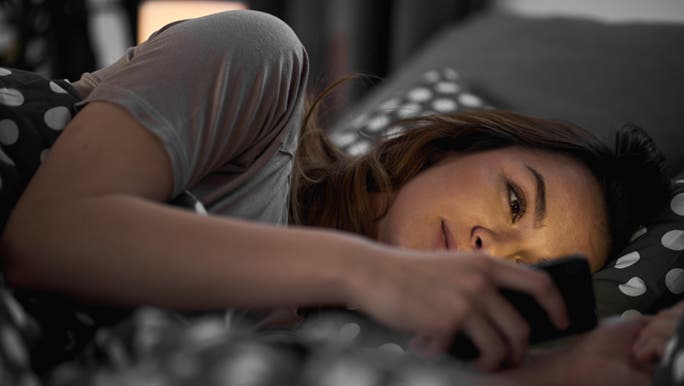
If you have a source of blue light like your phone in front of you, your pineal gland thinks it’s the morning sun.
How to cut the light and get better sleep at night
Here are Dr David’s top 5 tips to reduce your exposure to blue light at night to help improve your sleep.
1. Dim the lights
Dr David recommends practising ‘light hygiene’ to minimise the effect screens have on your sleep.
This means being conscious of the light around you, particularly once the sun's gone down. Light that's out of sync with the natural environment can have an impact on sleep and health.
“Bright, cold light (rather than soft, warm light) will confuse your body clock, keeping your melatonin levels from rising,” Dr David says.
2. Observe your own sleep patterns

Do you need to track your sleep?
With smart gadgets the norm these days you can track just about anything, including your sleep. But do you need to? And do sleep trackers actually work? Let's find out.
We all have different responses to light at night, so take note of how screens affect your individual sleep patterns.
If you stay up scrolling on your phone until 11pm, can you go to sleep straight away? Or do you stay awake for an hour or two afterwards?
The answer to these questions will tell you how long before bed you should turn your phone off. If you're struggling to fall asleep, try switching your phone off an hour before you go to bed.
3. Avoid endless scrolling
Online content is all about attracting and keeping eyeballs. One of the reasons social media exists is to provide engaging content that gives us a hit of dopamine – one of your brain’s feel-good hormones.
“The problem with that dopamine hit is that it wakes the brain up”, Dr David says.
So if you must use your phone, consider tip 4 instead.
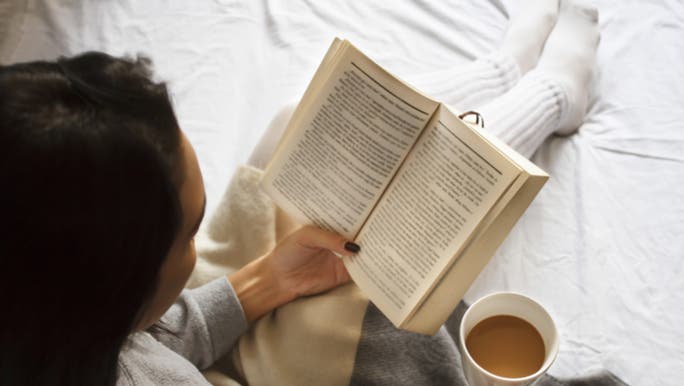
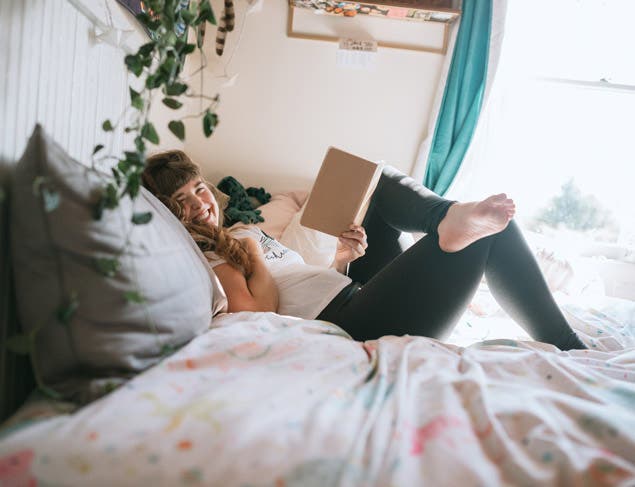
Reading a book before bed is ideal.
4. Read a book before bed
Reading a physical, paper book is ideal. But according to Dr David, reading an e-book (even on your phone!) is less likely to disrupt your sleep than scrolling on social media.
According to Dr David, that’s because the content is linear and long-form, and your brain doesn’t jump rapidly from one topic to another.
5. Use orange glasses to filter out blue light
You can buy ‘gaming glasses’ with orange lenses that filter out blue light. They’re designed to reduce eye strain for anyone who spends hours continuously playing games.
They may look a bit unusual, but they do remove some of the blue light that hits your eyes when you’re working on a screen.
We’re learning more every day about sleep
Sleep is essential, and reducing our exposure to blue light in the evenings can help us to avoid that ‘always tired’ feeling.
Of course, light isn’t the only thing that can interfere with sleep. A snoring partner, a hormonal imbalance or simply the stress of juggling kids, work and life can all affect your sleep quality.
But following Dr David’s tips above will at least potentially help remove one factor from the equation. And that’s worth sleeping on.
Want to learn more?
Get access to more expert-backed strategies on how to get a good night's sleep via our free Get More Sleep program.
Related:
- Why is sleep important and why do we do it?
- Sleep for women: how to get better rest & improve your health
- Do hormones affect my sleep?
- Why do we snore (and how can we stop)?
- Get More Sleep program
Dr David Cunnington is a specialist sleep physician who helps his clients to treat their complex sleep problems while also promoting sleep health through education, research and advocacy.
Reviewed by the healthylife Advisory Board June 2021
Related reads


How to manage screen time?
Recreational screen use has raised a mixture of concerns in society. Literature raises questions about, for instance, recreational screen effects on family cohesion, diets in children, changes in parent-child dynamics, and changes to sleep.

How to get better sleep: 10 tips to a good night's rest
Want to know how to sleep better? You’re not alone – we’re all a bit sleep-deprived. A sleep expert shares 5 top tips for a great night's sleep.
Can’t sleep? Try these 3 sleep hacks
Nothing is more frustrating than lying in bed, wide awake, trying to fall asleep. Try these sleep hacks instead.
How to get more deep sleep
Wondering how to get more deep sleep? Enhance your sleep quality and discover how to wake up feeling rejuvenated and energised with help from our expert.

Understanding your circadian rhythm
What is my circadian rhythm? We’ve asked sleep specialist, Dr David Cunnington to weigh in on this burning question.

Why is sleep important and what are the benefits?
The birds do it. The bees do it. We all need to do it. But why DO we all need sleep?
How to Get More REM Sleep
Discover how to get more REM sleep with this handy guide. With help from our sleep expert, we give you the latest advice.
Waking up during the night? Here’s why and what to do
If you find yourself struggling to stay asleep or dozing off only to wake up repeatedly, there may be more at play. Let’s break it down and explore what could be causing these disruptions, and how you can get back to sleeping soundly.
Is poor sleep hygiene affecting your sleep?
Here’s some expert advice from sleep specialist Dr David Cunnington about the difference between poor sleep hygiene and good sleep hygiene.
How to manage sleep when daylight savings changes
Many people are often seeking information about how to cope with daylight savings changes and often don’t know which way the clocks go at which time of year! This confusion is even more common because of social media, where we share platforms with people in the northern hemisphere, where DST is observed differently.
This article is for informational purposes only and does not provide medical advice, diagnosis, or treatment. Any information published on this website or by this brand is not intended as a substitute for medical advice. If you have any concerns or questions about your health you should consult with a health professional.