


Elimination phase of the low FODMAP diet
elimination phase
Let’s get this show on the road! As promised, we will break down the steps to follow when starting a low FODMAP diet, so it is super easy for you to follow along.



Let's dive in
We’re so excited to have you here, as part of this simple low FODMAP journey, to help you take control of your unwanted symptoms, and medically diagnosed IBS. In this initial 2-week period, it’s all about getting started with a simple version of the low FODMAP diet. In research, this is called the ‘gentle – FODMAP’ approach.
Research shows that following a diet that is low in FODMAPs can help relieve symptoms of medically diagnosed irritable bowel syndrome (IBS). FODMAPs are sugars that are found in food and are poorly absorbed in people with IBS. FODMAPs stands for Fermentable Oligosaccharides, Disaccharides, Monosaccharides and Polyols. They act as a food source to bacteria that live in the large intestine.
When they are not absorbed properly, they are fermented. This can result in bloating, flatulence, abdominal pain, diarrhoea, constipation, nausea and other gastrointestinal symptoms. It is important to remember that high FODMAP foods are not always the only culprit for IBS symptoms. Consider being aware of your reaction to fatty foods, caffeine, alcohol, fibre (excess or lack of), medications and stress, which may also influence your symptoms.
The next 2 weeks - elimination phase
We begin by eliminating high FODMAP foods from your diet for the next 2 weeks to see whether your symptoms will resolve or improve. It's important to have this symptom-free baseline so you can begin to challenge different foods in your diet and see which ones trigger your IBS.
- Grains - wheat, rye
- Vegetables - onion, garlic, leek, cauliflower, mushrooms
- Fruit - apple, pear, dried fruit, stone fruit, watermelon, prune juice
- Dairy - cow’s milk, cow’s milk yoghurt
- Meat/Alternatives - legumes

As you can see, this list is SIGNIFICANTLY shorter than the full low FODMAP food lists you have likely seen (and found in our handy guide below). The reason for this is these foods are most concentrated in FODMAPs, so removing them from your diet is likely going to mean significantly better symptom control, without the traditional heavy restriction a full low FODMAP diet requires.
did you know?
The low FODMAP diet was first created back in 1999!


Our handy guide
Need a recap on what FODMAP means and what FODMAP foods are? We’ve got you covered with this handy guide. Download it and save it to your files - it will be very useful over the next 4 weeks.


Now, before we get started….
We have a few things to check off just in case you are yet to ensure that a low FODMAP diet is right for you. BEFORE we start restricting:
1. Have you been checked for coeliac disease, bowel cancer and IBD by your doctor? If not, call your doc and get these looked at, ASAP.
2. How are your stress levels? Managing these is absolutely key when it comes to symptom control. When we are stressed, symptoms can end up much worse.
3. What is your diet quality like? Are you eating enough veggies? Fruit? Wholegrains?
4. How much fibre do you consume each day? Are you eating enough?
5. Are you drinking enough water? Think at least 2 litres per day!
6. How is your fat intake? High fat intake can exacerbate symptoms in some people.
7. Are you consuming lots of caffeine or spicy foods? Both of these can make symptoms worse for some people, so may be worth cutting back.
You’ve already worked through these 7 steps? That’s why you signed up right!? If not, please complete the manage your gut symptoms program and see your health professional ASAP. Let’s get started!
More handy resources
We have developed some special resources for you, to make this process a lot easier.
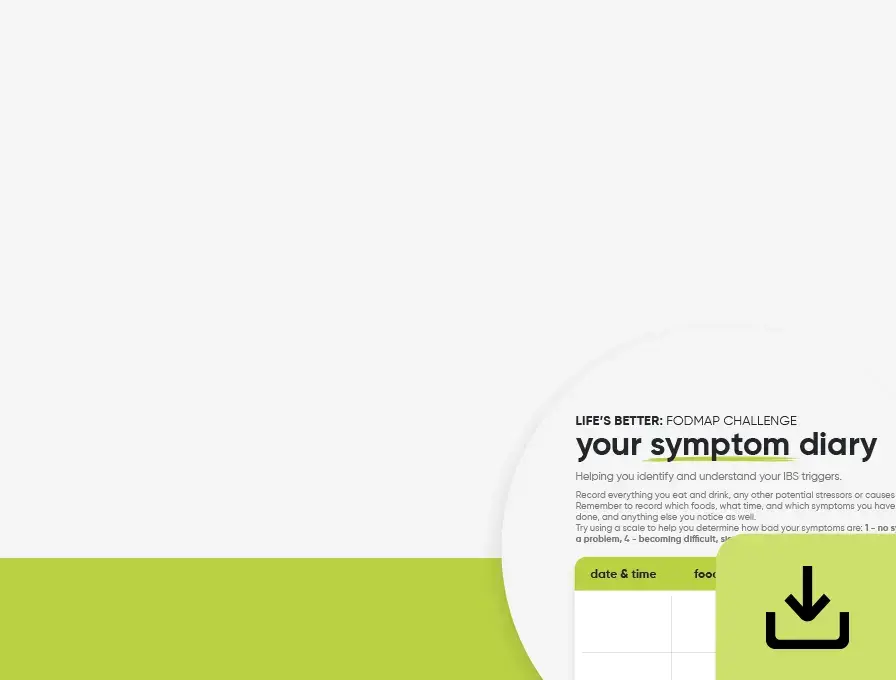
symptom diary
This is a GREAT idea and will make it that much easier to keep track of symptoms (and hopefully as you progress, lack thereof).
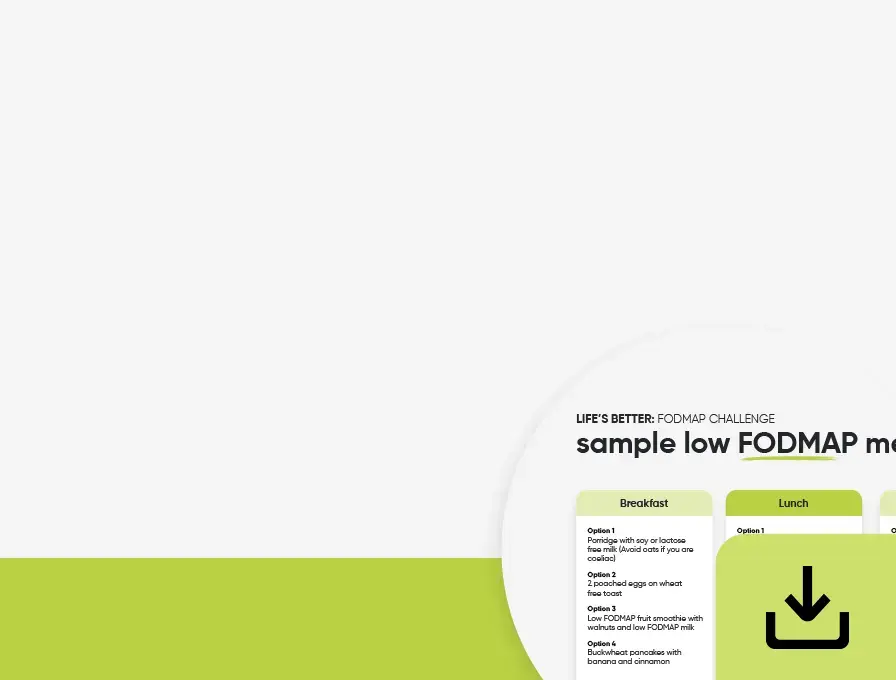
meal plan
Our program does not contain these - as it’s personal - but see our sample meal plan here to get you started.
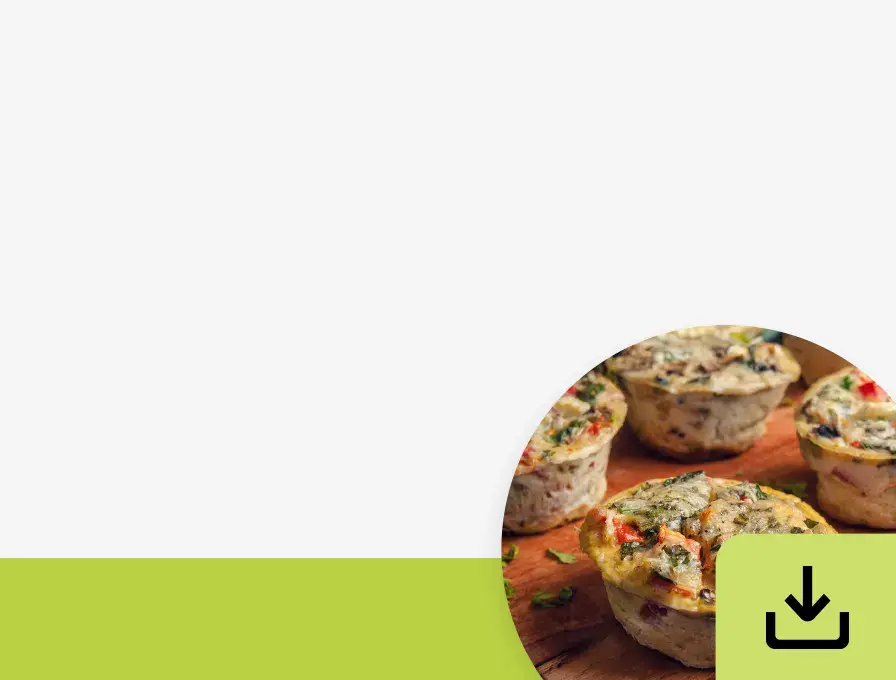
recipe
We have heaps of these in store - for now - see this handy low FODMAP vegetable muffin recipe to get you started!
Keep an eye on your inbox
That’s all for today! Stay tuned for:
- Weekly inspiration to keep you on track.
- The reassessment phase after your initial 2 weeks of elimination.
- The reintroduction phase.
- Personalisation and where to from here?
- Handy resources, guides, expert tips and more!

This page is for informational purposes only and does not provide medical advice, diagnosis, or treatment. Any information published on this website or by this brand is not intended as a substitute for medical advice. If you have any concerns or questions about your health you should consult with a health professional.